Heart of Neolithic Orkney: Skara Brae and the Ring of Brodgar.
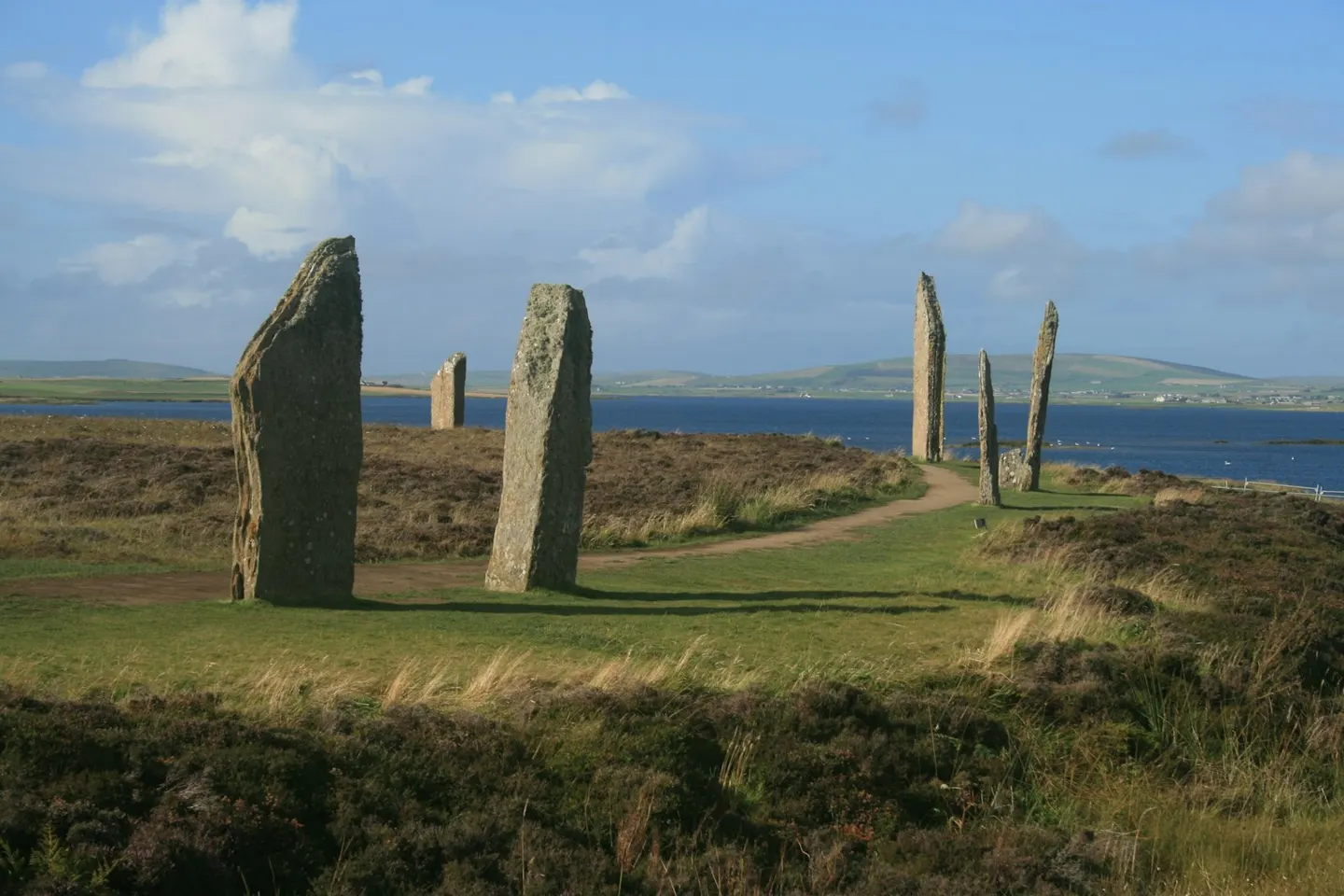
On Orkney’s Mainland, four Neolithic monuments make up the Heart of Neolithic Orkney, a UNESCO World Heritage Site. At Skara Brae, a cluster of stone-built houses complete with box beds and stone dressers survived buried under sand for thousands of years, until a storm uncovered it in 1850; people lived here from around 3200 BC. Maes Howe, a chambered tomb (a Neolithic burial mound built around a stone passage and inner chamber) raised around 2800 BC, was built so that the midwinter sun shines straight down its entrance passage for a few weeks either side of the solstice; Viking raiders broke in during the 12th century and carved runes on the chamber walls, among them a serpent-like dragon. Close by, the Ring of Brodgar and the Stones of Stenness are Neolithic stone circles standing on the strip of land between the lochs of Stenness and Harray, the Ring raised a few centuries after the Stones.
NorthLink ferries run from Scrabster to Stromness and from Aberdeen to Kirkwall, Pentland Ferries crosses from Gills Bay to St Margaret’s Hope on South Ronaldsay, joined to the Mainland by road over the Churchill Barriers, and Loganair flies into Kirkwall from the Scottish mainland.
St Magnus Cathedral stands at the heart of Kirkwall, Orkney’s main town. The red sandstone cathedral was begun in 1137 by the Viking earl Rognvald, in memory of his uncle Magnus, and has belonged to the town rather than the church since a royal charter of 1486. On the other coast, Stromness is a working harbour town of flagstone lanes and stone houses built gable-end to the sea; from 1670 it was a regular port of call for Hudson’s Bay Company ships bound for Canada, and generations of Orcadians signed on there to work the fur trade.