Areas
Routes
Natural spots
Historic places
Villages & landmarks
Near you
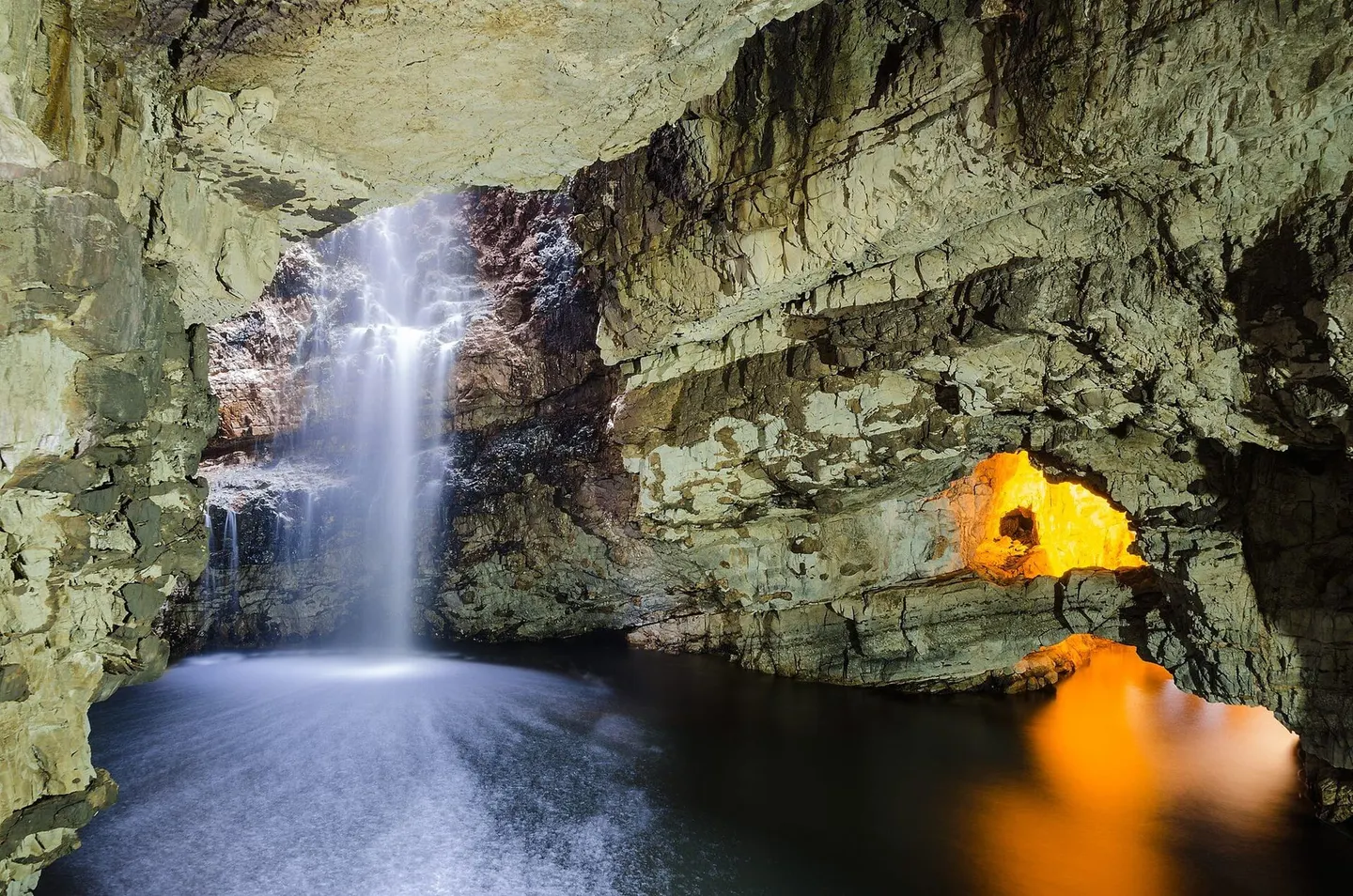
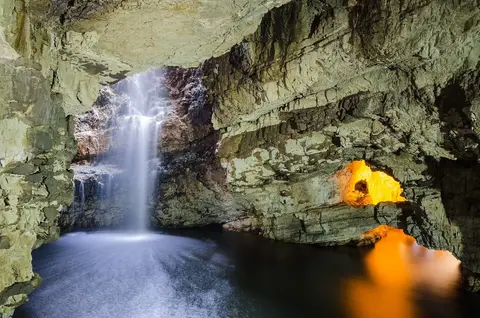
Smoo Cave© Florian Fuchs / Wikimedia Commons · CC BY 3.0
Sea caves, karst caves and quarry caverns you can stand inside. 33 in the Albion Guide.
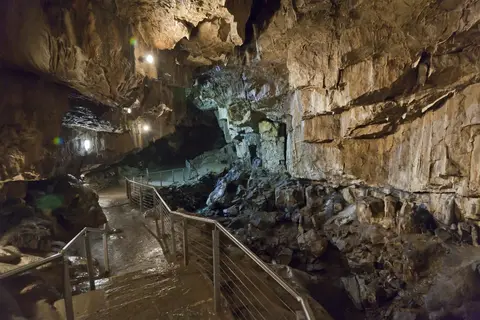
Natural show cave in the hillside above Castleton, one of the only places on earth where the banded Blue John stone is mined.
Derbyshire
Maze of man-made sandstone caves beneath Nottingham, medieval tannery and wartime air-raid shelters cut into the rock.
Nottinghamshire
Long known as the Devil's Arse, it has the largest cave entrance in Britain and once sheltered a whole rope-makers' village.
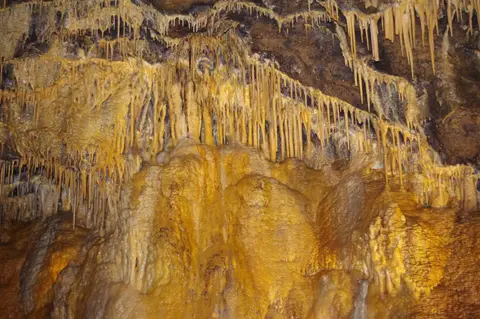
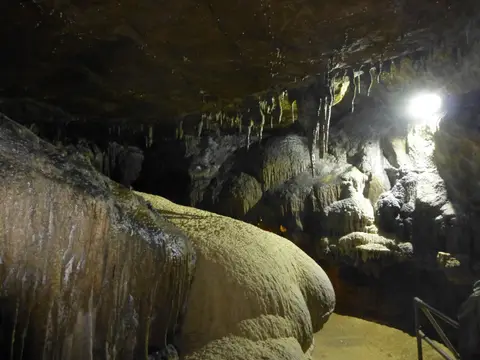
Two-million-year-old limestone cavern on the edge of Buxton, with a source of the River Wye and rare 'poached-egg' stalactites.
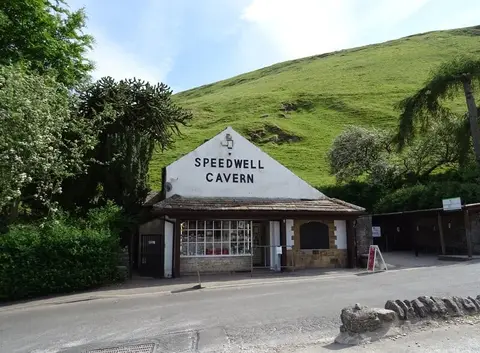
Flooded former lead mine at the foot of Winnats Pass, reached by an underground boat trip to a vast Bottomless Pit.
Show cave prized for its stalactites and richest Blue John veins, still worked for a few hundred kilos of the stone each year.
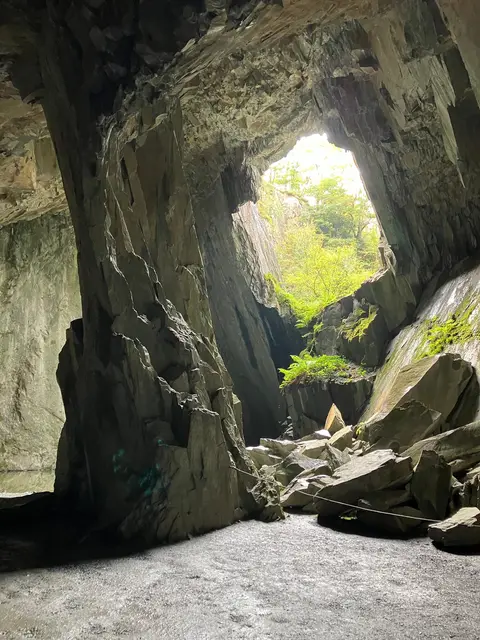
The main chamber of the Little Langdale slate workings, forty feet high and lit by a window of daylight — reached through a tunnel that wants a torch.
Little Langdale
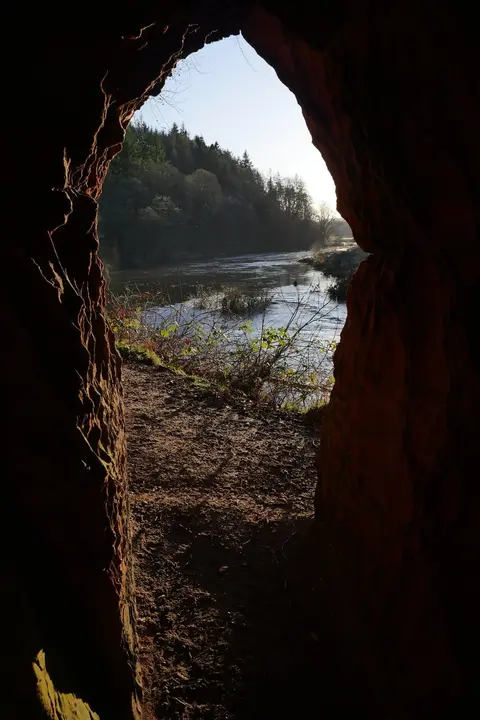
Five chambers cut into the red sandstone cliffs above the Eden near Little Salkeld, a Georgian gentleman's folly.
Lazonby
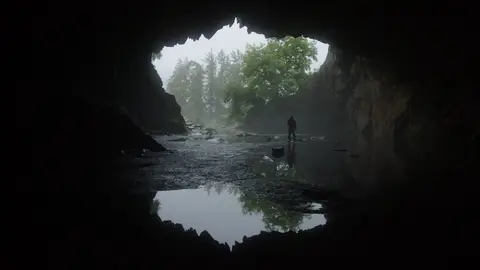
A quarry mouth above Rydal Water big enough to swallow a house, its floor pool crossed on stepping stones — the void left by Loughrigg's slate men.
Rydal
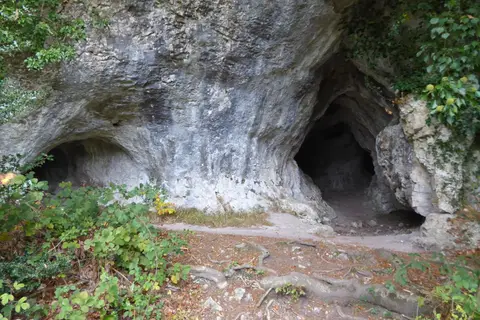
Twin-mouthed cave in the wooded Wye gorge near Symonds Yat, holding evidence of Ice Age human and animal life.
Herefordshire
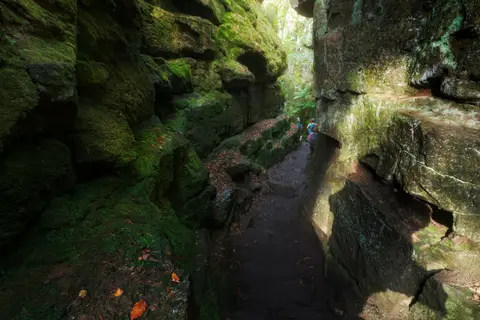
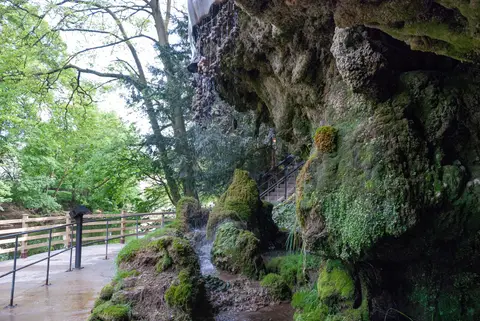
Deep mossy chasm hidden in woodland above the Dane, a fairytale cleft of dripping rock linked to the Green Knight and Lollard worship.
Staffordshire
A sixty-foot symmetrical cave mouth punched through a limestone crag above the Manifold valley — occupied since the Stone Age, photographed since the Victorians.
One of Britain's largest cave chambers, big enough to swallow a cathedral, into which Fell Beck plunges beneath Ingleborough.
Clapham
A show cave of floodlit stalactites and pools on the walk up from Clapham toward Gaping Gill.
England's oldest paying tourist attraction, a petrifying well by the Nidd said to turn objects to stone.
Knaresborough
A show cave of ancient flowstone formations discovered by lead miners in 1860, high on the Greenhow moors.
Appletreewick
Britain's longest show cave, an 80-minute underground tour of waterfalls and a huge glittering chamber near Ingleton.
Ingleton
Ancient iron-ore mine in the Forest of Dean, its worked-out caverns open to visitors underground.
Gloucestershire
Network of chalk tunnels dug into West Wycombe hill for Sir Francis Dashwood's Hellfire Club, running some 260 metres underground.
Buckinghamshire
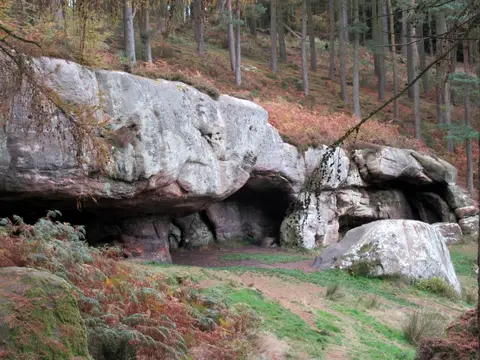
An overhanging sandstone shelter in the hills near Belford where monks are said to have rested St Cuthbert's body.
Northumberland
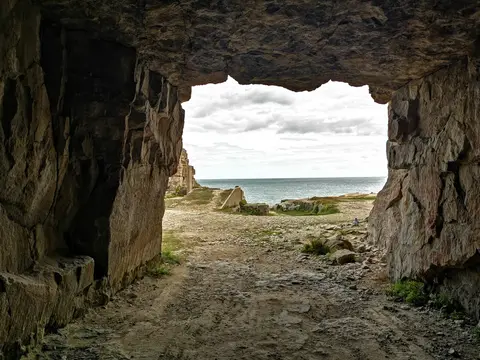
A dramatic disused sea-cliff quarry of galleries and caves opening straight onto the water below Worth Matravers.
Dorset
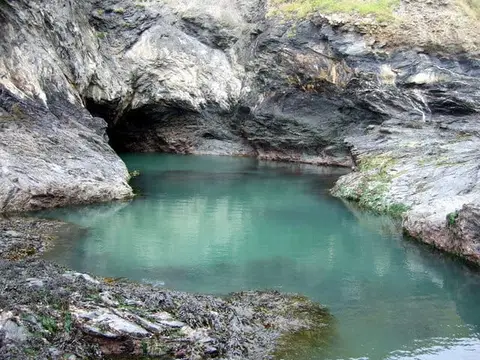
The largest sea-cave entrance in Britain, with a burn falling twenty metres through the roof of its inner chamber — half sea-carved, half dissolved.
Highland
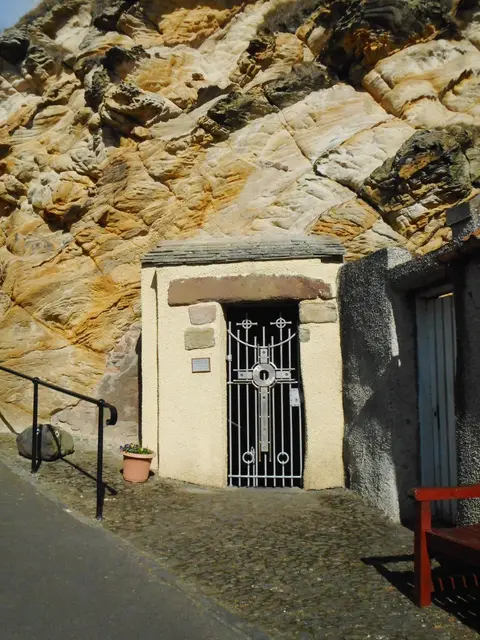
A tiny cave shrine in Pittenweem linked to a 7th-century missionary, from which the village takes its name.
Fife
Sea cave on a pebble shore near Whithorn, a pilgrimage site linked to Scotland's earliest saint.
Dumfries and Galloway
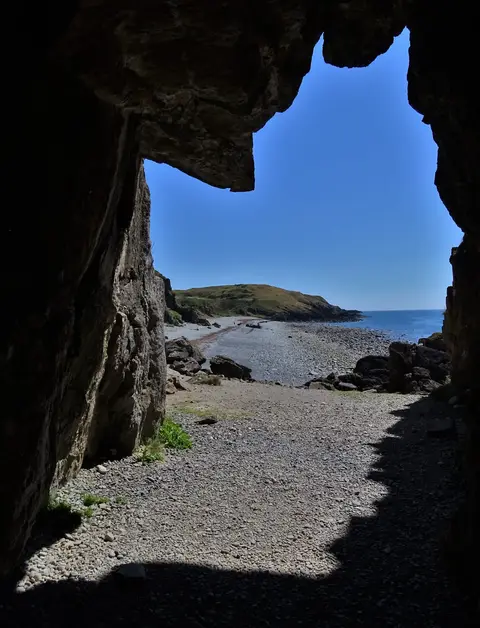
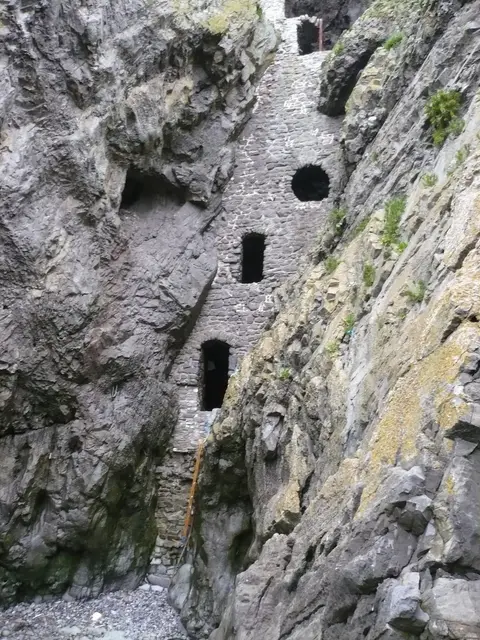
Cliff fissure at Port Eynon walled with masonry and internal stairs, of medieval origin.
Swansea
Large sea cave in Pennard Cliffs with important prehistoric and interglacial deposits.
Sea cliff cave, also called Goat's Hole, where the Palaeolithic Red Lady of Paviland burial was found.
Collapsed sea cave and blowhole on the coast near Moylgrove, linked to the sea by a natural arch.
Pembrokeshire
Show cave complex in the upper Tawe valley with lit chambers, stalactites and an underground river.
Powys
Twin limestone caves at Tremeirchion where Palaeolithic tools and Ice Age animal bones have been found.
Denbighshire
A rock-cut cave and cliff-edge viewing platform above the Wye, part of the 18th-century Piercefield picturesque walks, named for a lost statue of a boulder-hurling giant.
Monmouthshire
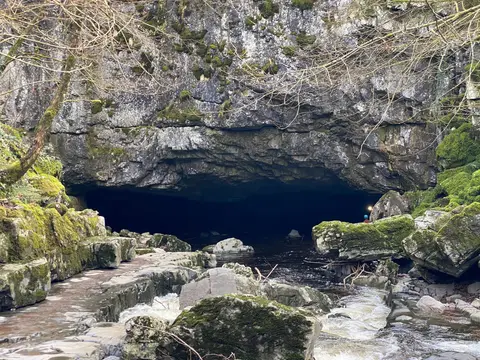
Cave with the largest entrance in Wales, formed where the Afon Mellte vanishes underground near Ystradfellte.
A restored Victorian copper mine near Beddgelert offering audio-visual tours through its chambers and formations.
Gwynedd