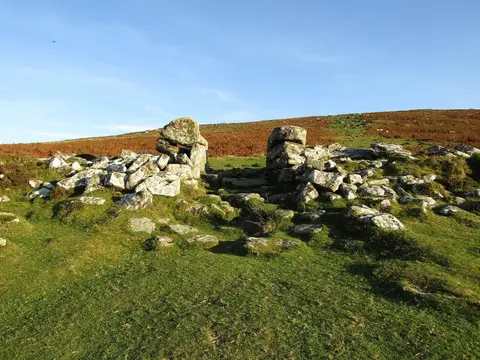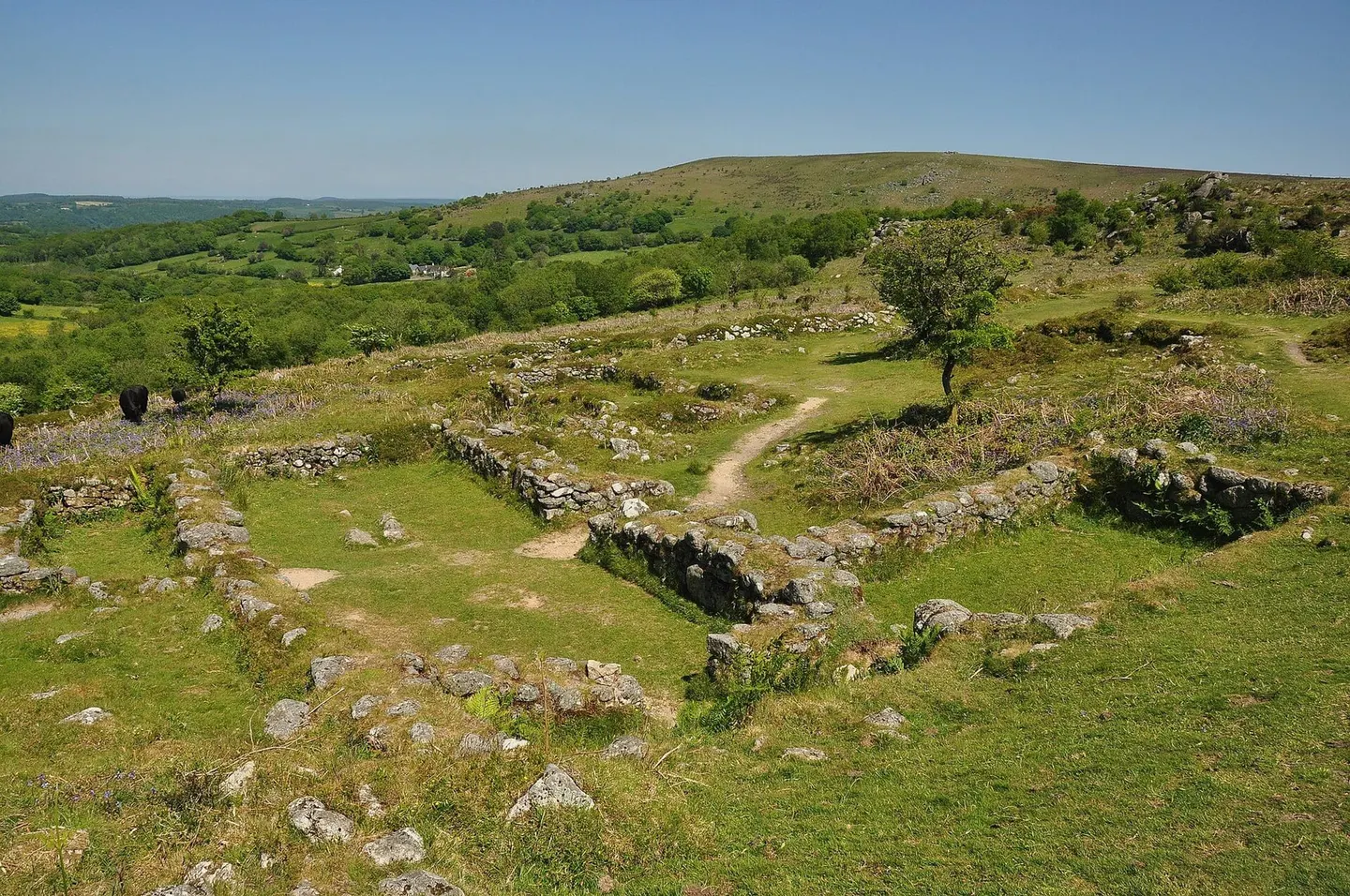
Stone footings of a small 13th-century Dartmoor hamlet below Hound Tor, abandoned within a hundred years or so
Open accessfree to visit at any reasonable time
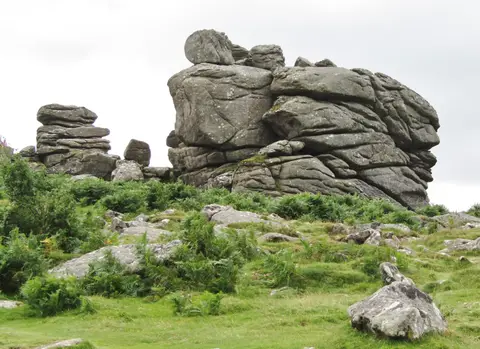
Farmers raised a cluster of stone longhouses here during the 1200s, near Dartmoor’s eastern fringe, between the granite outcrops of Hound Tor and Greator Rocks. A longhouse put people at one end of the building and animals at the opposite end, sharing the warmth under a single roof, an arrangement common across upland Britain at the time. Eleven such buildings survive at Hound Tor, grouped into three or four small farms, each with its own longhouse, barn and yard. The largest longhouse, at the eastern end of the site, runs almost 19 metres end to end. All were built from local granite; the walls once stood roughly two metres tall, with simple thatched roofs on oak rafters, no glass in the window openings, and a single open hearth for heat and cooking.
Three stone barns stand closer to the rocks, each fitted with a pair of ovens for drying the oats and rye grown on narrow terraced fields nearby. Domesday Book records a settlement here named Hundetorra in the 1080s, and scattered hut circles nearby, the round footings of earlier stone houses, go back to the Bronze Age. Archaeologists excavating in the 1960s confirmed the hamlet’s medieval dates, and it seems to have emptied out within a hundred years or so, as a run of bad harvests and, later, the Black Death hit small upland farms hard across Dartmoor.
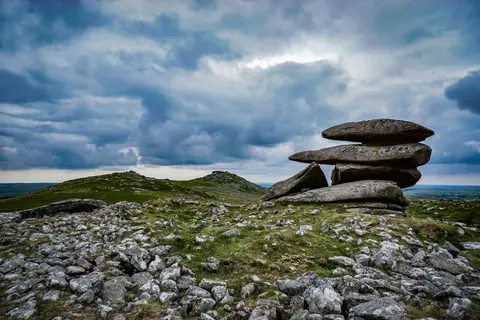
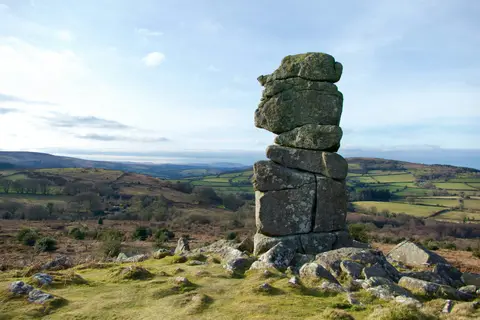
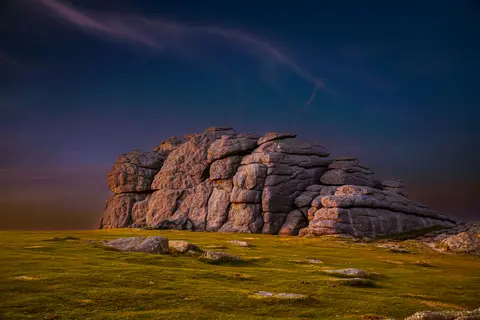
The path in crosses Hound Tor’s summit, loose granite underfoot the whole way, so wear boots with a decent grip. Climb Hound Tor or nearby Greator Rocks for a view down over the deserted hamlet, and you can easily combine a visit with Grimspound, another Dartmoor settlement about 5km northwest.