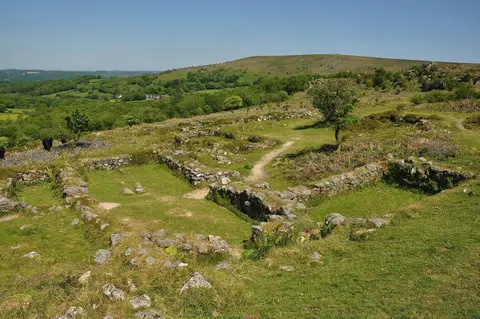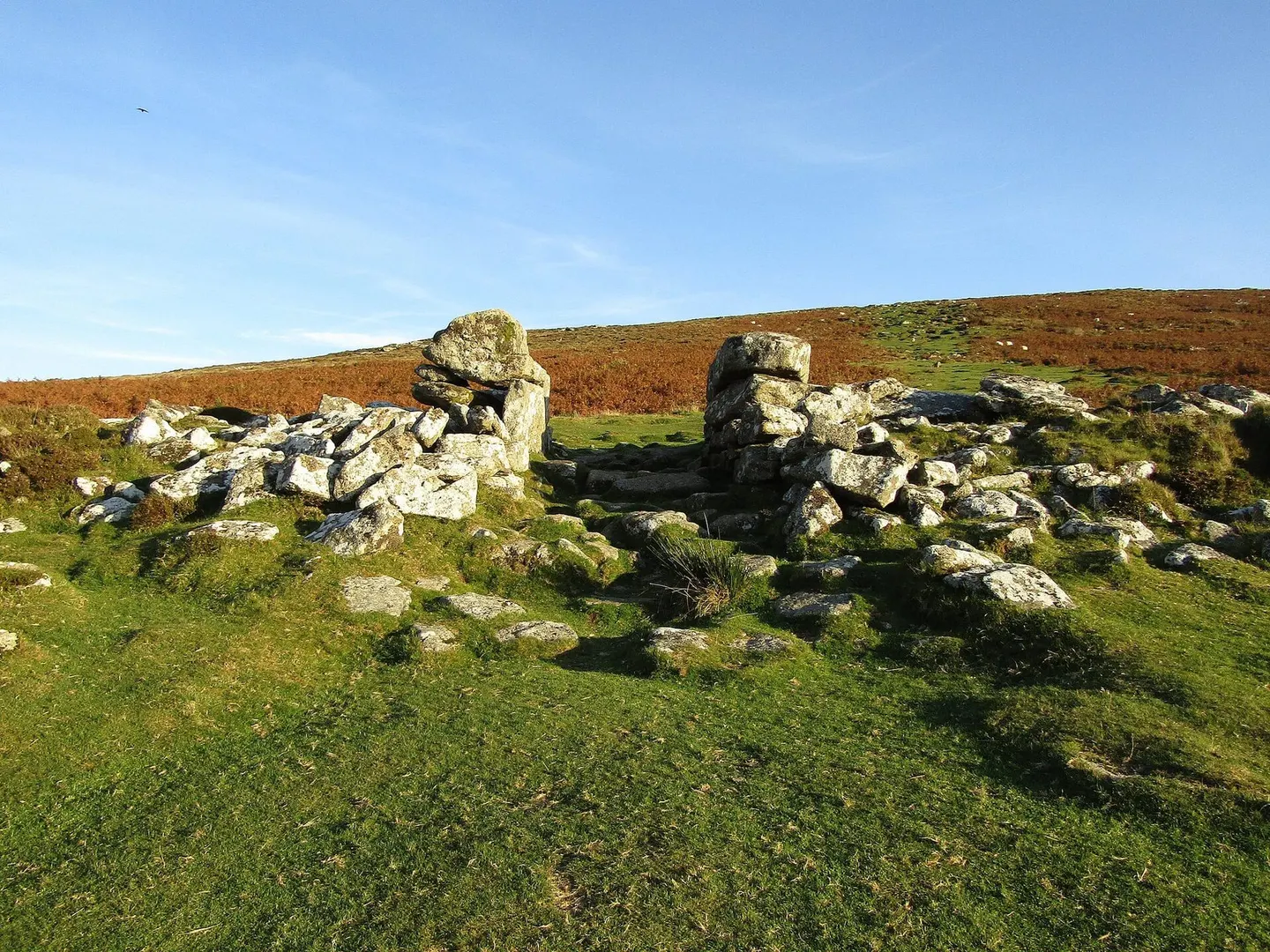
Bronze Age hut circles ringed by a thick stone wall in a high fold of Dartmoor between Hookney Tor and Hameldown
Open accessfree to visit at any reasonable time
Standing remainssubstantial fabric survives to stand in front of
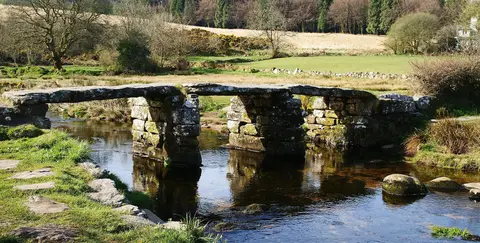
Walk up from the road between Hookney Tor and Hameldown and the ground drops into a shallow bowl, ringed almost entirely by a stone wall you can still trace on foot. Inside stand the footings of 24 round houses, sometimes called hut circles, part of a farming settlement built somewhere between 1500 and 700 BC, late in the Bronze Age. The wall itself is substantial. It runs about 150 metres across, is roughly three metres thick on average, and in places still rises to a metre and a half high, faced with big slabs of local stone. It probably wasn’t built for defence, but to pen farmed animals in and keep wild ones out, and a stream still runs along the enclosure’s north side, which explains why people settled here in the first place. The site is open moor throughout.
Archaeologists from the Dartmoor Exploration Committee dug into 16 of the roundhouses in 1893, uncovering hearths, paved floors, pottery and flint, and rebuilt sections of both the wall and several of the huts as they went, not always accurately — so some of what you see today is Victorian restoration as much as it is Bronze Age original. Further out, on the slope to the south-east, at least nine additional house platforms survive, linked by low banks that once marked out fields.
From Hookney Tor, or the rise of Hameldown above, the settlement’s layout is clear to see. The Two Moors Way passes right alongside Grimspound, and the Warren House Inn is a couple of miles west.