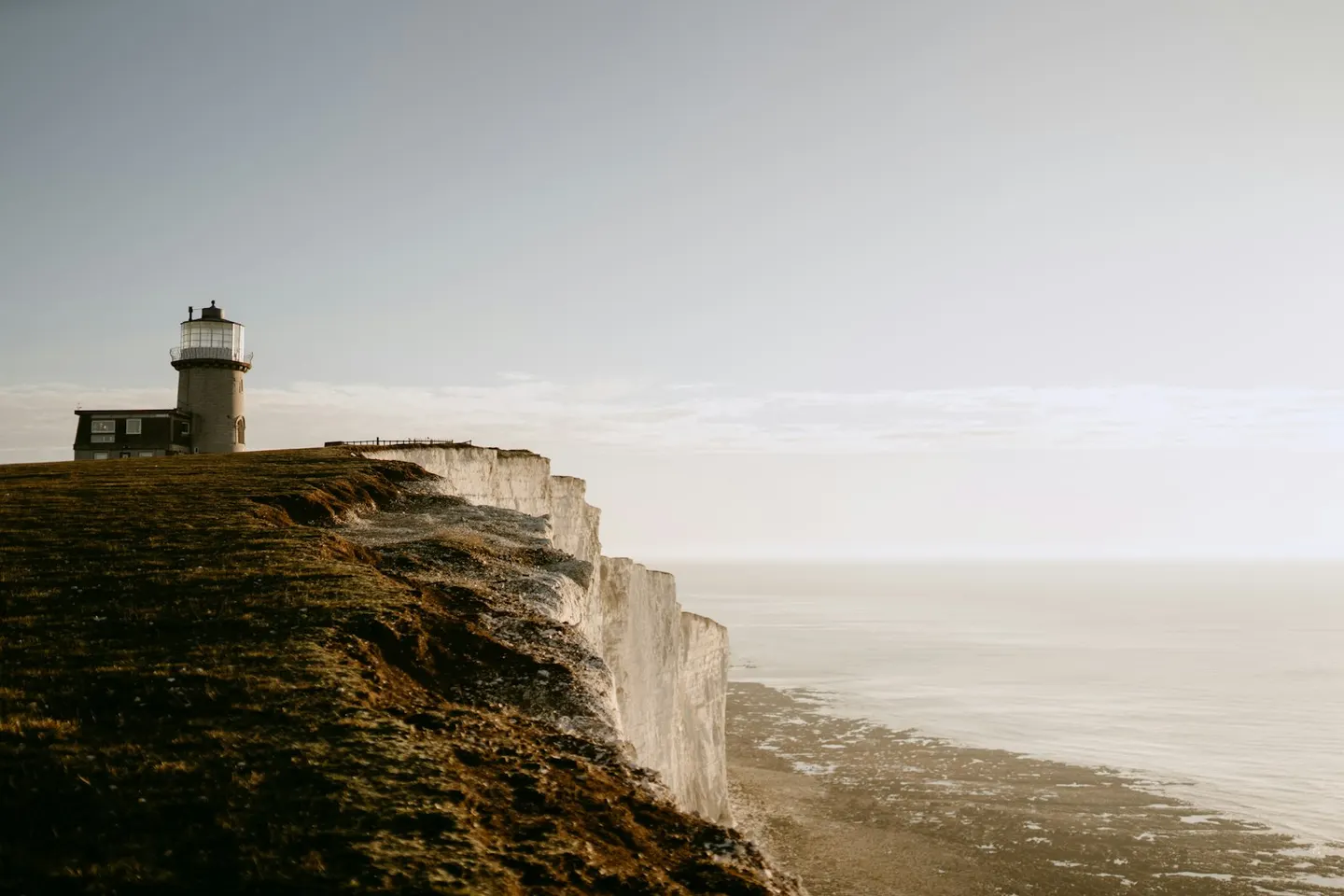
Beachy Head's chalk face, the highest in Britain, with a lighthouse at its foot and downland walking either side
Open accessin a National Nature Reserve open to the public
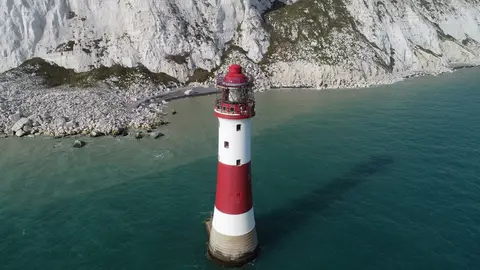
Beachy Head is the high point of this stretch of coast, the highest chalk sea cliff in Britain, dropping 162 metres to the beach below. The current lighthouse, red and white stripes, standing in the water at the foot of the cliff rather than on top of it, was built there after the original clifftop lighthouse proved too easy to lose in low cloud.
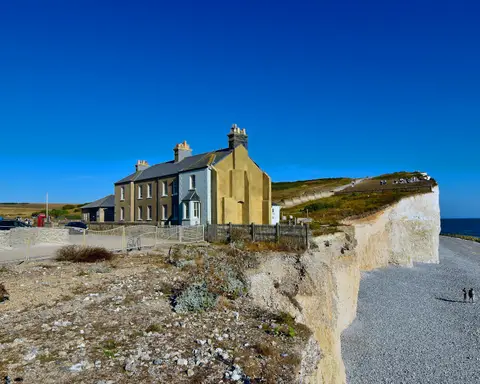
That original lighthouse, Belle Tout, still stands on the clifftop a little way along, a squat white tower, retired from service, that was moved back from the edge in one piece in 1999 as the chalk beneath it kept disappearing. Between the two lighthouses, the pattern here is clear enough: the cliff erodes constantly, sometimes gradually and sometimes in one sudden collapse. The edge itself is not a safe place to stand — it overhangs in places and can give way without warning, so keep well back and keep children and dogs close.
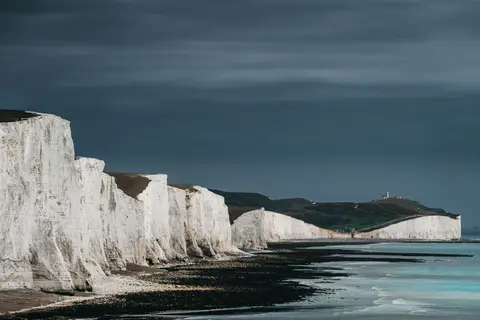
The reserve covers open downland all the way back to Seaford Head in the west, taking in the full length of cliffs, including the Seven Sisters and the beach at Seven Sisters Country Park, as well as the headland at Beachy Head itself: chalk grassland that’s open access land, free to walk beyond the paths as well as on them. The South Downs Way crosses the top here on its way into Eastbourne, and the stretch from Birling Gap and Seven Sisters over the Seven Sisters makes for a long day’s walking with clear weather and a decent pair of boots. From the top, you can see along the coast for miles in both directions.