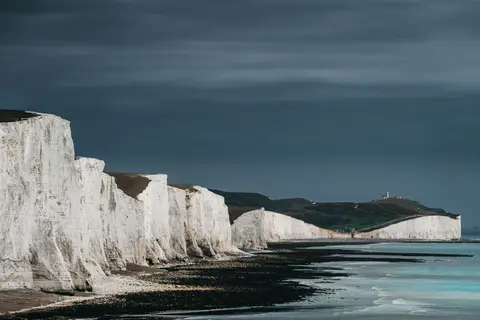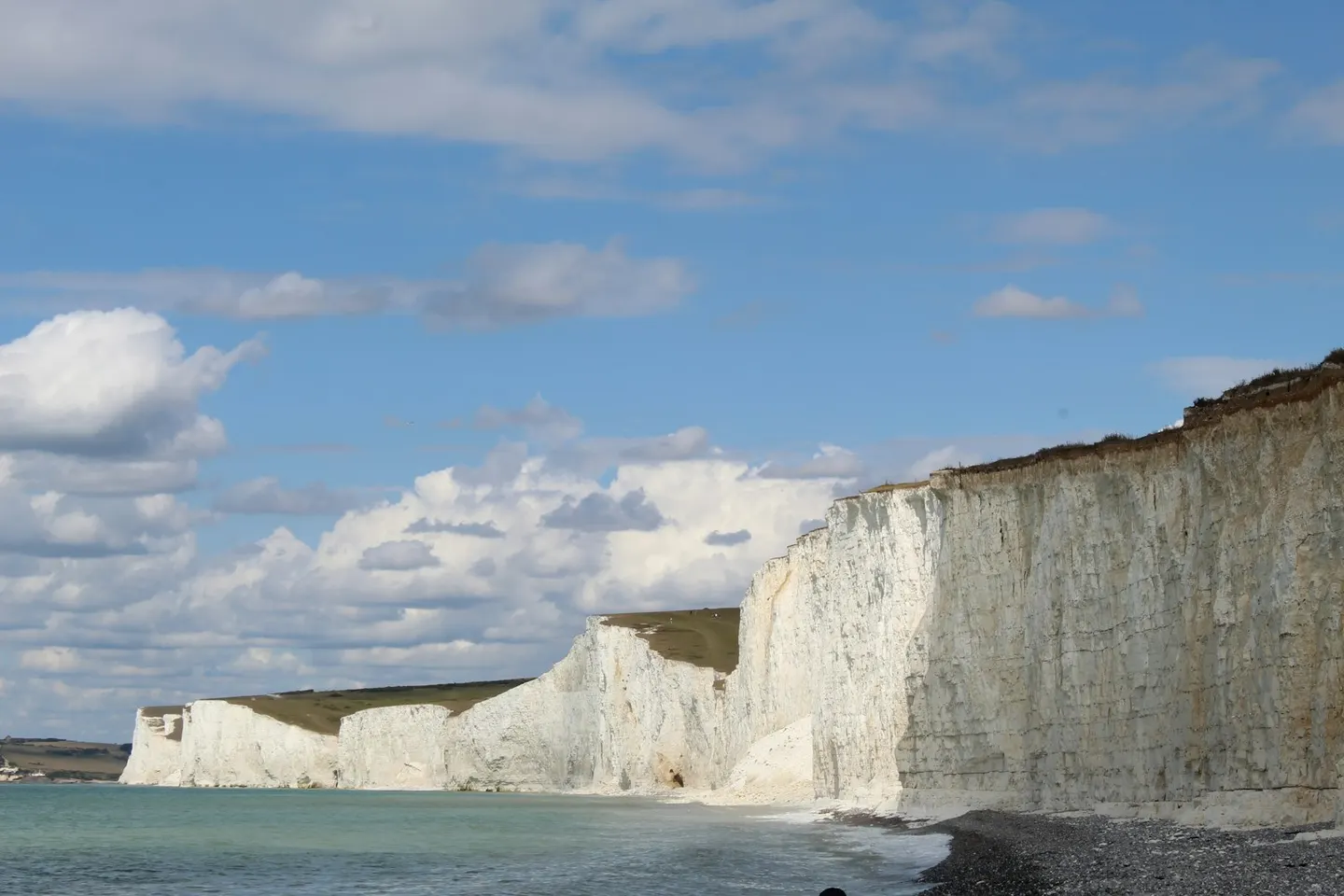
Chalk cliffs and dry valleys sheared off by the sea, linked by the switchback path between Seven Sisters and Beachy Head
Defined in 1973, the Sussex Heritage Coast protects one of the least developed stretches of chalk coastline in the South Downs: the run from Seaford east to Eastbourne, taking in Seven Sisters and Beachy Head. Heritage Coast status doesn’t carry the legal weight of a national park, but it has kept this coastline free of the caravan parks and promenades lining so much of the rest of the south coast, leaving chalk cliffs dropping straight into the Channel for mile after mile.
The humps that give the Seven Sisters their name are the seaward ends of dry valleys, left hanging when the sea cut back the cliff line that used to extend beyond them. Each hump is really the truncated end of a ridge between two valleys, which is why the coast path keeps dropping into a gap and climbing back over the next shoulder rather than ever running flat for long. The sea keeps eating into the chalk, so the count of sisters has never quite stayed at seven — depending on where the counting starts, there are more.
At the eastern end, Beachy Head is Britain’s highest chalk sea cliff, its lighthouse standing in the sea below rather than up on top. Birling Gap, roughly in the middle of the stretch, is where the path drops back down to beach level, past cottages that edge nearer the drop each year, proof this stretch of coast is still being carved rather than finished.
The coast path here forms part of the South Downs Way and draws a crowd whenever the weather’s fine — good walking for anyone happy with a lot of up and down, though the cliff edges are unfenced and the chalk can crumble away with no warning at all, so stay well back from the top. Seven Sisters Country Park and the Seaford to Beachy Head reserve both make good places to start.