Wilmington Priory
A small Norman priory cell next to a churchyard yew reckoned among the oldest trees in England
Access unclearno public right of way confirmed — check locally before setting out
Substantial ruinsruined, but plenty survives above ground
Rather than a full monastery, Wilmington Priory began as a small outpost: a cell of the Benedictine abbey of Grestain in Normandy, set up to manage estates in England on the mother house’s behalf. Religious houses like this, owned and run from across the Channel, were known as alien priories, and whenever England and France went to war the Crown treated their income and property as enemy assets and seized it. Plenty of alien priories, Wilmington included, were suppressed and sold off well before Henry VIII’s dissolution of the monasteries got round to everyone else.
The prior’s own house is mostly what remains, a 14th-century domestic range rather than a church, which went on to have a long working life as a farmhouse once the monks had gone and is now let as a holiday cottage by the Landmark Trust. It’s seen from the churchyard rather than wandered into, unless you’re booked to stay. That churchyard next door holds the real veteran: a yew reckoned among the oldest trees in England, its trunk long since split apart and propped up rather than left to fail. Ancient yews are notoriously hard to date precisely, since old trunks hollow out and lose their growth rings, but this one is commonly put at over a thousand years old.
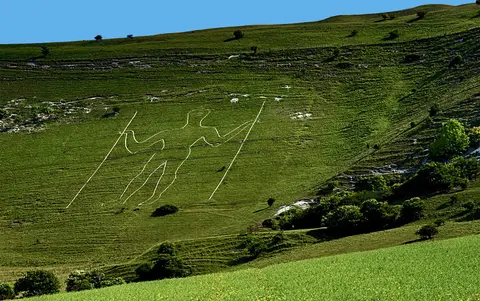
The priory is a short walk from the Long Man of Wilmington and Wilmington Hill, on the edge of the South Downs, with Alfriston Clergy House — another small medieval survivor — a few kilometres further on for anyone touring Sussex’s smaller historic buildings in one day.
More at the National Heritage List entry