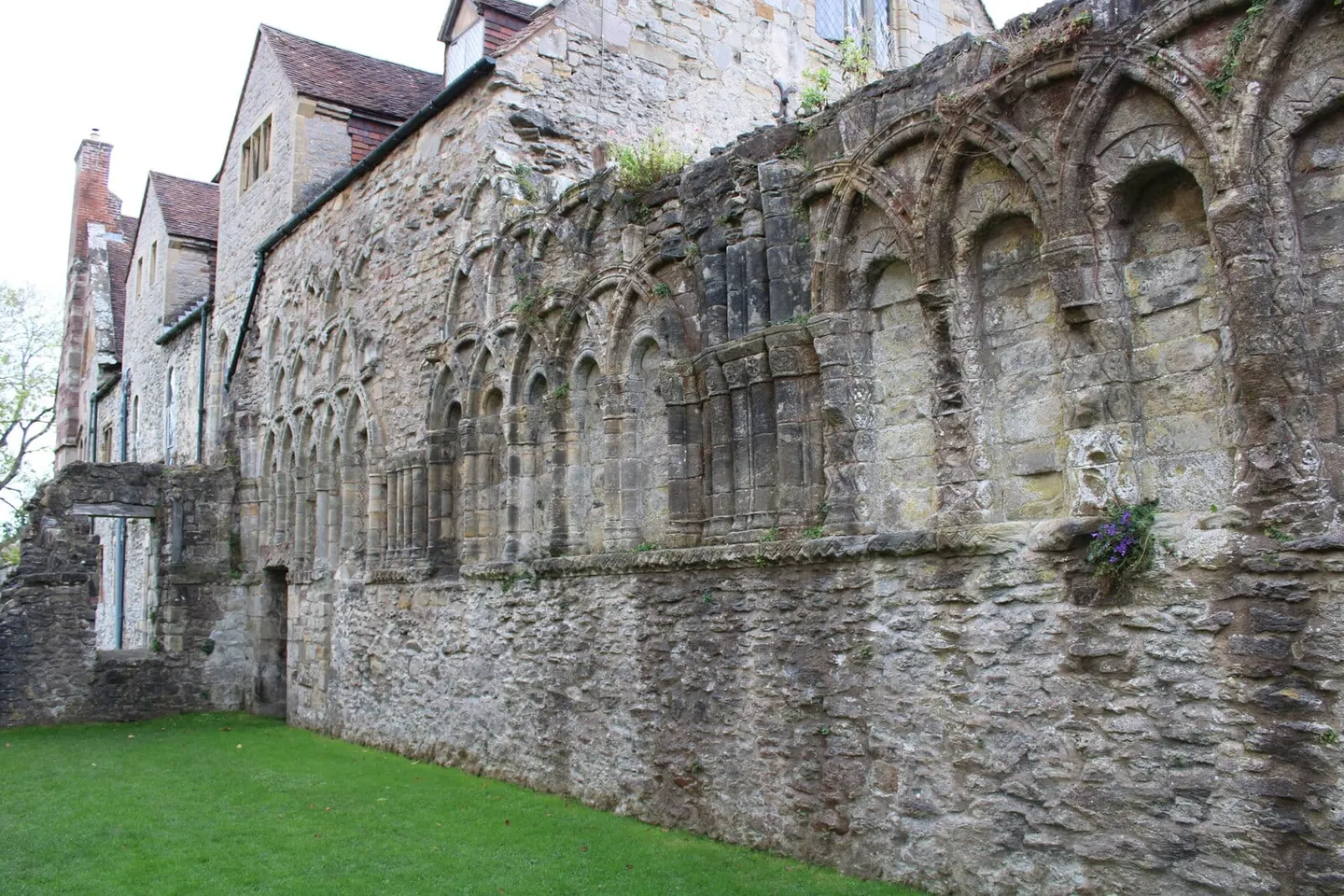
Cluniac priory ruins among clipped topiary in Much Wenlock, with a richly carved Norman chapter house and roots in a Saxon nunnery
Open to visitorsan English Heritage site — check opening times and admission before you go
Substantial ruinsruined, but plenty survives above ground
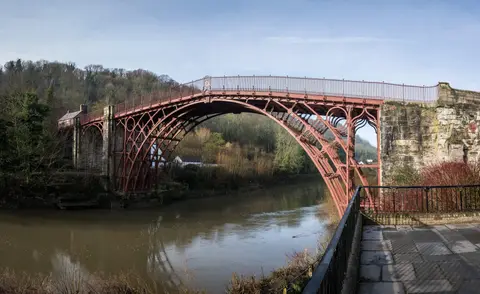
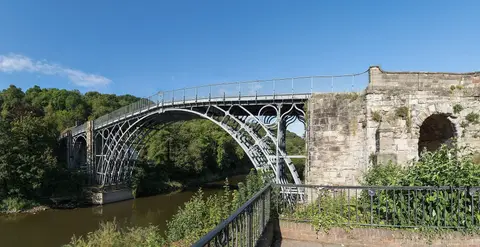
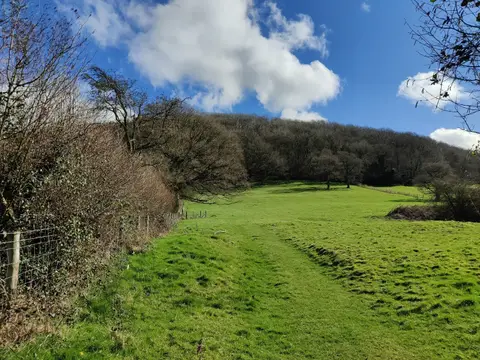
The ruins sit right on the edge of Much Wenlock, tall pale arches rising out of lawns dotted with clipped topiary yews. There was a monastery here long before the walls you see: a nunnery founded in the 7th century and led by St Milburga, a Mercian princess, whose cult drew pilgrims for centuries. After the Norman Conquest Roger de Montgomery, Earl of Shrewsbury, refounded it as a Cluniac priory — the Cluniacs being a grand, elaborate branch of the Benedictine monks, based on the abbey of Cluny in France. The best of what survives is the Norman chapter house, the room where the monks met, its walls covered in interlacing blind arcading, along with the remains of an unusual lavabo where they washed before meals. Henry VIII closed the priory in 1540. English Heritage cares for it. You are a short walk from the centre of Much Wenlock and Holy Trinity Church; Wenlock Edge and, further off, the Iron Bridge are both worth folding into a visit.
More at the National Heritage List entry