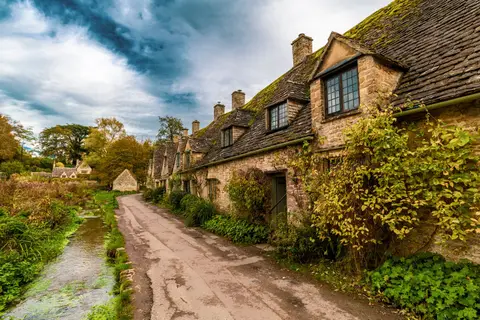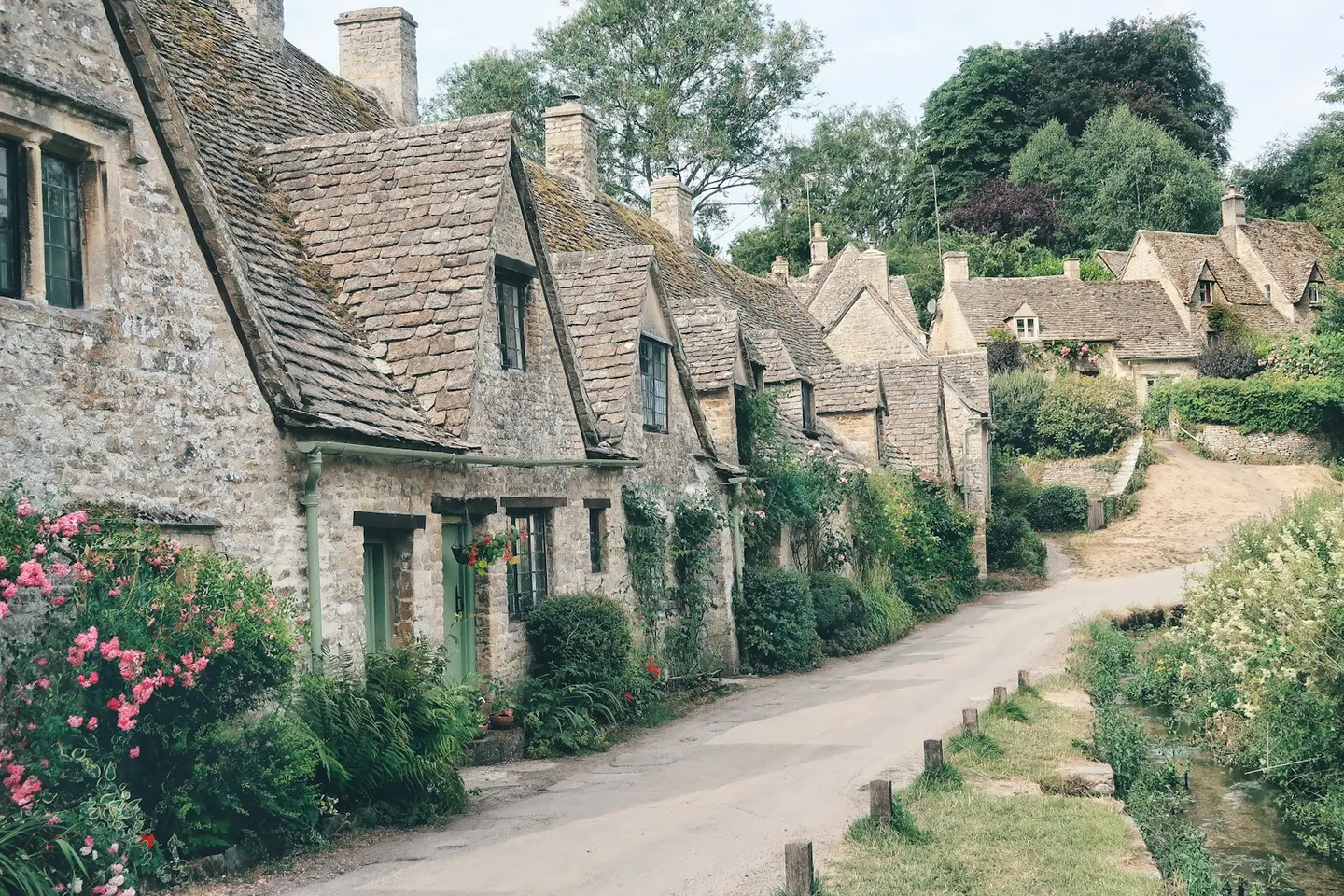
A short row of honey-stone weavers' cottages that turns up on postcards, tea towels and the inside of the British passport
Open accessNational Trust land — free to wander
Most people come to Bibury for one short terrace. Arlington Row is a line of steep-roofed weavers’ cottages in Cotswold stone, built around the fourteenth century as a wool store and converted to housing in the seventeenth. The National Trust owns the row, though the cottages are lived in, so you look from the lane rather than go inside. In front of it lies Rack Isle, a boggy water meadow where cloth was once hung out to dry on racks, now left to birds and wildflowers.
The rest of the village follows the River Coln along the valley, with a trout farm and St Mary’s Church, which keeps Saxon stonework under its later medieval fabric. William Morris is said to have called Bibury the most beautiful village in England, and the crowds have taken him at his word ever since, so the main street can be busy and the parking tight. Quieter places sit a few miles off down the Coln, among them Coln St Aldwyns and Fairford, the latter worth the detour for the complete set of medieval glass in its church.