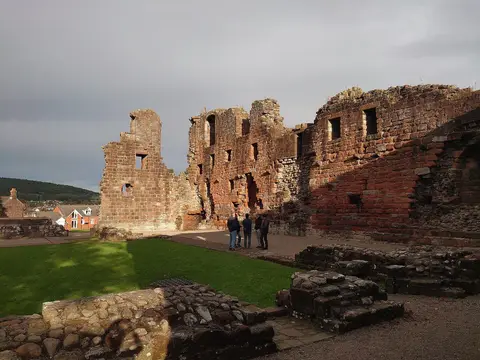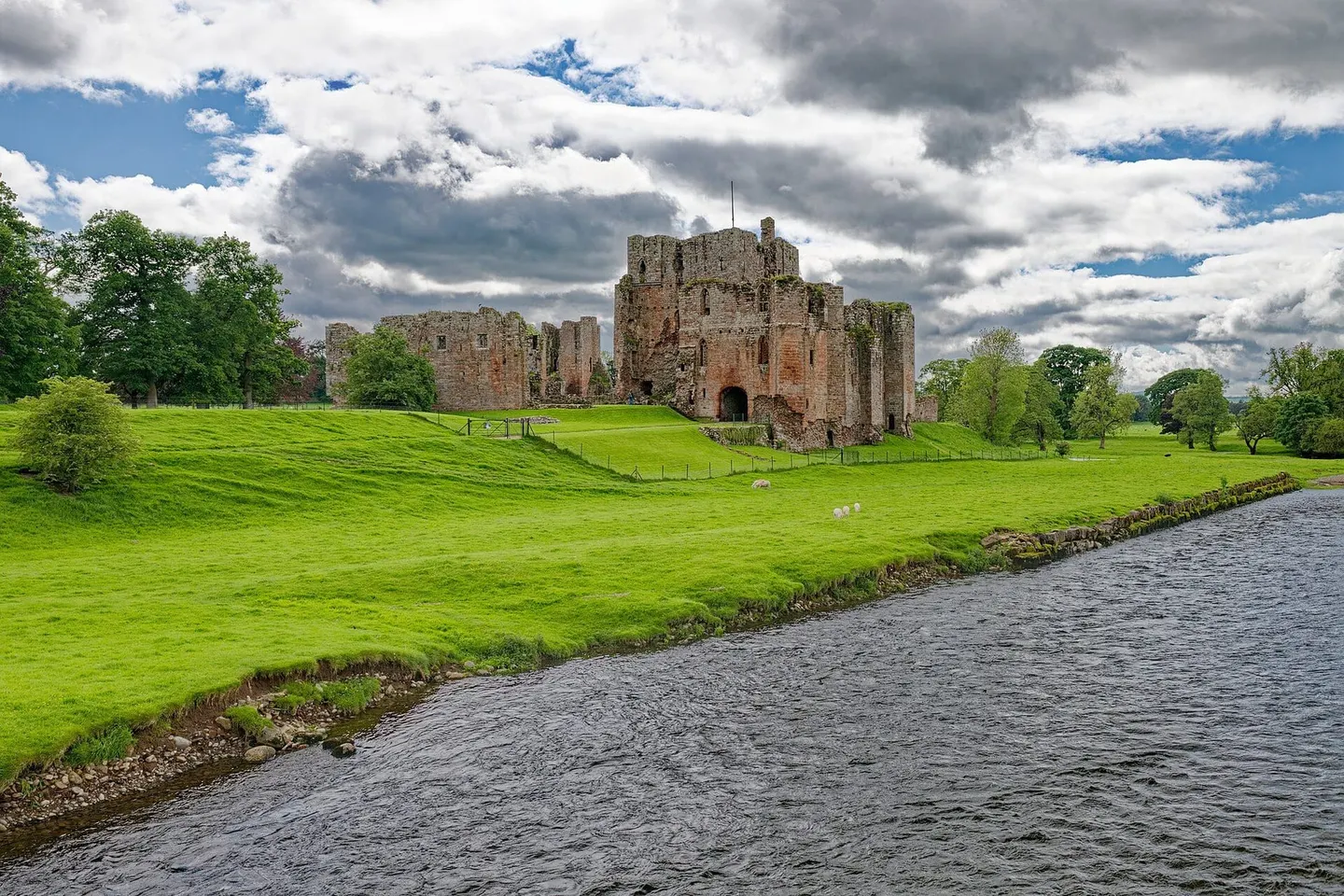
A red sandstone castle beside the grassy banks of Brocavum, a Roman fort built where roads met at a crossing of the River Eamont
Open to visitorsan English Heritage site — check opening times and admission before you go
Substantial ruinsruined, but plenty survives above ground
Three Roman roads met near this crossing of the River Eamont, just south-east of Penrith, and the army put a fort here to control them. The Romans called it Brocavum. Archaeologists have hardly touched the fort itself, which today shows as low banks and ditches in the field beside the castle, but some of its stone went into the medieval building, including a Roman tombstone that ended up as a ceiling slab in a passage of the keep.
Robert de Vieuxpont, one of King John’s few loyal barons in the north, began the castle in the early 13th century with a stone keep inside an earth bank and timber fence. The Clifford family gained it by marriage later that century, and when war with Scotland broke out in 1296 Robert Clifford made Brougham his main base on the border. He replaced the fence with a stone curtain wall, added a double gatehouse and built the Tower of League, a four-storey block of private rooms in one corner. Edward I visited in 1300, and a Scottish raid sacked the castle in 1388.
Brougham was patched up for a visit by James I in 1617, then neglected again. Lady Anne Clifford, who inherited her family’s northern estates in 1643, restored it along with her castles at Appleby and Brough, and she died here in 1676. Her grandson, the Earl of Thanet, sold off the furnishings in 1714 and let the shell decay.
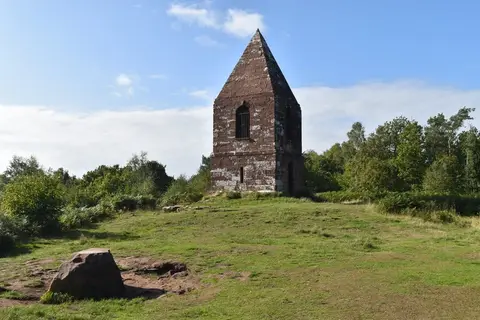
You pay to go in, and a spiral stair climbs to the top of the keep for a wide view of the Eden valley. The Countess Pillar, which Lady Anne put up to mark her last parting from her mother, is beside the road about a kilometre east, though it is closed to visitors during roadworks. Penrith Castle is about three kilometres west, by Penrith station.
Full name: Brougham Roman fort (Brocavum) and civil settlement and Brougham Castle
More at the National Heritage List entry