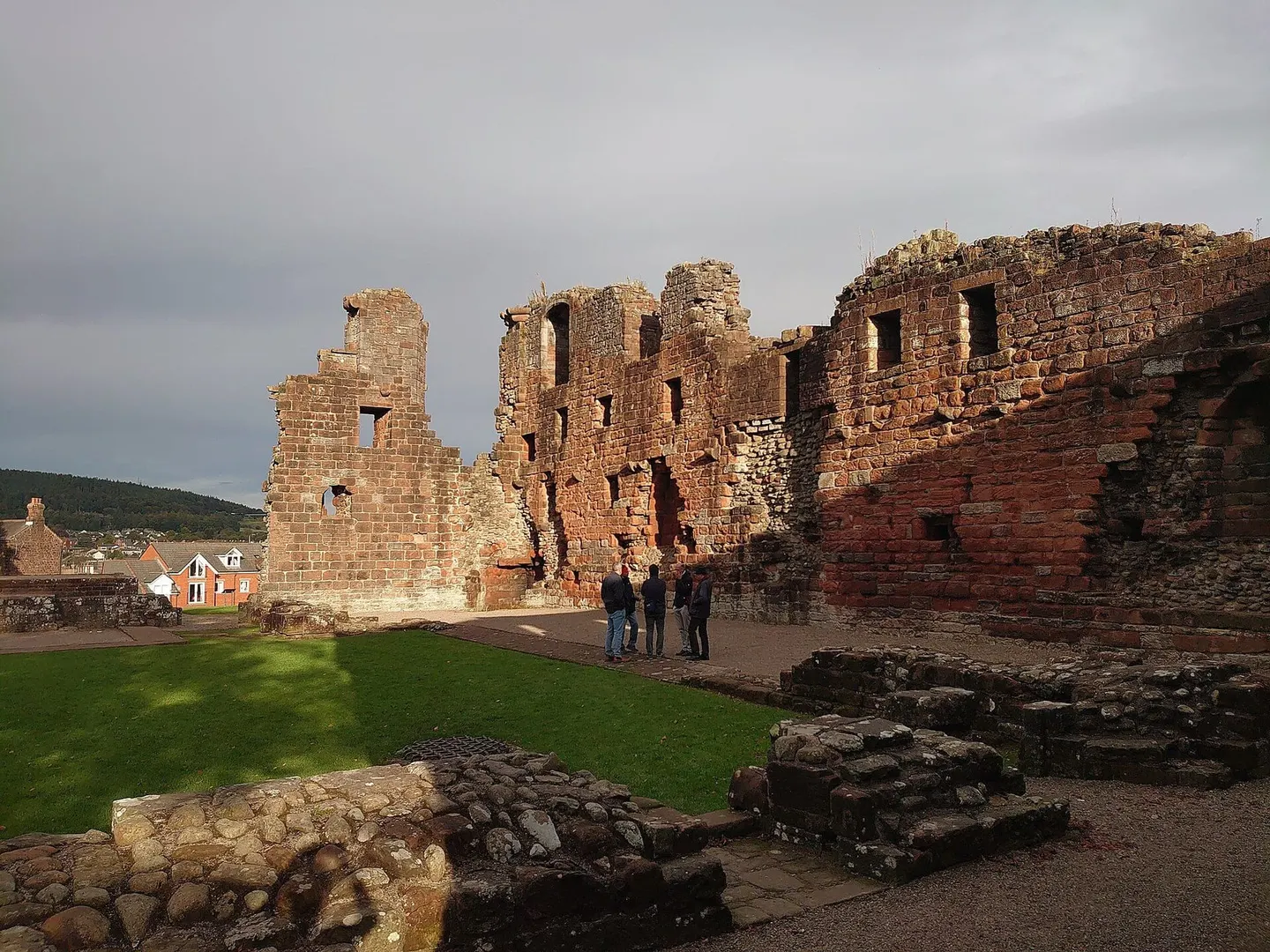
A red sandstone ruin in a public park opposite Penrith station, begun for Ralph Neville and later a residence of the future Richard III
Open to visitorsan English Heritage site — check opening times and admission before you go
Substantial ruinsruined, but plenty survives above ground
Ralph Neville started building Penrith Castle in the late 1390s, soon after Penrith’s manor was granted to him in 1396. As Earl of Westmorland, in charge of holding this part of the border against Scottish raids, he built in red sandstone, sections of which still stand to their full height today. After Richard Neville, nicknamed ‘the Kingmaker’, died at Barnet in 1471, the castle passed to Richard, Duke of Gloucester — later Richard III — who lived there on and off until 1483 while serving as Sheriff of Cumberland and Warden of the West March, and added grander private quarters of his own.
Once Richard took the throne, the castle was never lived in again, and by the late 17th century it was in ruins. It changed hands several times over the next two centuries before the Lancaster and Carlisle Railway bought the site in the 1840s to build Penrith railway station, a project that took up roughly half of the medieval castle’s footprint. The remaining walls became a public park in the early 20th century, and have been cared for since by what is now English Heritage. One dig here turned up an odd find, an elephant’s tooth from the old moat, later dated by radiocarbon to somewhere between 1670 and 1880 and thought to have come from a travelling circus animal, now kept in the Penrith and Eden Museum.
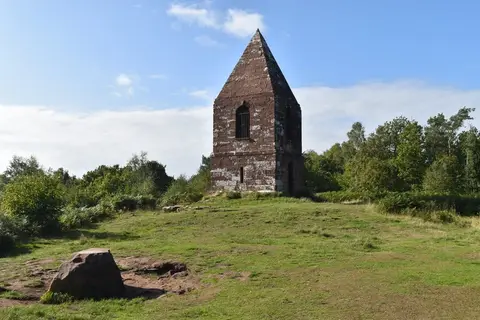
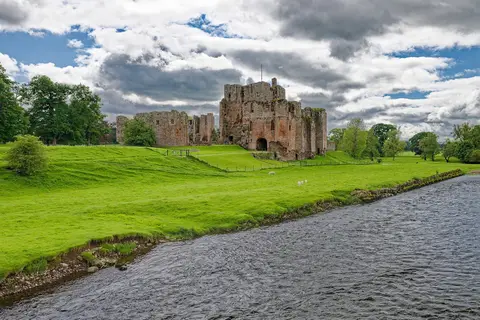
The castle is free to visit and keeps the same opening hours as the park around it. Brougham Castle and Roman fort is a short drive away, and Penrith Beacon stands on the wooded hill above the town.