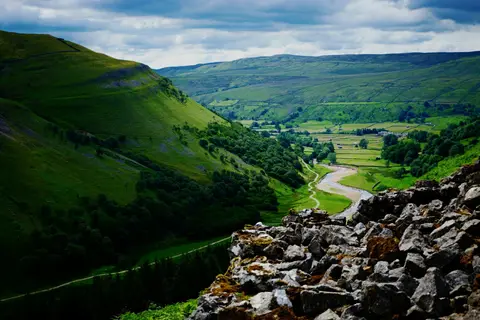
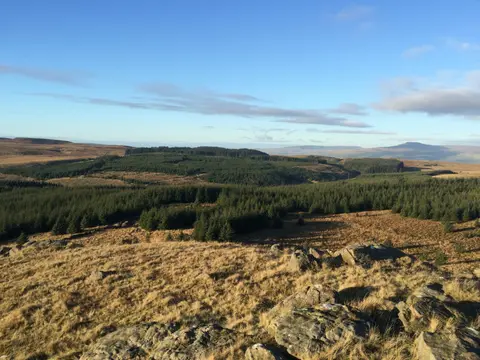
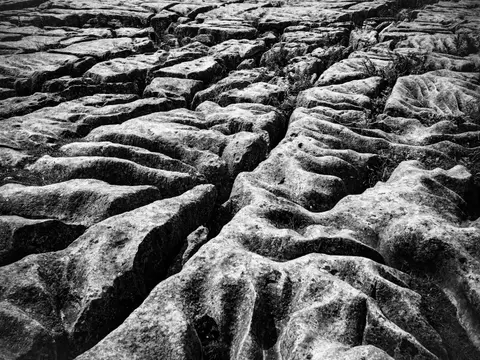
Limestone cliffs above Settle with Victoria Cave, where bones of hippos, hyenas and elephants were dug out of the floor
Open accesson open access land, where the right to roam applies
Langcliffe Scar is part of a line of white limestone cliffs on the hills north-east of Settle, and the best known of the caves along it is Victoria Cave. In 1837 Michael Horner, who worked for a Settle plumber named Joseph Jackson, squeezed through a small hole in the scar after his dog and found bones and Roman coins inside. Jackson began digging, and the cave took its name from Queen Victoria’s coronation the following year. Excavations through the 19th century and since have turned up animal bones well over 100,000 years old, including hippopotamus, elephant, rhinoceros and the hyenas that dragged many of them in. A barbed harpoon point made of antler, about 11,000 years old, is among the earliest signs of people in the Yorkshire Dales. Jubilee Cave and Albert Cave are smaller openings in the same cliffs.
The cave mouth is a short scramble up a scree slope from the path, and it makes an impressive arch to stand in front of. Signs warn you not to go further in because of the risk of rockfall. The usual walk is a loop from Settle past Attermire Scar, and the cave is also a scheduled monument, so leave everything where it lies. While you are near, the Hoffmann Kiln is down the hill at Langcliffe.
Full name: Langcliffe Scars and Jubilee, Albert and Victoria Caves