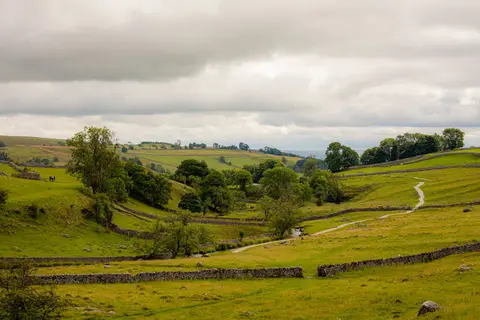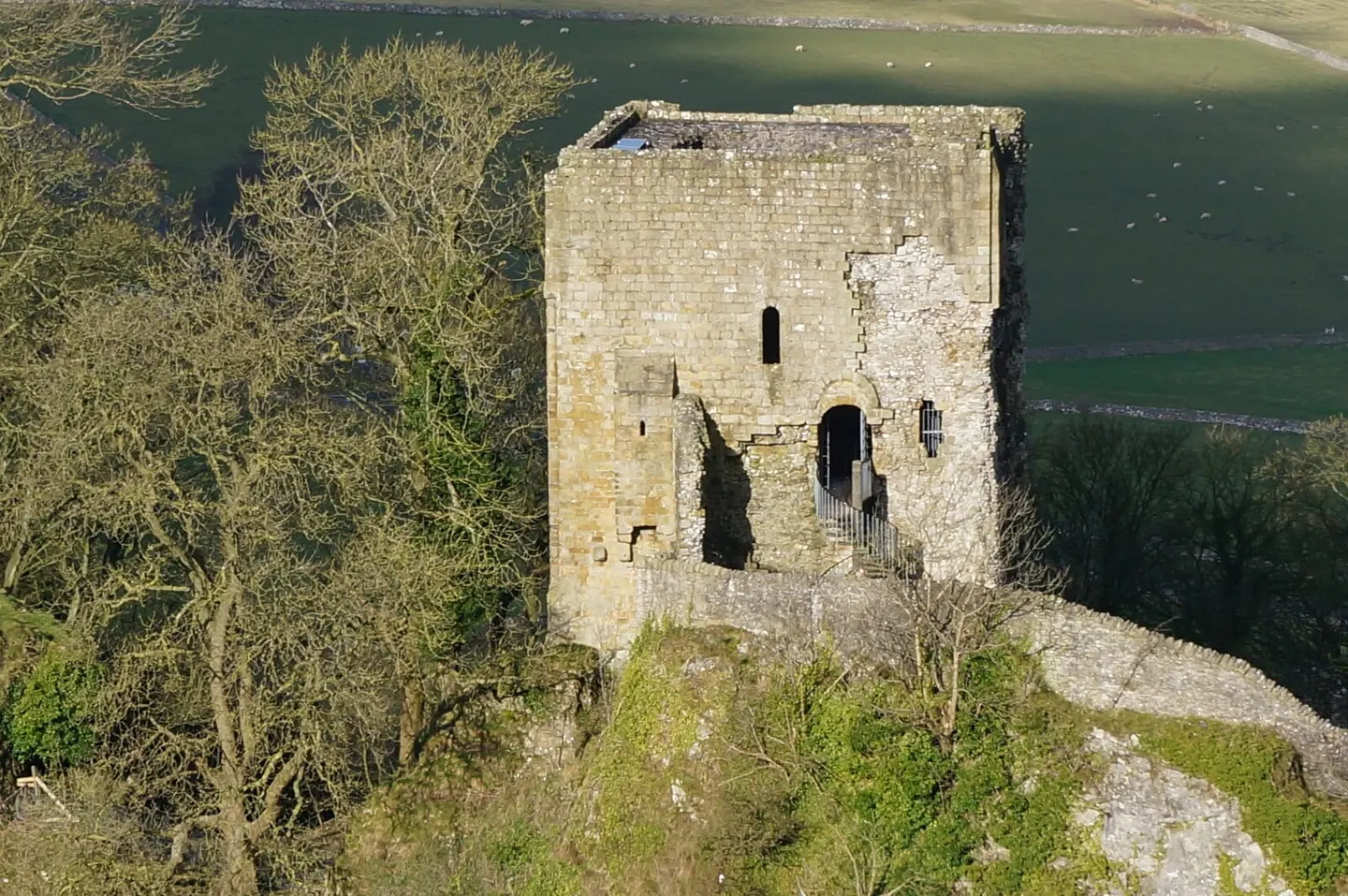
A Norman keep on a high limestone spur above Castleton, with big views over the Hope Valley
Open to visitorsan English Heritage site — check opening times and admission before you go
Substantial ruinsruined, but plenty survives above ground
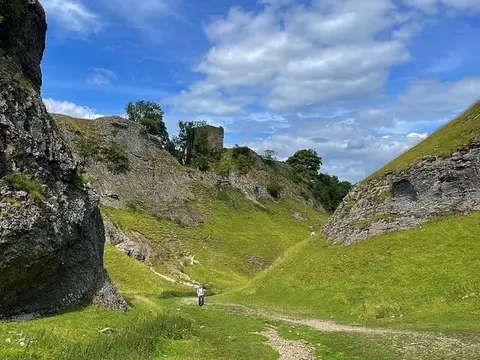
Peveril Castle stands high on a limestone spur above the village of Castleton, in the Hope Valley of the Peak District. It is one of the earliest Norman stone castles in England, begun by William Peverel, a follower of William the Conqueror, not long after 1066. The tall square keep — the strong main tower at the heart of the castle — was added by Henry II in 1176 and still stands close to its full height, a landmark you can pick out from far down the valley.
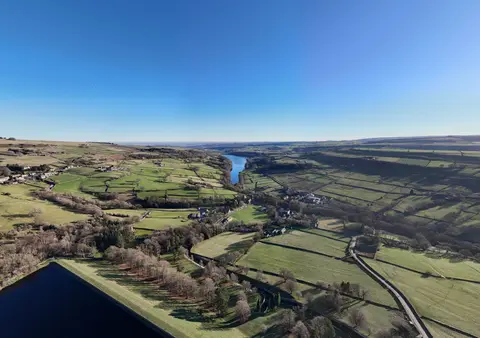
Much of its strength came from the position itself. The spur drops away in steep crags on two sides, and the ground behind falls into a rocky cleft, so there was never much need for thick walls all the way round. From up here the views stretch across the rooftops of Castleton and out along the Hope Valley.
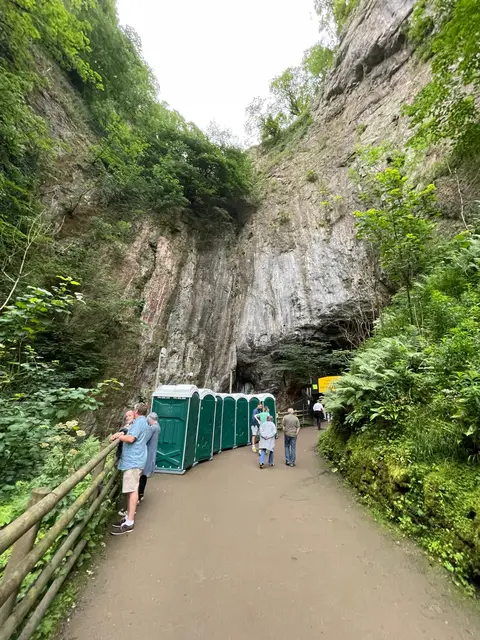
English Heritage runs the castle. Getting up to it is the catch: the path climbs steeply from the village and the last stretch is a stiff pull, so take your time and wear proper shoes. Directly below the crag lies the huge natural opening of Peak Cavern, one of the finest show caves in the country, and the dry limestone valley of Cave Dale cuts up behind the castle, giving another dramatic angle on the walls.
More at the National Heritage List entry