Sweetheart Abbey
National iconA red-sandstone ruin founded by a widow who was buried with her husband's embalmed heart
Open to visitorsa Historic Environment Scotland site — many are free to wander; staffed ones charge and keep set hours
Substantial ruinsruined, but plenty survives above ground
Sweetheart Abbey gets its name from a love story. Lady Dervorgilla of Galloway founded it in 1273 in memory of her husband, John Balliol, and when he died she had his embalmed heart kept in a casket that she carried with her for the rest of her life. She was buried in front of the abbey’s high altar in 1289 with that casket beside her, and the monks called the place Dulce Cor, Latin for “sweet heart.” Dervorgilla was no minor figure: she also founded Balliol College at Oxford, which her husband had begun.
The abbey was built of warm red sandstone for Cistercian monks, a plain-living, self-sufficient branch of the Benedictines. Much of the church still stands, along with a rare surviving precinct wall, the great boundary wall that once enclosed the whole monastery.
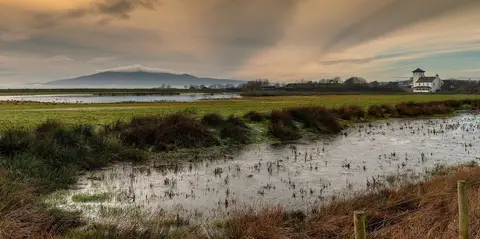
Historic Environment Scotland runs the ruins, in the village of New Abbey that grew up around them. It’s good walking country: Criffel, the big hill above the Solway coast, is a few miles south, and the wetland reserve at Caerlaverock, along with its castle, sits just across the estuary.