The cradle of Christianity in northern England, on tidal Holy Island, and the target of the first great Viking raid
Open to visitorsan English Heritage site — check opening times and admission before you go
Substantial ruinsruined, but plenty survives above ground
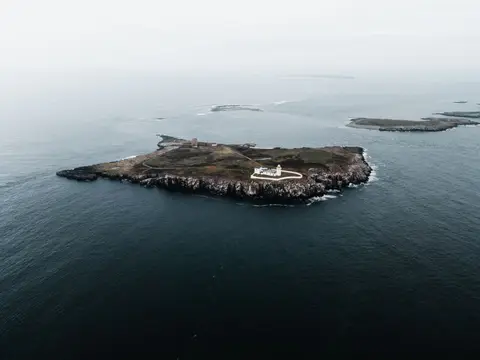
Lindisfarne Priory sits on Holy Island, a tidal island off the Northumberland coast. This is where Christianity took hold in the north of England. The Irish monk Aidan came over from Iona in 635 and founded a monastery here, and the community he started became famous. St Cuthbert was based here, and the beautifully illustrated Lindisfarne Gospels were made here around the year 700. In 793 Viking raiders attacked the monastery, a shock that ran through Christian Europe and is often taken as the start of the Viking age in Britain.
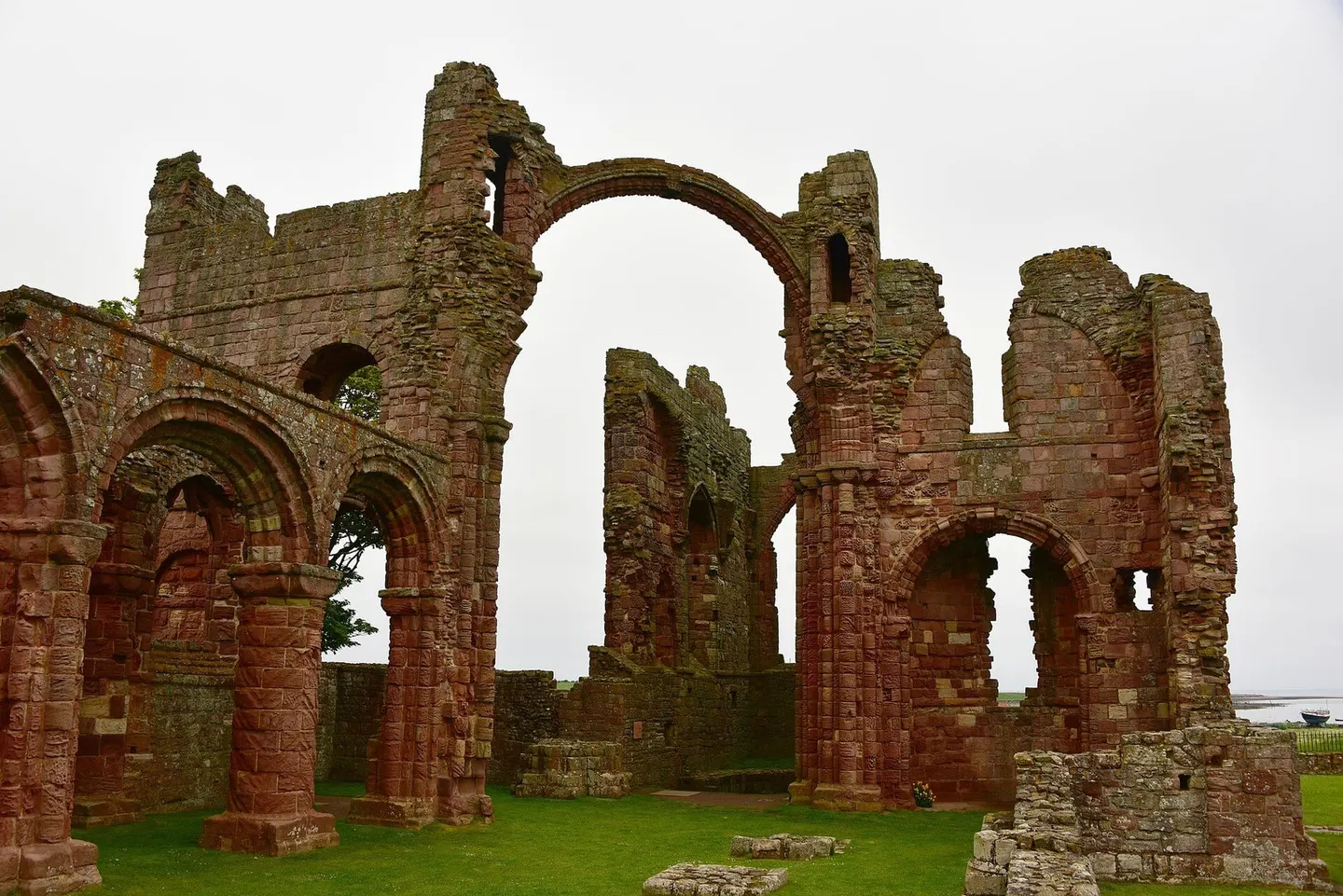
The ruins you visit today are younger: a priory, a monastery run by a prior and smaller than an abbey, re-founded by monks from Durham after the Norman Conquest. Its best-known feature is the “rainbow arch”, a slender rib of stone still curving through the air where the tower over the crossing once stood.
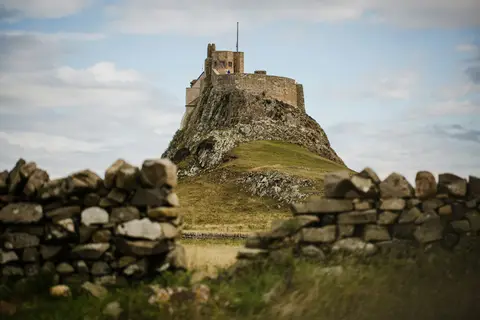
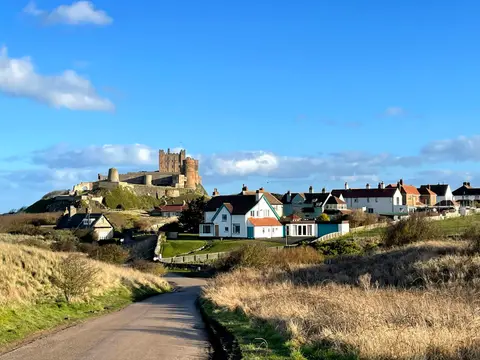
The catch, and it’s the important one, is the tide. Holy Island is reached by a causeway that floods twice a day, and every year people get caught out on it. Check the published safe crossing times before you set off, and don’t chance it. English Heritage runs the priory, the parish church next door is worth a look, and Lindisfarne Castle stands a mile east across the island.
More at the National Heritage List entry