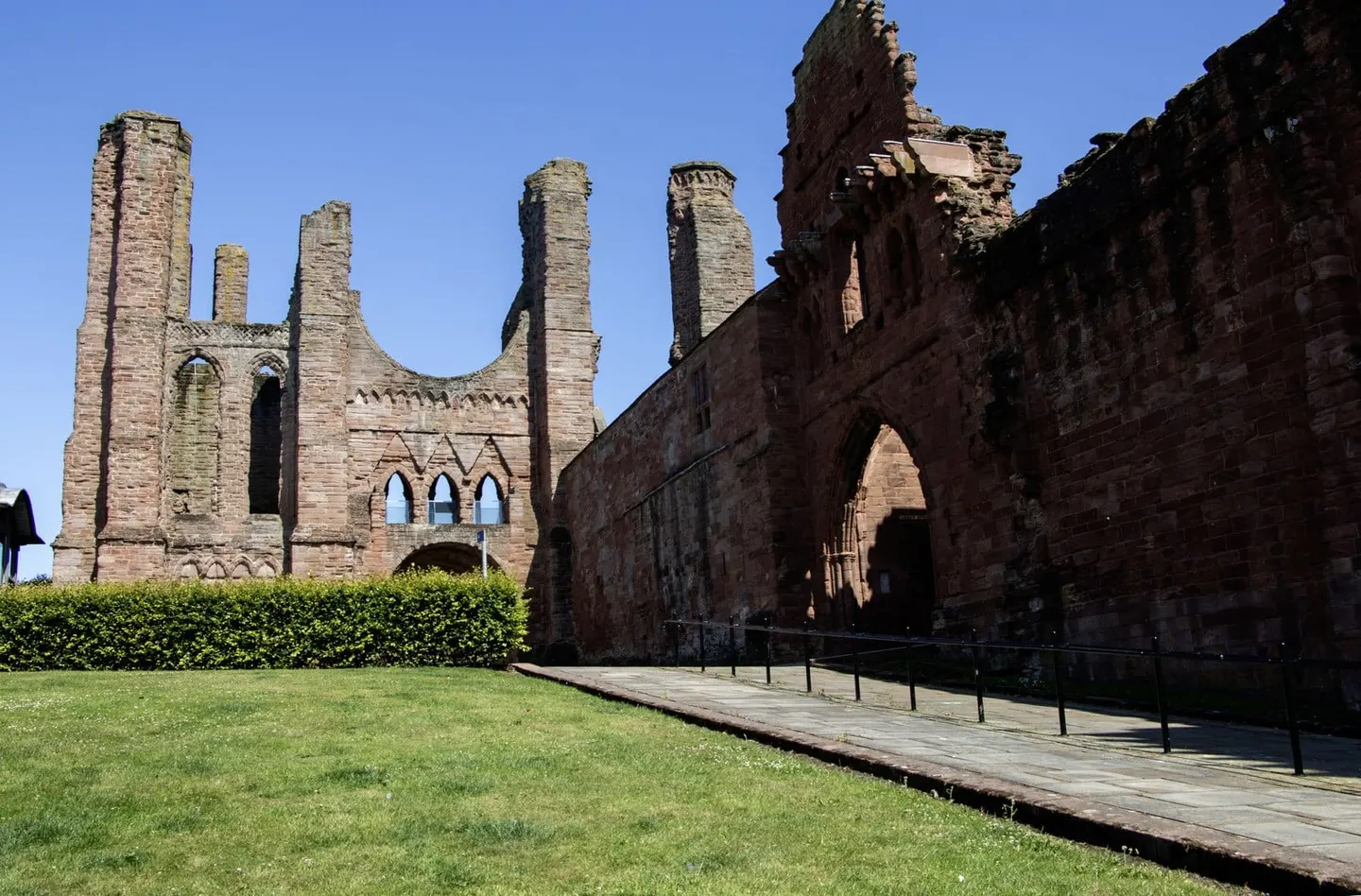
The great red-sandstone ruin where Scotland's nobles sealed the Declaration of Arbroath in 1320
Open to visitorsa Historic Environment Scotland site — many are free to wander; staffed ones charge and keep set hours
Substantial ruinsruined, but plenty survives above ground
You’ll know Arbroath Abbey best for one document. In 1320 a group of Scottish barons put their seals to the Declaration of Arbroath, a letter to the Pope arguing that Scotland was an independent kingdom and meant to stay one. The abbey itself was much older: William the Lion founded it in 1178 for monks of the Tironensian order, a reforming French branch of the Benedictines, and dedicated it to Thomas Becket, the archbishop murdered at Canterbury a few years before. William was buried here when he died in 1214.
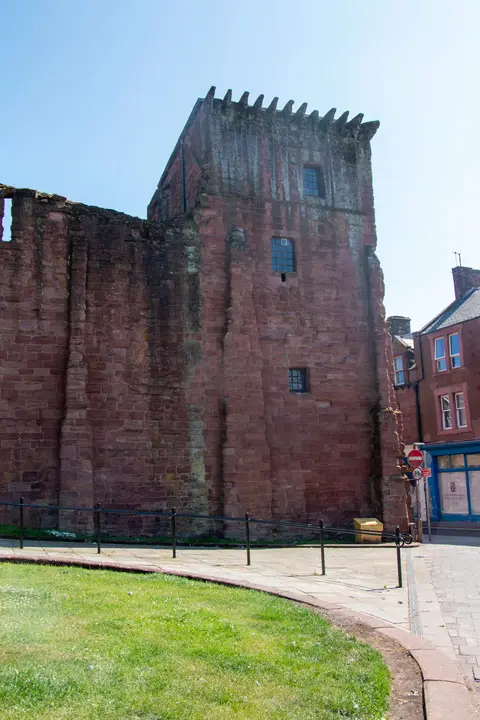
The abbey was built of the local red sandstone, and even as a ruin the west front and the round window high in the south transept still stand tall. The transept is the arm of the church that crosses the main body, and that circular window, lit up at night, is known locally as the Round O.
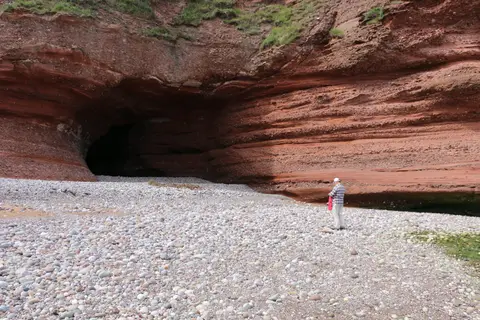
Historic Environment Scotland runs the site, with a visitor centre and the surviving Abbot’s House alongside the ruins. It stands right in the middle of Arbroath, a couple of minutes’ walk from the harbour, in the town that gives its name to Arbroath smokies, the smoked haddock. If you’re making a day of it, the coast walk out along Seaton Cliffs to the north is worth the time, and The Old Brewhouse is close by for something to eat.