The largest surviving inland canal port in the country, where tramway met water in the Derbyshire hills
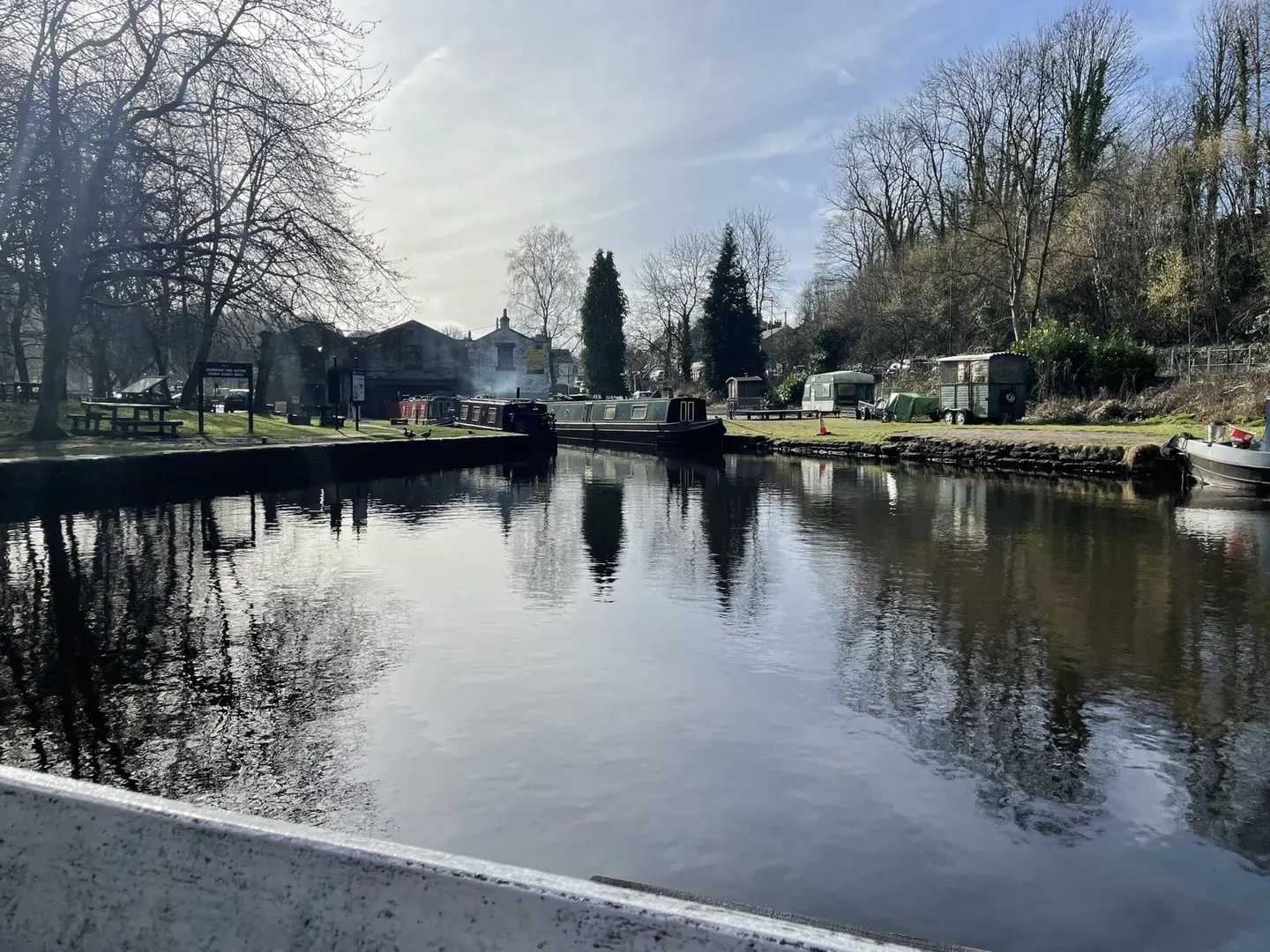
Bugsworth Basin is the terminus of the Peak Forest Canal, at Buxworth in the Derbyshire hills near Whaley Bridge. It was the meeting point of the canal and the Peak Forest Tramway, a horse-worked plateway that brought limestone down from the quarries around Dove Holes, above Buxton. At the basin the stone was tipped from tramway wagons into narrow boats, or burned in kilns on site to make lime, and sent on to the mills and fields of Manchester and beyond. In its busiest years it handled hundreds of tonnes a day, and it is the largest surviving inland canal port in Britain.
The canal was built under an act of 1794, with Benjamin Outram as engineer, and completed in 1804. Trade held up through the nineteenth century but fell away in the twentieth, and the basin closed in the early 1920s and was left derelict for decades. From 1968 the Inland Waterways Protection Society took on its restoration, a labour of more than forty years, and the basin reopened to boats in 2005. It survives as the only intact canal-and-tramway interchange left in the country, and is a scheduled ancient monument.
The site is open to walk at any time, free of charge, with the stone basins, arms, tramway lines and limekilns laid out to see and interpretation boards to explain them. It sits in the village of Buxworth, a short way off the road between Whaley Bridge and Chapel-en-le-Frith, and the towpath leads out along the canal towards New Mills.