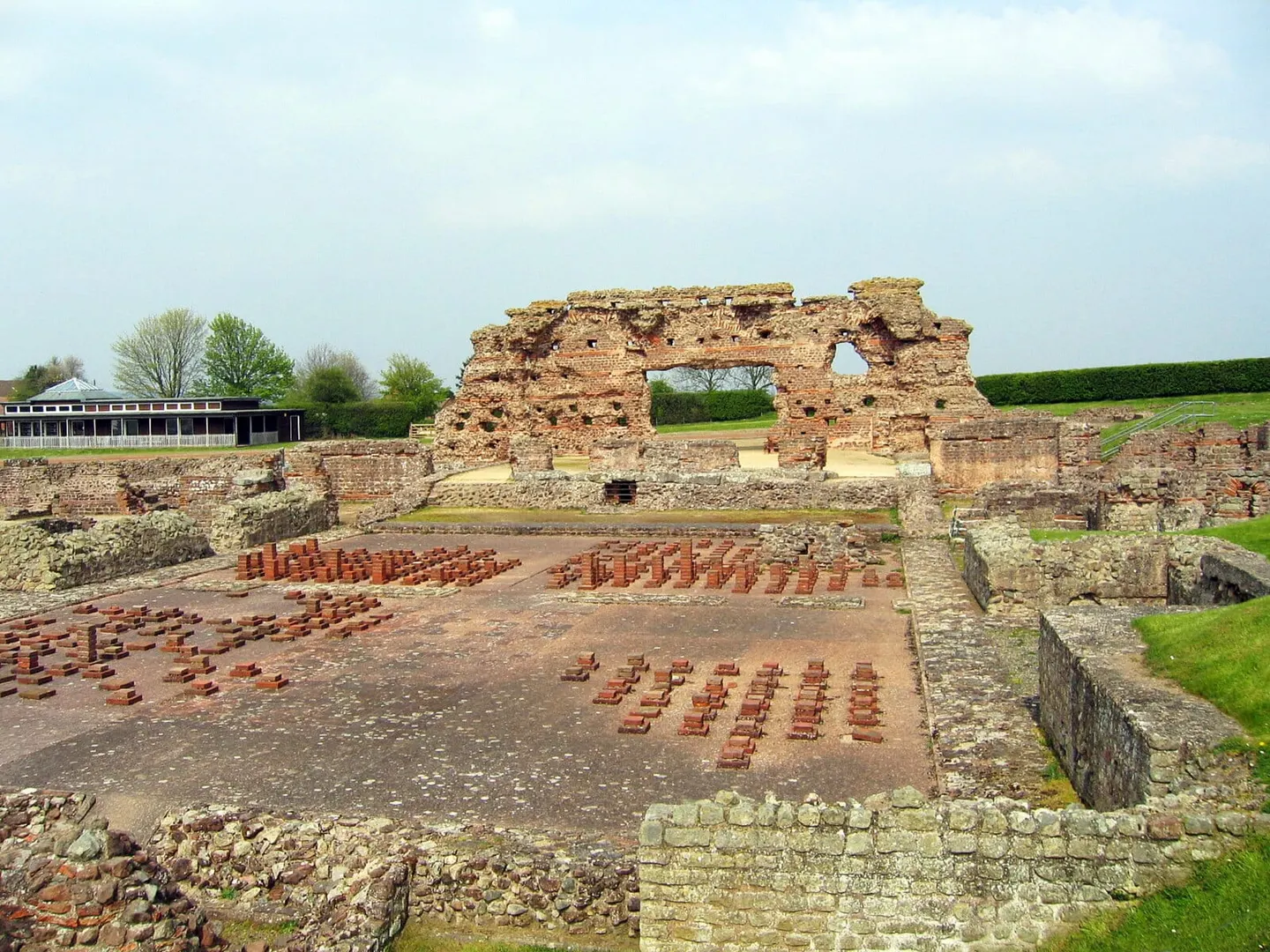
One of the largest Roman cities in Britain, with a huge fragment of the baths wall still standing in a Shropshire field
Open to visitorsan English Heritage site — check opening times and admission before you go
Substantial ruinsruined, but plenty survives above ground
It started as a legionary fortress and grew into a city. Wroxeter — the Romans called it Viroconium — became one of the largest towns in Roman Britain, roughly the size of Pompeii at its height, laid out with a forum, public baths and streets of houses near the bank of the River Severn. The legion moved on to Chester, and the town that stayed behind served the local Cornovii tribe as their regional capital for generations.
The piece everyone comes to see is the Old Work, a tall chunk of wall from the public baths that has stood in the open for the best part of two thousand years, one of the largest free-standing pieces of Roman masonry in the country. Around it, low foundations trace the bath suite, and English Heritage has built a full reconstruction of a Roman town house on the site to show how people actually lived. There is a museum with finds from the digs.
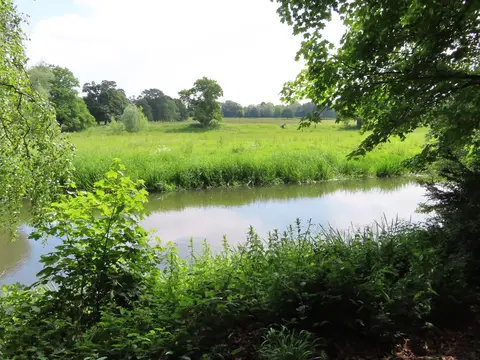
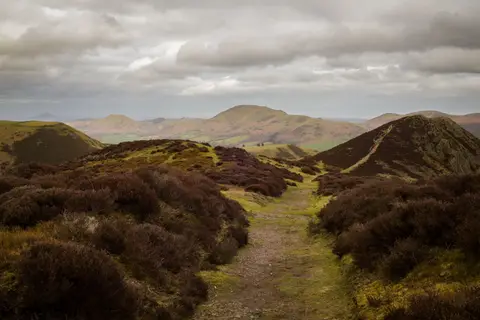
English Heritage runs Wroxeter, and it is an easy, flat visit. The Severn Way follows the river close by, Attingham Park is just to the north, and The Wrekin, the landmark hill of the Shropshire Hills, rises a few miles to the east.
More at the National Heritage List entry