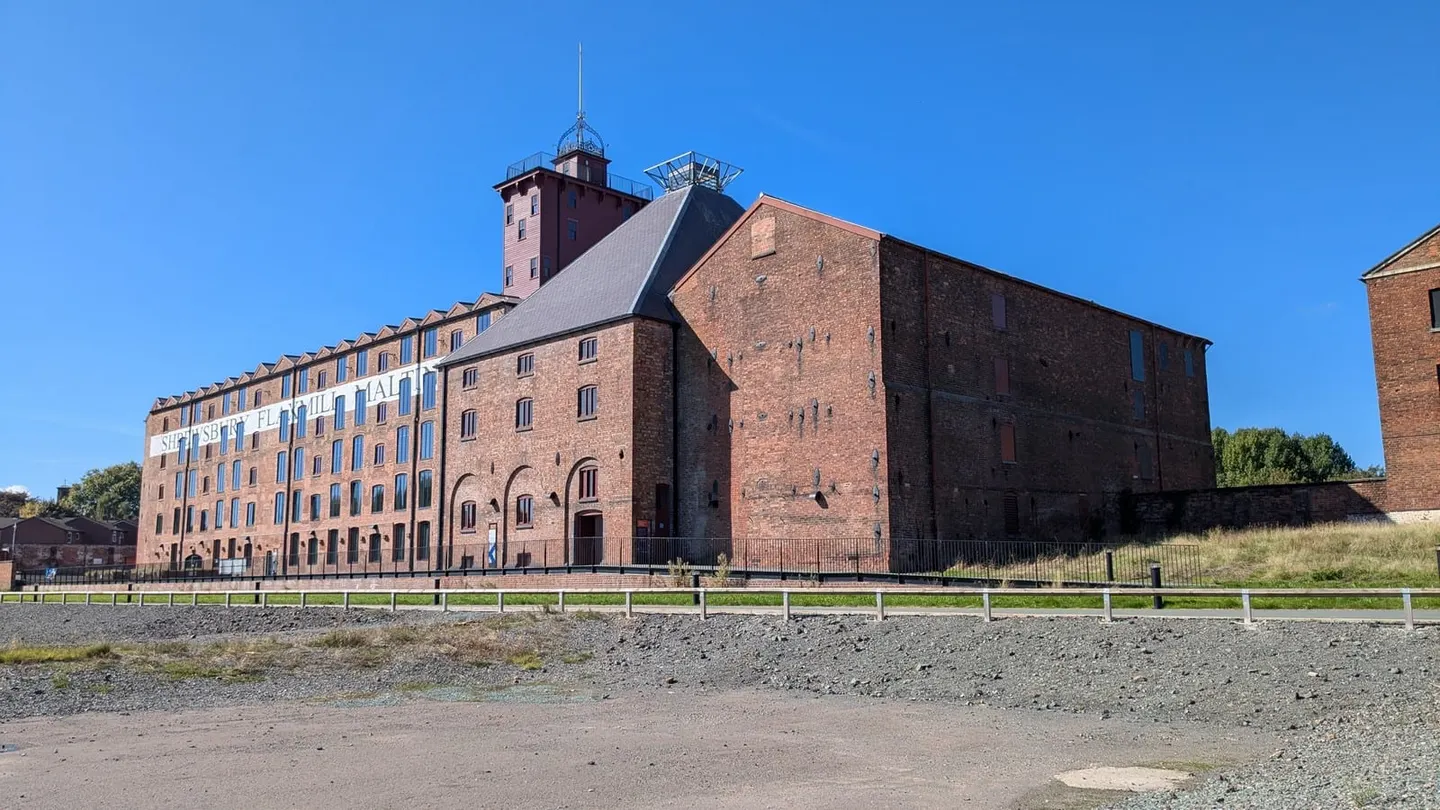
The Ditherington Flax Mill, raised between 1796 and 1800, the world's first iron-framed building and ancestor of every skyscraper since, later a maltings and restored
Open to visitorsan English Heritage site — check opening times and admission before you go
Nothing like this had been built before — a mill frame made almost entirely of cast iron, raised here between 1796 and 1800 to end the fire risk that plagued timber-built mills. The Leeds businessman John Marshall and his Shrewsbury partners, the Benyon brothers, commissioned it, and the design came from their new partner Charles Bage, who had taught himself an unusual amount about building with cast iron.
The columns and beams came from William Hazledine’s foundry nearby at Coleham — the same works Thomas Telford later used for his Pontcysyllte Aqueduct and the Menai Suspension Bridge in Wales. Inside, three rows of iron columns stretch across each floor from end to end, supporting iron beams and shallow brick vaults, while outside the building still looks much like any other plain brick mill of the age, five storeys of regular windows beside the old Shrewsbury Canal.
Flax-spinning ended here in 1886, and the mill spent much of the next century as a maltings, then briefly used as an army barracks in the Second World War, when recruits nicknamed it the Rat Hotel for its bare, unheated floors. It closed for good in 1987 and stood empty for years until Historic England restored it, fitting a hidden steel frame to take the strain off Bage’s original ironwork. The mill reopened as a staffed museum with admission in 2022, and you can now wander its floors and learn about the mostly young workforce who once kept its machines running. It’s a short walk from Shrewsbury Station, and the ruins of Haughmond Abbey are a few miles further out.