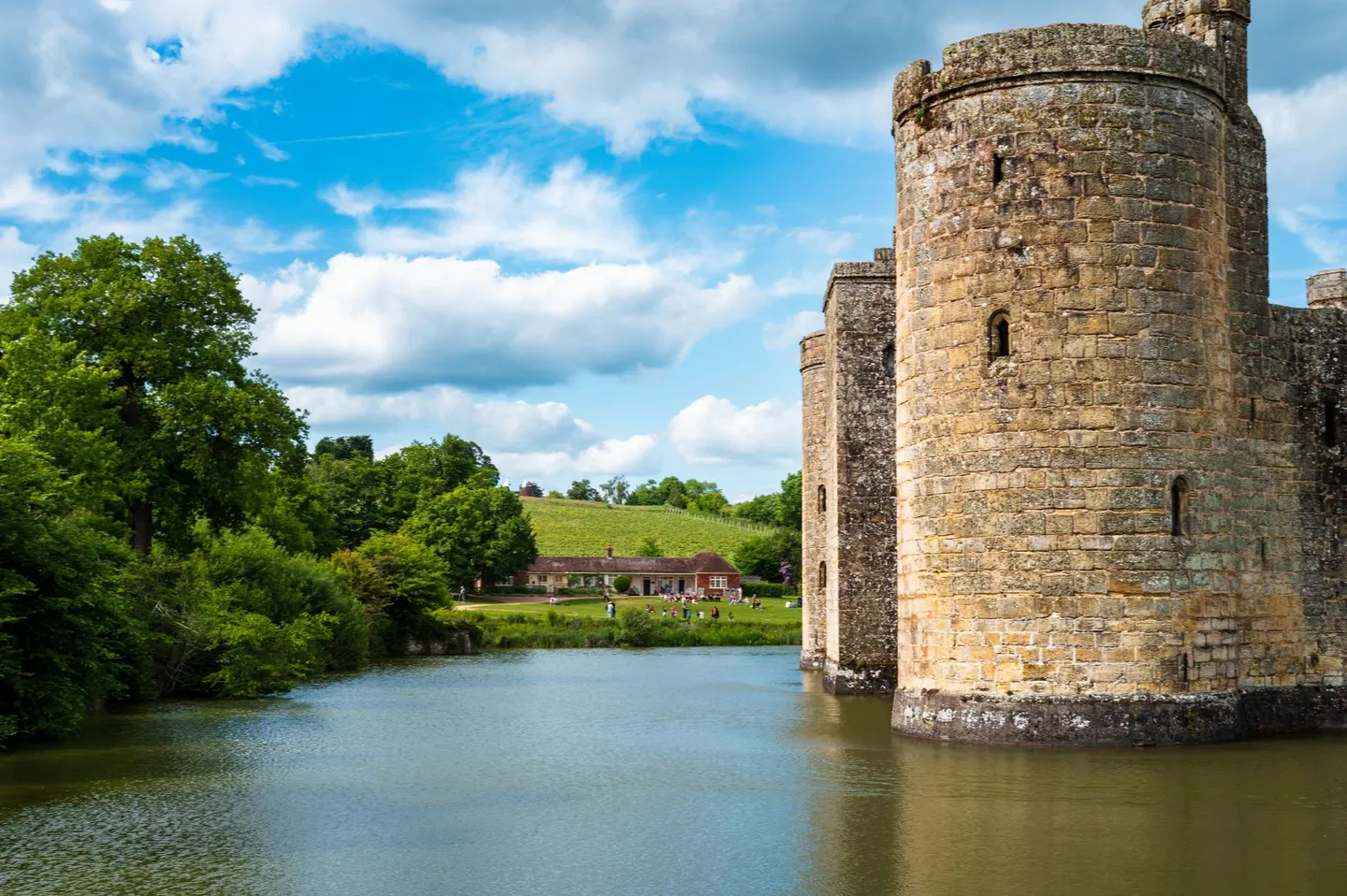
Rising out of its own moat in the High Weald, Bodiam Castle looks exactly like a castle is supposed to look
Open to visitorsa National Trust place — check opening times and admission before you go
Substantial ruinsruined, but plenty survives above ground
A licence to crenellate, granted by Richard II in 1385, let Sir Edward Dalyngrigge fortify his manor after French raiders had torched Rye and Winchelsea along the coast. What he built was a full quadrangular castle with round corner towers, a gatehouse, and a wide moat fed by local springs, which is why the name is so widely known. Whether Dalyngrigge needed all that for defence or just liked the look of it is an open question. The walls never faced a siege, so the point was never tested.
Parliament tested it eventually. During the Civil War its Royalist owner sold the castle off to pay Parliament’s fines, and the interior was gradually dismantled for reusable stone and timber, leaving it an empty shell ever since — bare walls around a square of open grass, roofless under the sky. You can still climb the towers and walk sections of the wall, which is more than most ruined castles offer. Lord Curzon bought the place in 1917, had it carefully restored and researched, and left it to the National Trust on his death in 1925, and the Trust still looks after it.
There’s a World War II pillbox tucked into the grounds too, part of the stop-line defences built when invasion looked possible again — a reminder that this stretch of Sussex has been bracing for cross-Channel trouble for the better part of six centuries.
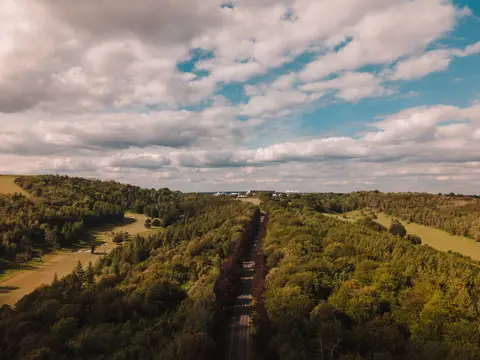
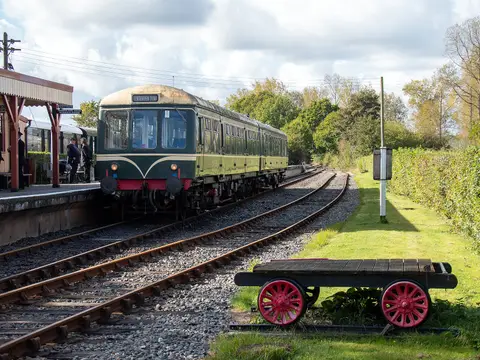
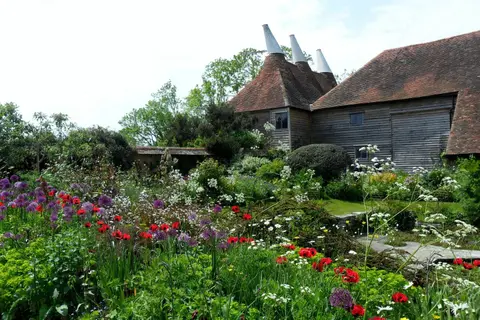
It sits in the High Weald, with Great Dixter’s garden a short way east and Battle Abbey further south if the 1066 story appeals. Robertsbridge Station is the closest stop on the line, a few miles off.
Visit on the National Trust website →
More at the National Heritage List entry