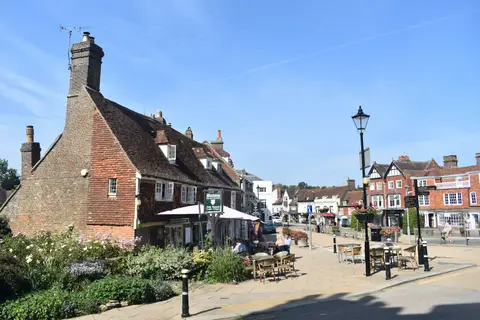
An abbey built where an English king died and the crown changed hands, all an easy walk from the station
Open to visitorsan English Heritage site — check opening times and admission before you go
Substantial ruinsruined, but plenty survives above ground
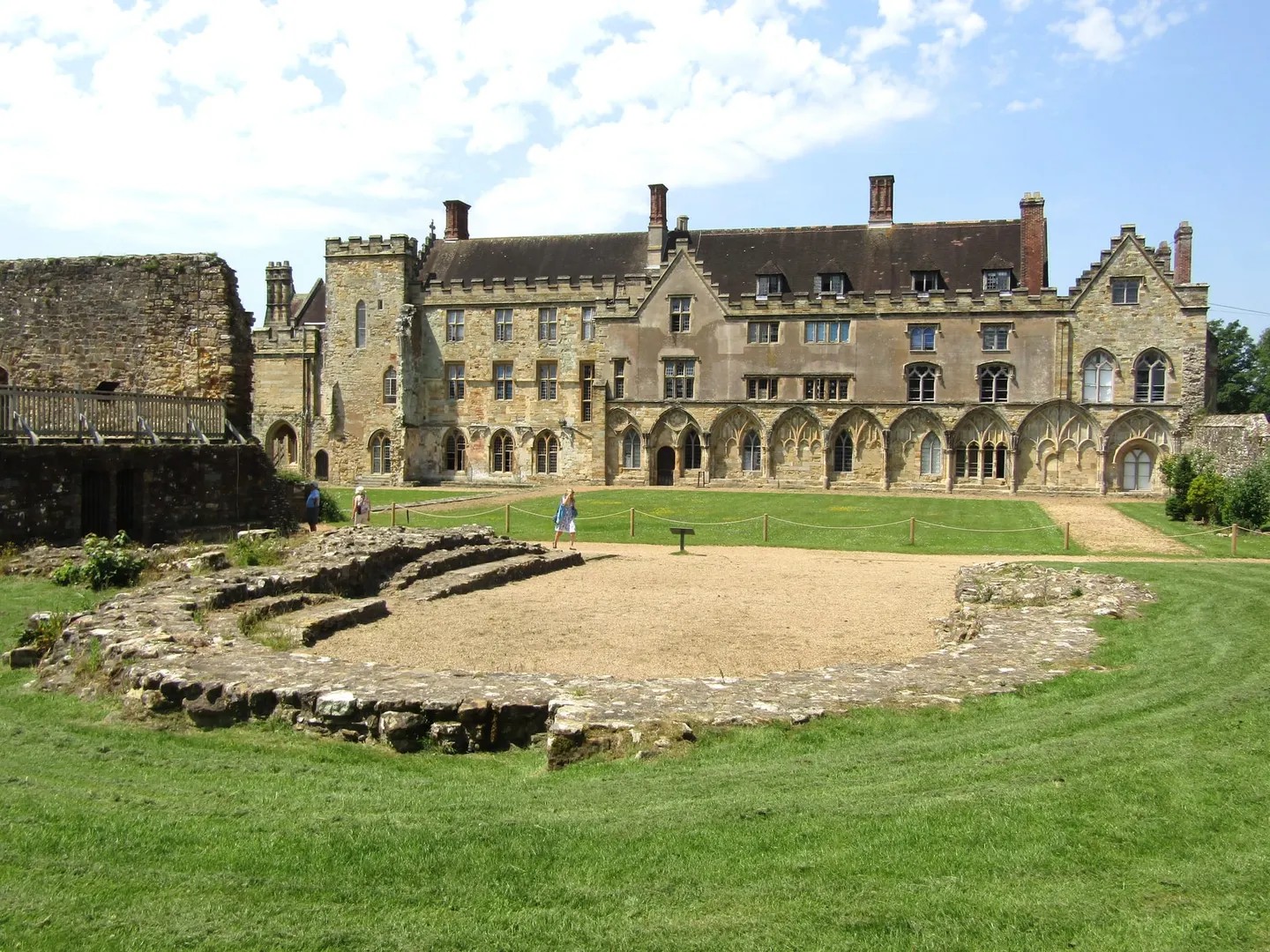
William had the abbey built where he won, as penance the Church imposed for the number of dead the Battle of Hastings left on the ground in 1066. The high altar of the abbey church was positioned, tradition says, over the spot where Harold fell — a nice piece of medieval marketing, tying the victor’s monastery to the loser’s grave in one gesture. Substantial ruins survive today alongside an impressive 14th-century gatehouse, one of the best-preserved monastic gatehouses anywhere in the country.
Henry VIII dissolved the abbey in 1538 along with everywhere else, and it passed to Sir Anthony Browne, who pulled parts of it down and built a house into what remained. The town outside the gates grew up to serve the abbey and kept its name long after the monks left. Part of the site is now a private school, which makes for an odd contrast: schoolchildren walking past ruins that mark the end of Anglo-Saxon England.
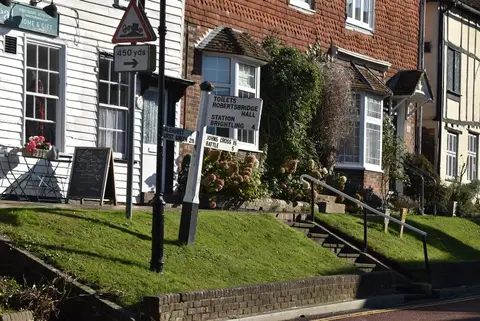
The battlefield runs alongside the abbey grounds, open for walking, with the slope Harold’s shield wall held still there to see, even if the woodland and hedgerows have moved in since. Battle Station is a short walk away, which counts as remarkably convenient for a site this old. Ashburnham Place and Robertsbridge Abbey are both within reach if the appetite for ruins and gardens hasn’t been used up, and Lake Meadow is close enough for a walk straight after.
More at the National Heritage List entry