A hall house from the Middle Ages, rebuilt by Lutyens, with a garden made internationally famous by one deeply opinionated gardener
Open to visitorscheck opening times and admission before you go
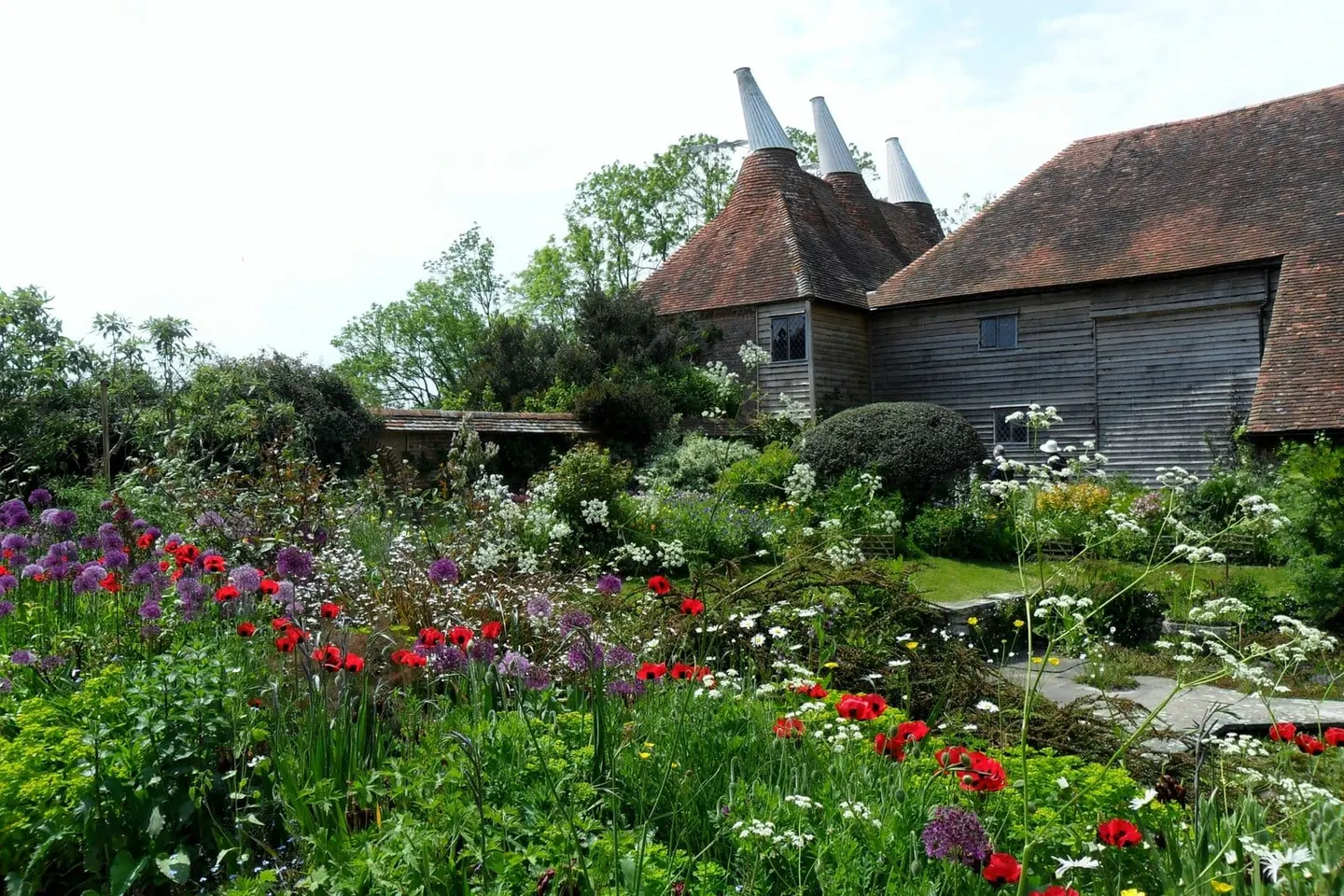
The house is medieval at its core, a hall house in the High Weald that the architect Edwin Lutyens extended in the 1910s for Nathaniel Lloyd, folding in a second timber-framed hall brought over from elsewhere so it reads as one building instead of two centuries stitched together. Lutyens also shaped much of the garden’s structure, from the paths to the clipped yew rooms, working alongside Nathaniel Lloyd, who was a topiary obsessive in his own right.
What actually made the place famous was Nathaniel’s son Christopher Lloyd, who gardened here for decades and wrote about it with an opinionated streak rare in garden journalism — he liked what he liked, said so in print, and had no time for safe, tasteful planting. In the 1990s he tore out his father’s rose garden and put in a jungle of cannas, bananas and dahlias instead, not a small thing to do to a rose garden your father planted, and it’s still there today as the Exotic Garden. The Long Border, packed tight with plant combinations most books would tell you not to attempt, is the other reason people make the trip.
Since Lloyd’s death in 2006 the garden has been run by Fergus Garrett, who worked alongside him for years and has kept the place experimental rather than preserved in aspic. It’s independent rather than National Trust-run, which suits a garden built on one man’s stubborn opinions. Northiam is a short walk away, and Bodiam Castle is close enough to combine with a visit. The house and garden open spring to autumn, Tuesday to Sunday, with tickets available on the day.