A border castle reduced to scraps by the railway, encircled by the Elizabethan ramparts that still ring the old town
Open accessfree to visit at any reasonable time
Substantial ruinsruined, but plenty survives above ground
Victorian engineers cleared most of the medieval castle to build Berwick’s railway station, which now stands where it once did. Before that clearance, this was where Edward I installed John Balliol as King of Scotland in 1292, a ruling that dragged the two kingdoms into more than a century of on-off war. The town changed hands repeatedly after that — the English seized it in 1296, Robert Bruce won it back for the Scots in 1318, and it was finally recaptured for good in 1482 — and defenders rebuilt the walls after each crisis. Little of the medieval castle itself survives today.
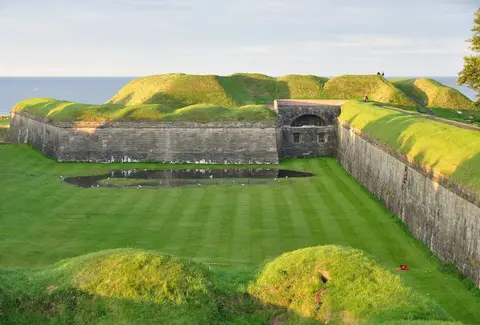
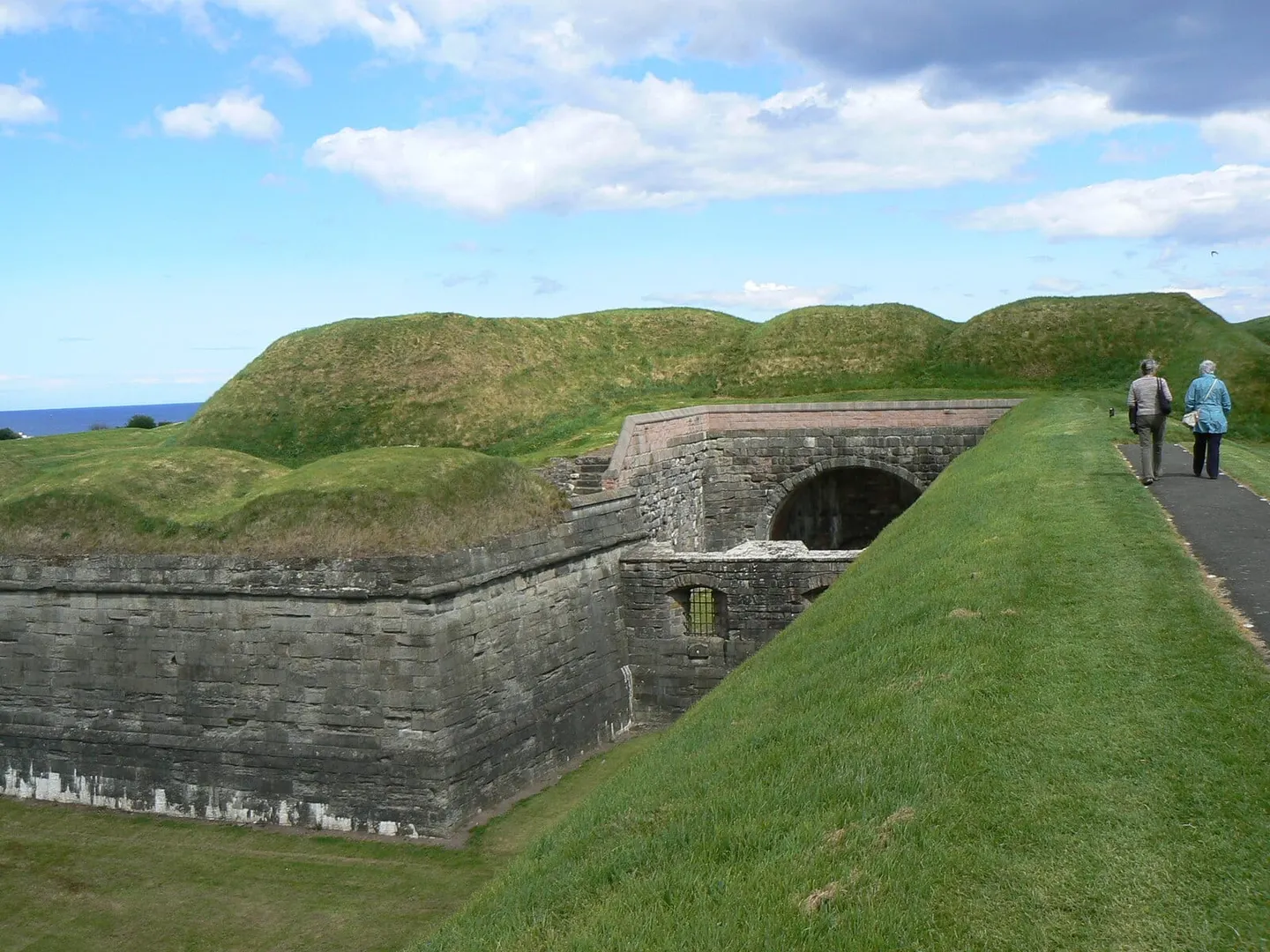
Far more survives of the ramparts that ring the old town, built on a much bigger scale under Mary I from 1558, after England lost Calais to the French and feared an attack on its northern border. The military engineer Sir Richard Lee designed a state-of-the-art bastioned system, with gun platforms called bastions projecting from the walls so defenders could fire along their length as well as straight ahead. Construction carried on into Elizabeth I’s reign, so today people still call these the Elizabethan ramparts, even though the work was never entirely finished. You can walk the full circuit, past bastions with names like Cumberland and Windmill, an old Georgian guardhouse, and the octagonal Bell Tower raised in 1577 as a lookout and belfry.
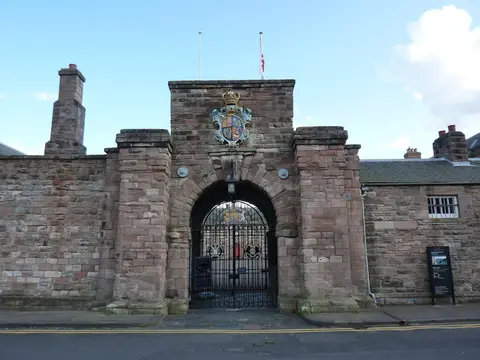
Both the castle remains and the ramparts are free to see, with information boards along the walk explaining what you’re looking at. Berwick Barracks and the Main Guard is a short walk from the walls, and Berwick-upon-Tweed is compact enough to see on foot from the station, right next to the old castle site.