The grandest of the Border abbeys in rose-red stone, said to hold the heart of Robert the Bruce
Open to visitorsa Historic Environment Scotland site — many are free to wander; staffed ones charge and keep set hours
Substantial ruinsruined, but plenty survives above ground
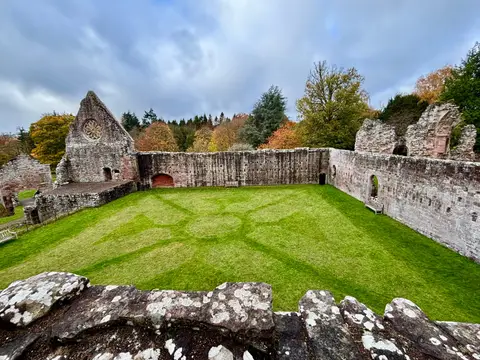
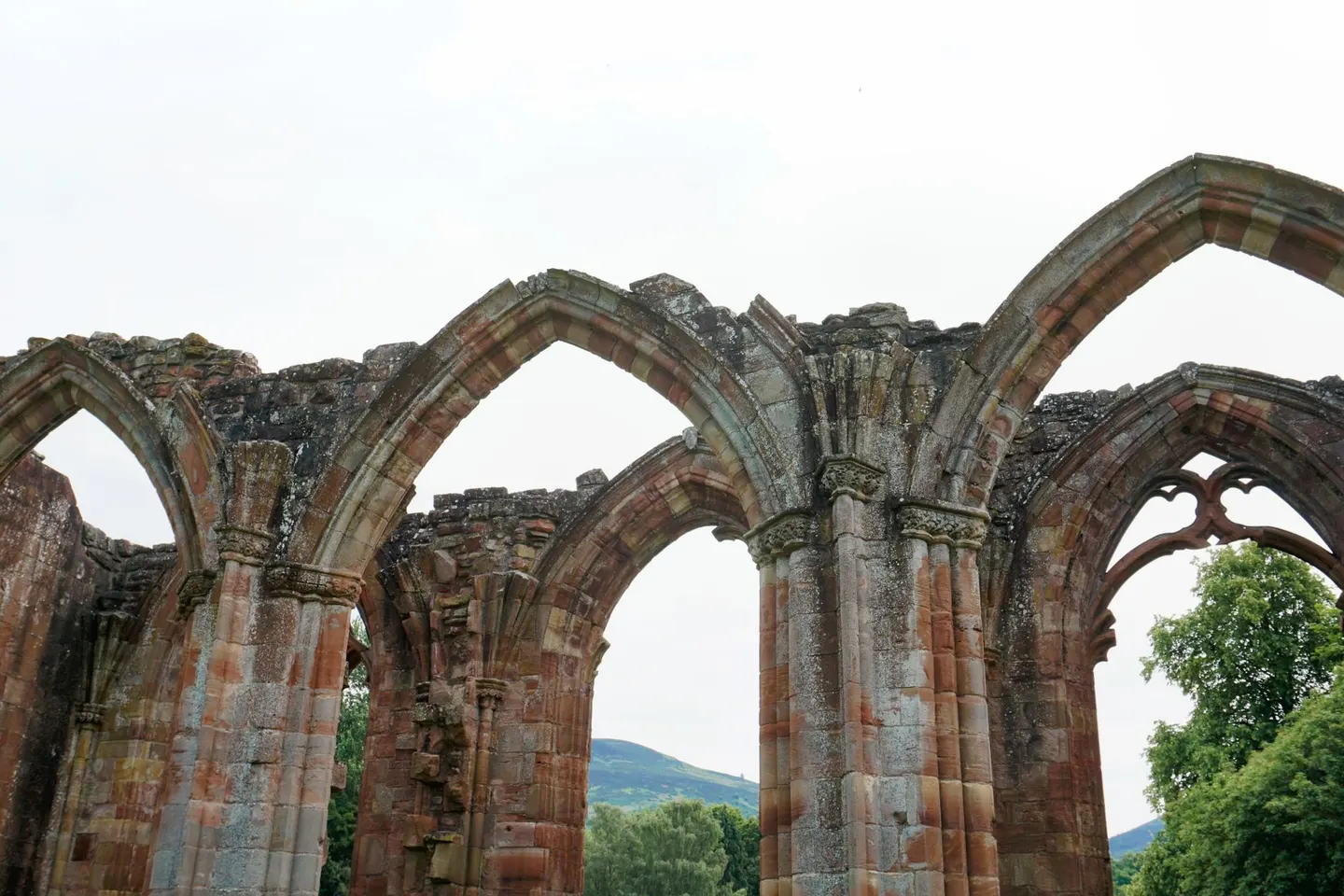
Melrose Abbey is the finest of the Border abbeys, and even in ruin you can see why: delicate stone tracery, big windows, and some of the best carving in Scotland, right down to a well-known gargoyle of a pig playing the bagpipes. David I founded it in 1136 for Cistercian monks, a strict, hard-working branch of the Benedictines, on the banks of the Tweed near the Eildon Hills.
Its most famous story concerns Robert the Bruce. When the king died in 1329 he asked for his heart to be taken on crusade, and after that journey it was brought back to Scotland and, by long tradition, buried at Melrose. A lead casket dug up in the grounds and reburied in 1998 is thought to hold that heart, marked now by a small stone.
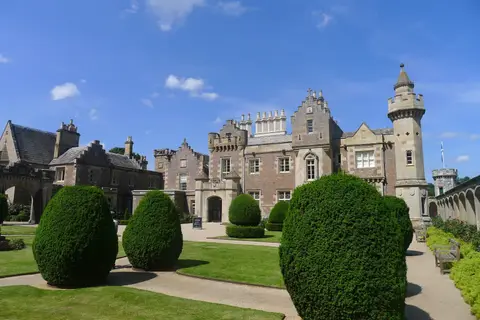
English armies burned the abbey more than once, and it was left to decay after the Reformation. Historic Environment Scotland runs the ruins, in the middle of the town of Melrose. St Cuthbert’s Way passes right by, Abbotsford, the home Sir Walter Scott built for himself, is a couple of miles west, and Dryburgh Abbey is a short drive down the Tweed.