A pink-stoned ruin in a quiet loop of the River Tweed, and the resting place of Sir Walter Scott
Open to visitorsa Historic Environment Scotland site — many are free to wander; staffed ones charge and keep set hours
Substantial ruinsruined, but plenty survives above ground
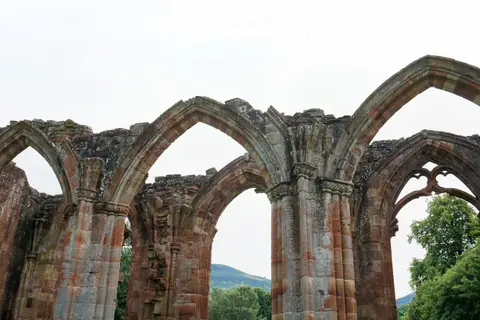
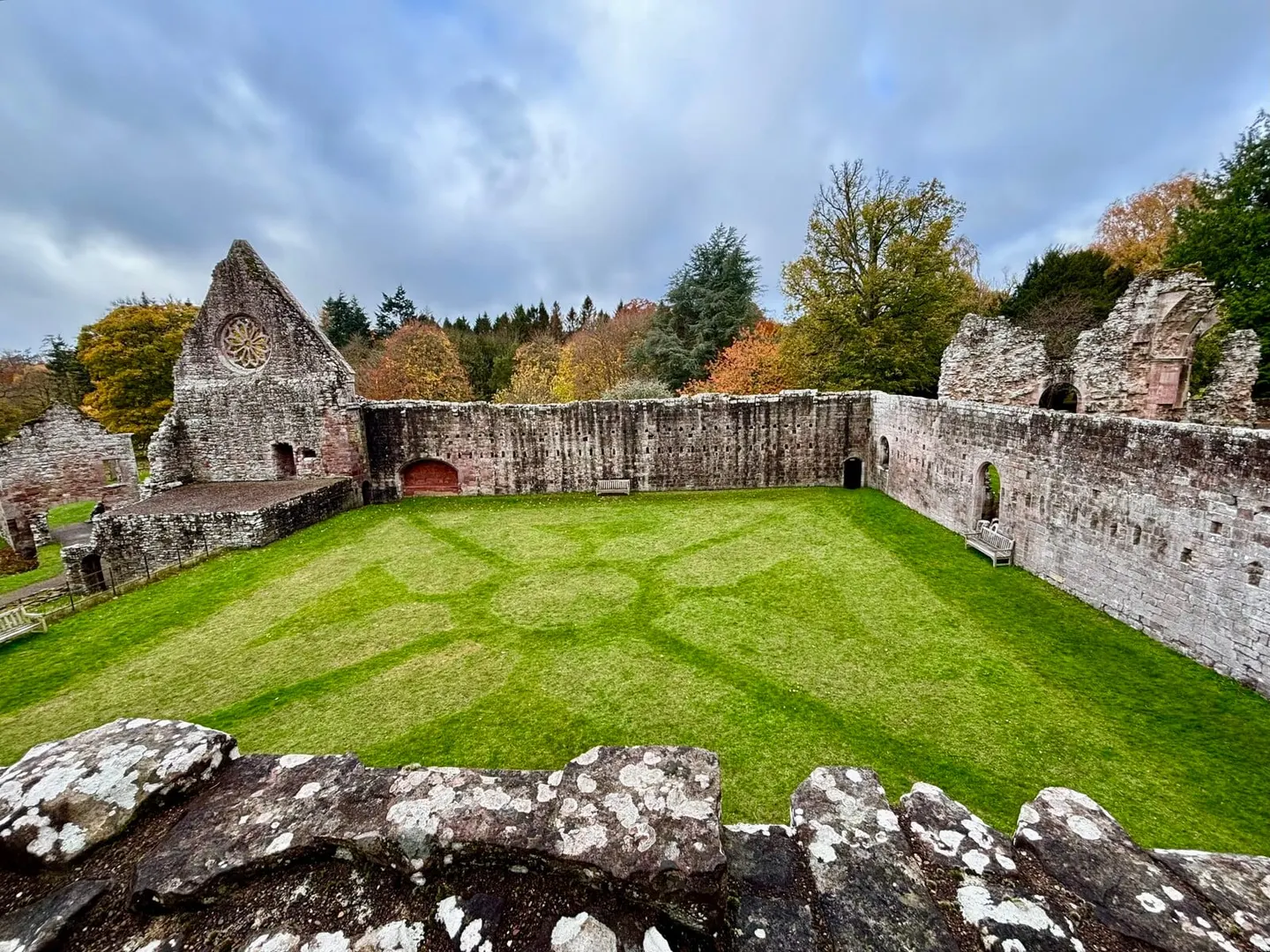
Dryburgh Abbey sits in a wooded bend of the River Tweed, and it’s the setting as much as the stones that people remember: cedar trees, lawns, and the pink-grey ruins half-hidden among them. Hugh de Morville founded the abbey in 1150 for the Premonstratensian canons, an order of priests who lived together under a monastic rule and wore white robes, so people called them the White Canons. English raids and then the Reformation left the place a ruin by the 1500s.
Two famous graves are here. Sir Walter Scott, the novelist and poet who did more than anyone to romanticise the Borders, was buried in the north transept in 1832. Field Marshal Earl Haig, who commanded the British armies through much of the First World War, lies nearby under a plain war-grave headstone.
Historic Environment Scotland looks after the ruins. Both St Cuthbert’s Way and the Borders Abbeys Way pass close by, so it’s an easy stop on foot. Scott’s View, the spot up the road where Scott liked to stop and look across to the Eildon Hills, is a couple of miles north. Melrose Abbey is about five miles away if you want to see more than one of the Border abbeys in a day.