The largest monastic ruin in the country, begun by breakaway monks and later made the climax of a Georgian water garden
Open to visitorsan English Heritage site — check opening times and admission before you go
Substantial ruinsruined, but plenty survives above ground
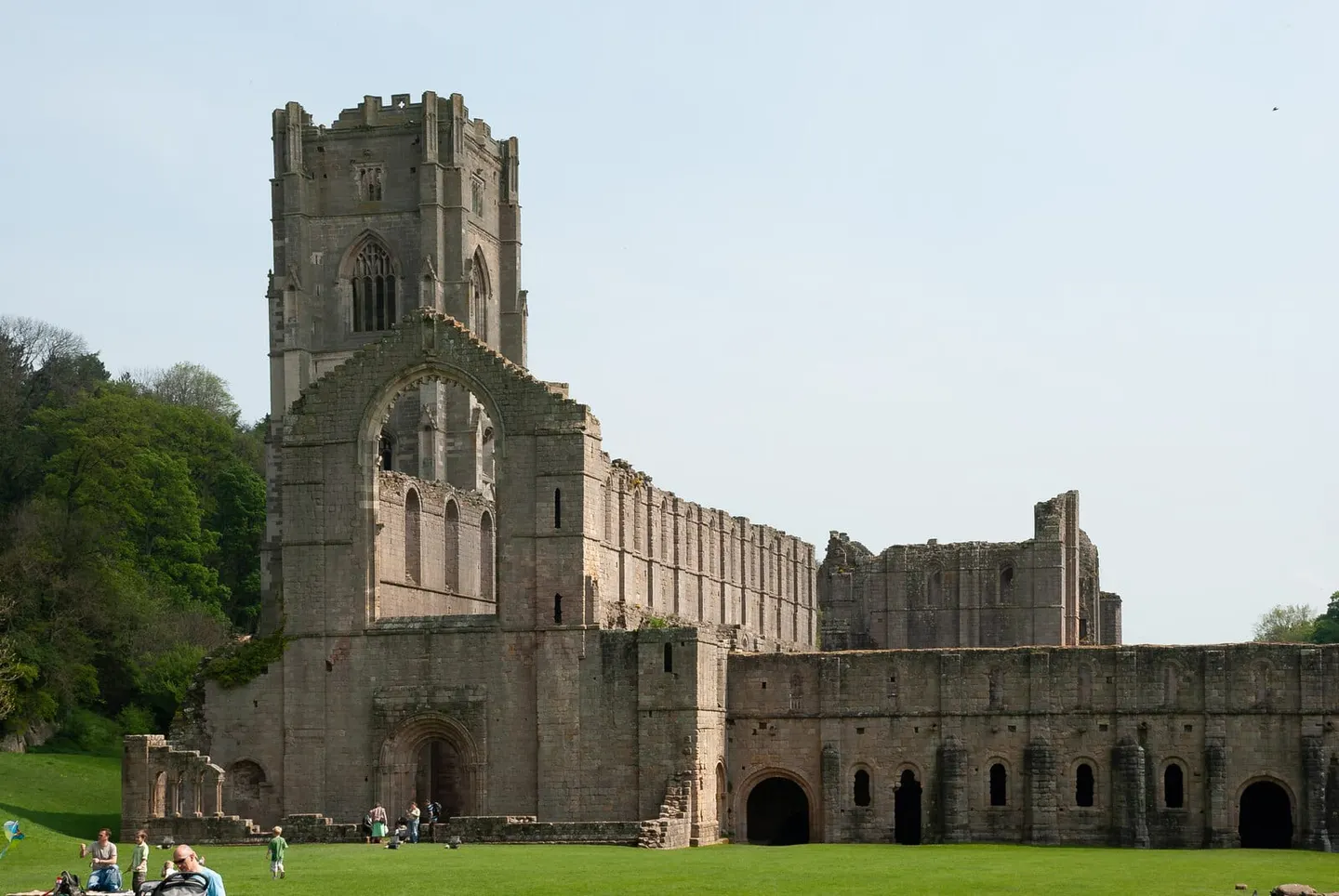
Thirteen monks walked out of St Mary’s Abbey in York in 1132, wanting a stricter, plainer life than the one they had, and were given a wooded valley on the River Skell to make their own. They took up the Cistercian rule and built Fountains, which grew over the next four centuries into one of the richest monasteries in England — its wealth built largely on wool, from vast flocks of sheep grazed across the Yorkshire uplands. Abbot Marmaduke Huby crowned the church with a great tower early in the sixteenth century, not long before Henry VIII’s dissolution shut the whole thing down in 1539 and stripped the lead from its roofs.
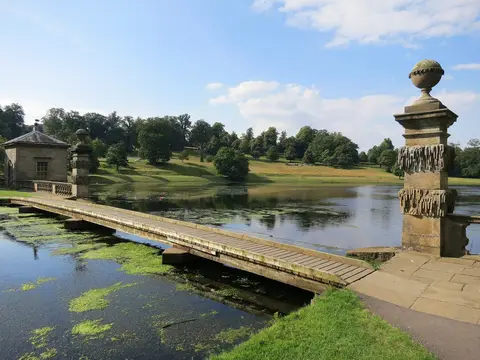
What survived the centuries of decay is the largest and most complete Cistercian ruin in Britain: the shell of the church, the long vaulted cellarium where the lay brothers stored their provisions, and the range of monastic buildings strung along the river. In the eighteenth century the ruins found an unlikely second life. William Aislabie bought the estate in 1768 to finish the composition his father John had begun next door, framing the abbey as the dramatic far-end eye-catcher of the Studley Royal Water Garden — a ruin turned deliberately into a view. The two are now a single UNESCO World Heritage Site, run by the National Trust, and it takes a good half-day to walk the abbey, the garden and the deer park together. Ripon and its cathedral are a few miles north.
More at the National Heritage List entry