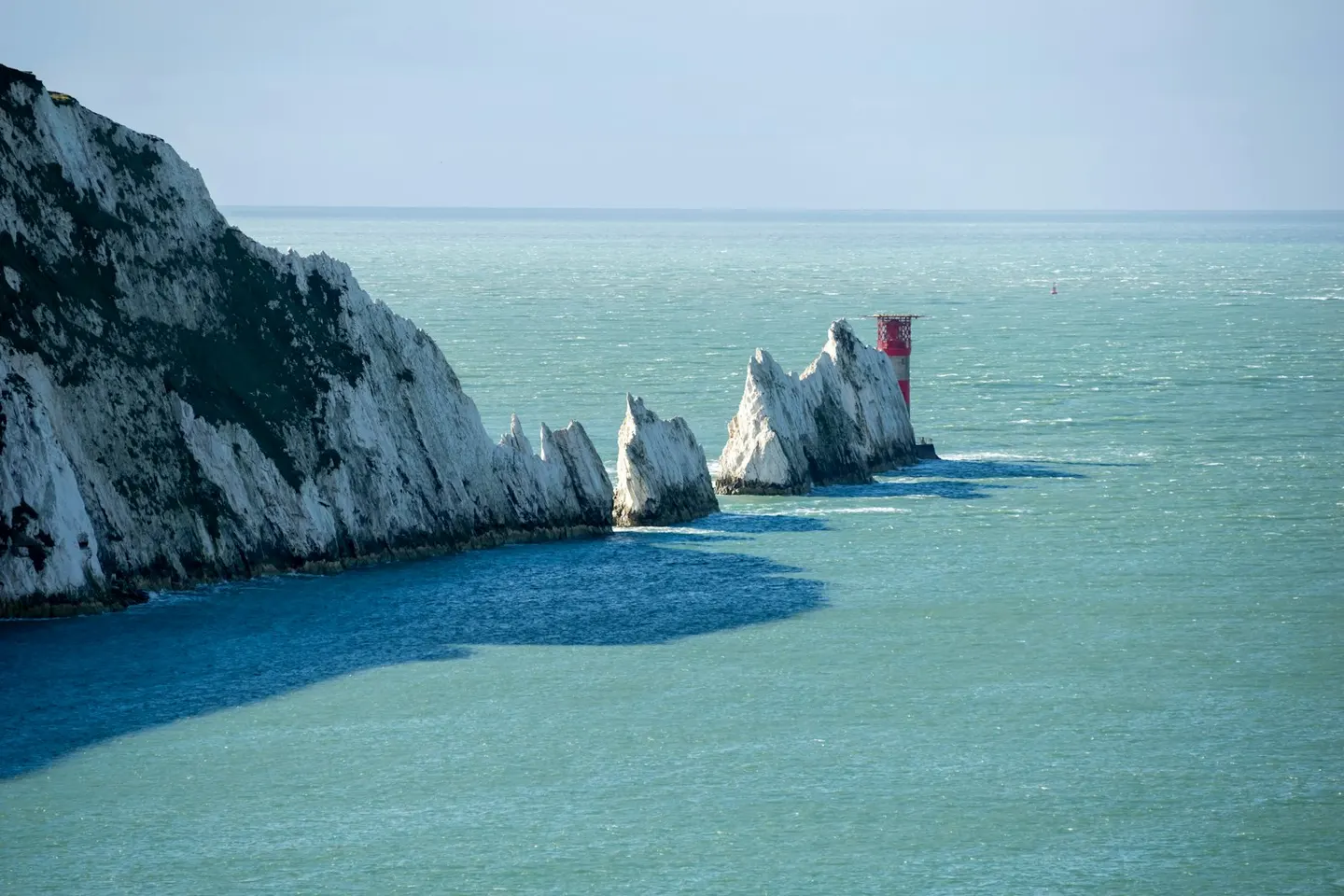
Chalk-ridged island of the Needles and Osborne House.
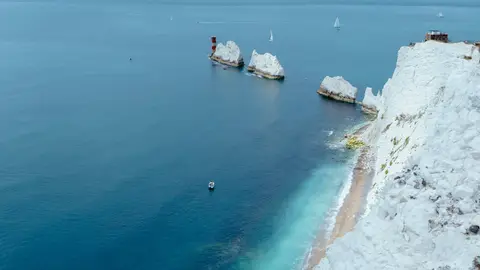
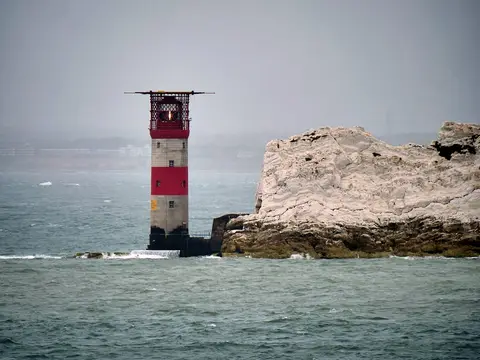
A chalk ridge runs the length of the Isle of Wight and breaks up into the sea at its western tip as the Needles, three white stacks below a lighthouse, with the coloured sand cliffs of Alum Bay alongside. England’s largest island lies a short crossing from Hampshire across the Solent, and its softer clay coast to the south is one of the best places in Europe to find dinosaur fossils — bones and footprints turn up after storms, especially in the south-west, and Dinosaur Isle, a museum in Sandown, is built around the finds.
Queen Victoria and Prince Albert built Osborne near Cowes as a private family retreat, and Victoria was fond enough of it to die there in 1901; the house and its gardens are open to visit now. Inland at Newport, Carisbrooke Castle is a Norman castle built on the site of an earlier fort, best known as the place Charles I was held prisoner in 1647 and 1648, before his execution the following January. A donkey still turns the 16th-century wheel that once drew water up from the castle well.
Godshill, thatched cottages leading up to a medieval church on the hilltop, is one of the island’s most photographed villages. Yarmouth, a small harbour town with a squat fort Henry VIII had built to guard the Solent, has the ferry across to Lymington, while Cowes, split by the River Medina, hosts Cowes Week every summer and has been a sailing town for well over a century. Wightlink also runs car ferries from Portsmouth to Fishbourne and passenger boats to Ryde; Red Funnel crosses from Southampton to Cowes, and Hovertravel’s hovercraft, Europe’s only scheduled passenger hovercraft service, crosses from Southsea to Ryde in about ten minutes. Much of the downland and coast is protected as a National Landscape.