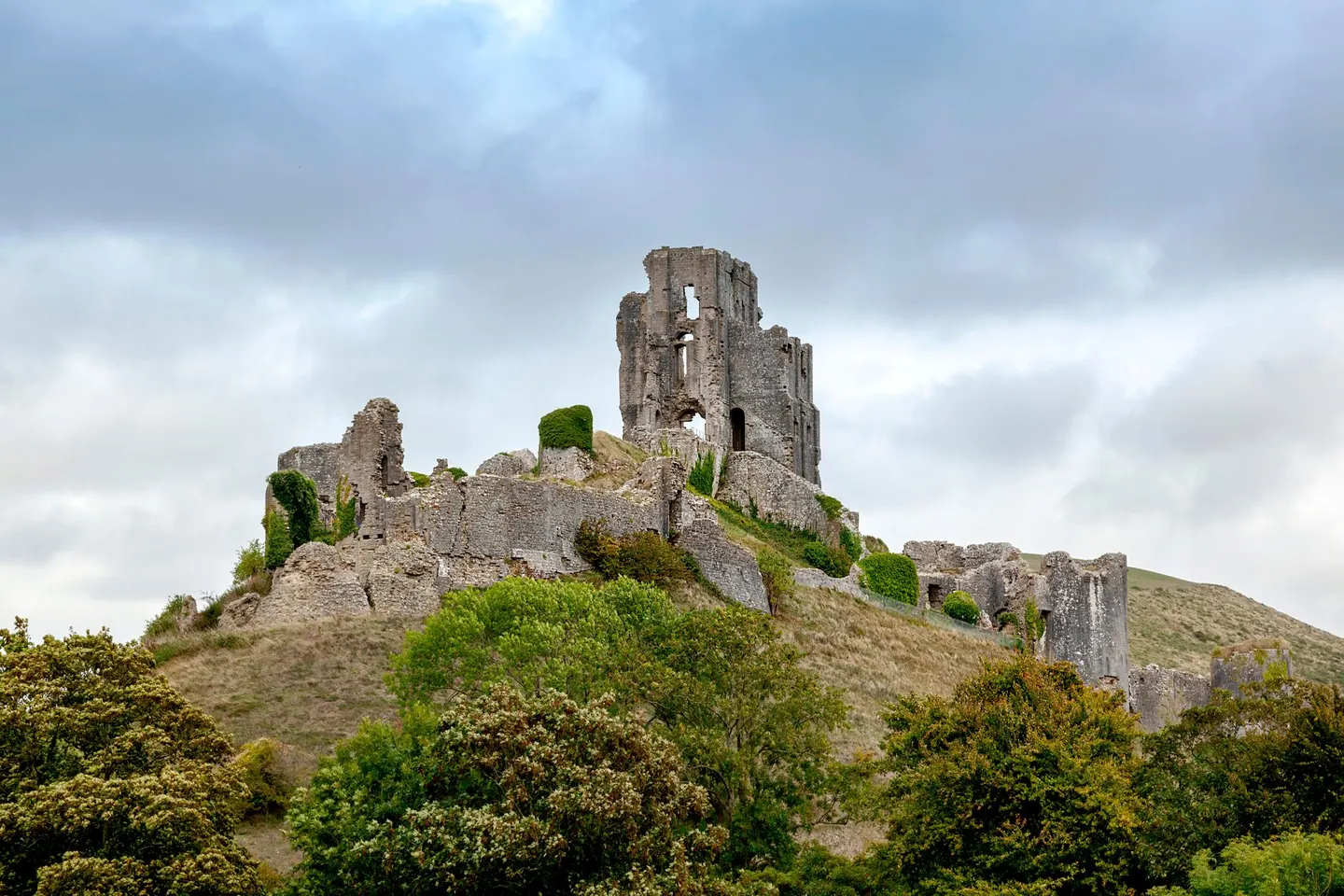
A great broken silhouette in the gap of the Purbeck hills, one of England's grandest castle ruins, blown up rather than lost in battle
Open to visitorsa National Trust place — check opening times and admission before you go
Substantial ruinsruined, but plenty survives above ground
The Normans picked the spot for obvious reasons: a steep natural mound plugging the one gap in the Purbeck ridge, so anything moving between the coast and the mainland had to pass under its walls. The Normans built here soon after the Conquest, and later kings kept adding to it in stone, which is why the ruin still stands so tall and reads as such a puzzle from the path below.
What did for it was the Civil War rather than any medieval siege. The Bankes family held Corfe for the King, and Mary, Lady Bankes — “Brave Dame Mary” to the locals — saw off the first Parliamentary attack in 1643 with a household and a handful of defenders. The castle fell in 1646, given up through treachery, and Parliament ordered it slighted, blown apart with gunpowder so it could never be held again. The drunken lean of the towers is that demolition, frozen. Worth knowing before you go: the earthwork called Rings, just to the south-west, is where the besiegers dug in.
It belongs to the National Trust now, and it’s a paid, set-hours sort of visit rather than a wander-up-any-time ruin, so check before making a special trip. The village that shares the name sits at the foot, with the steam railway running through. Walkers can pick up the Hardy Way right below the walls, or head south to the cliffs of Purbeck and the South West Coast Path. On a clear day the view from the keep runs all the way to the sea.
Visit on the National Trust website →
More at the National Heritage List entry