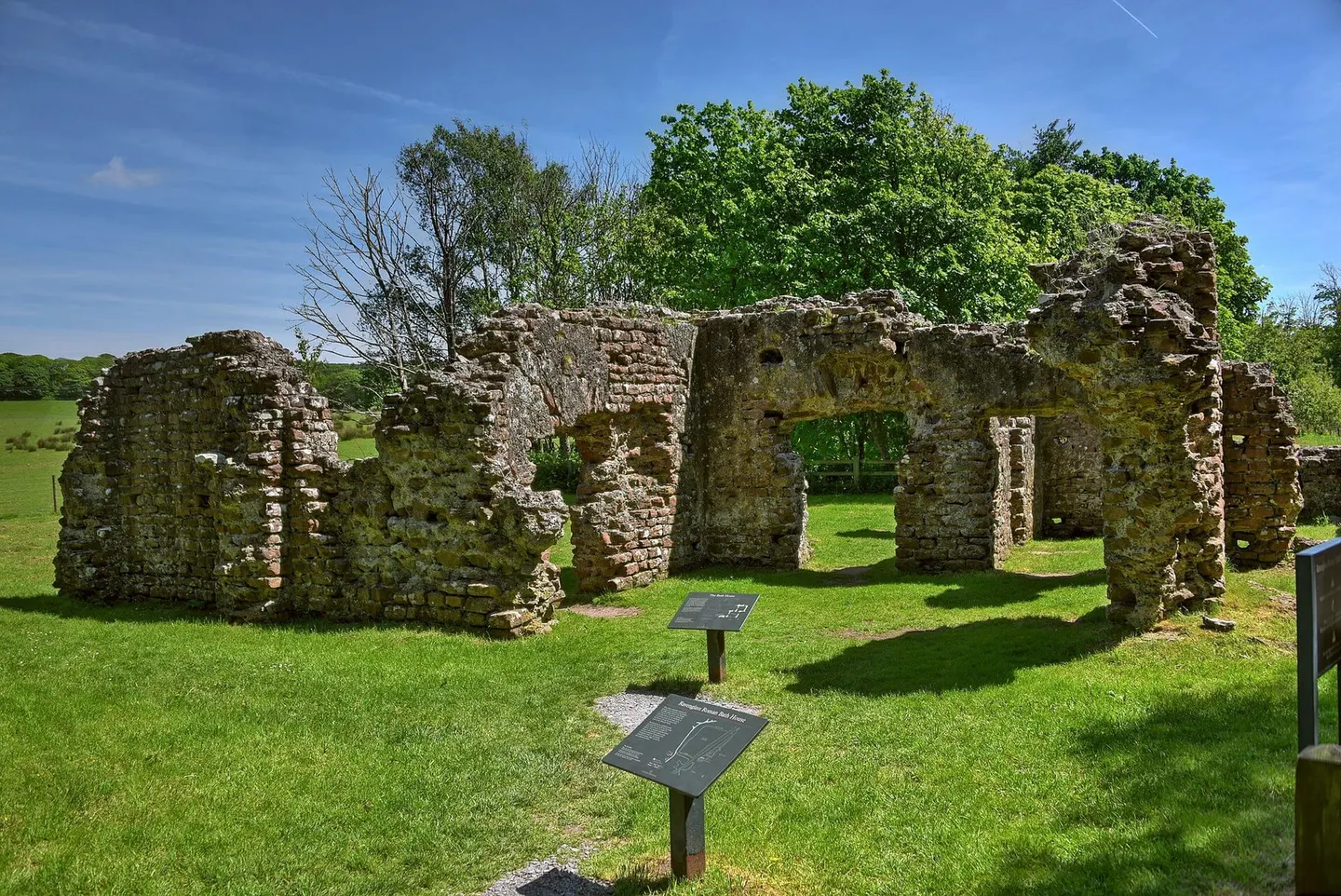
Antiquarians took these tall ruins at Ravenglass for a medieval building called Walls Castle, but they are a Roman fort's bath house
Open accessfree to visit at any reasonable time
Substantial ruinsruined, but plenty survives above ground
Soldiers at Ravenglass bathed the Roman way, moving through a string of rooms from cold to hot and back, and the bath house they used stood just outside their fort’s north-east corner. Its walls survive almost four metres high, one of the tallest pieces of Roman building left anywhere in northern Britain. There are still doorways, the splayed sides of windows, patches of the original pink and white render, and a niche topped by a red arch, perhaps made for a statue.
The army built a small fort early in Hadrian’s reign and replaced it with a large one around AD 130, at the mouth of the Esk where there was probably a busy harbour. By AD 158 a unit called the First Cohort Aelia Classica was stationed at Ravenglass, and classica comes from the Latin word for a fleet. A road ran inland up Eskdale to Hardknott Roman fort and on over the passes to Ambleside. The fort itself fared worse than its bath house. In the 1850s railway builders cut straight through it, and the sea has taken its western side, so only low banks of the fort remain.
A lane leads out to the ruin from Ravenglass village and station, a short walk, and there’s no charge. At present English Heritage lists it for viewing from the outside only, in daylight.
Full name: Ravenglass Roman fort bath-house, also known as Walls Castle
More at the National Heritage List entry