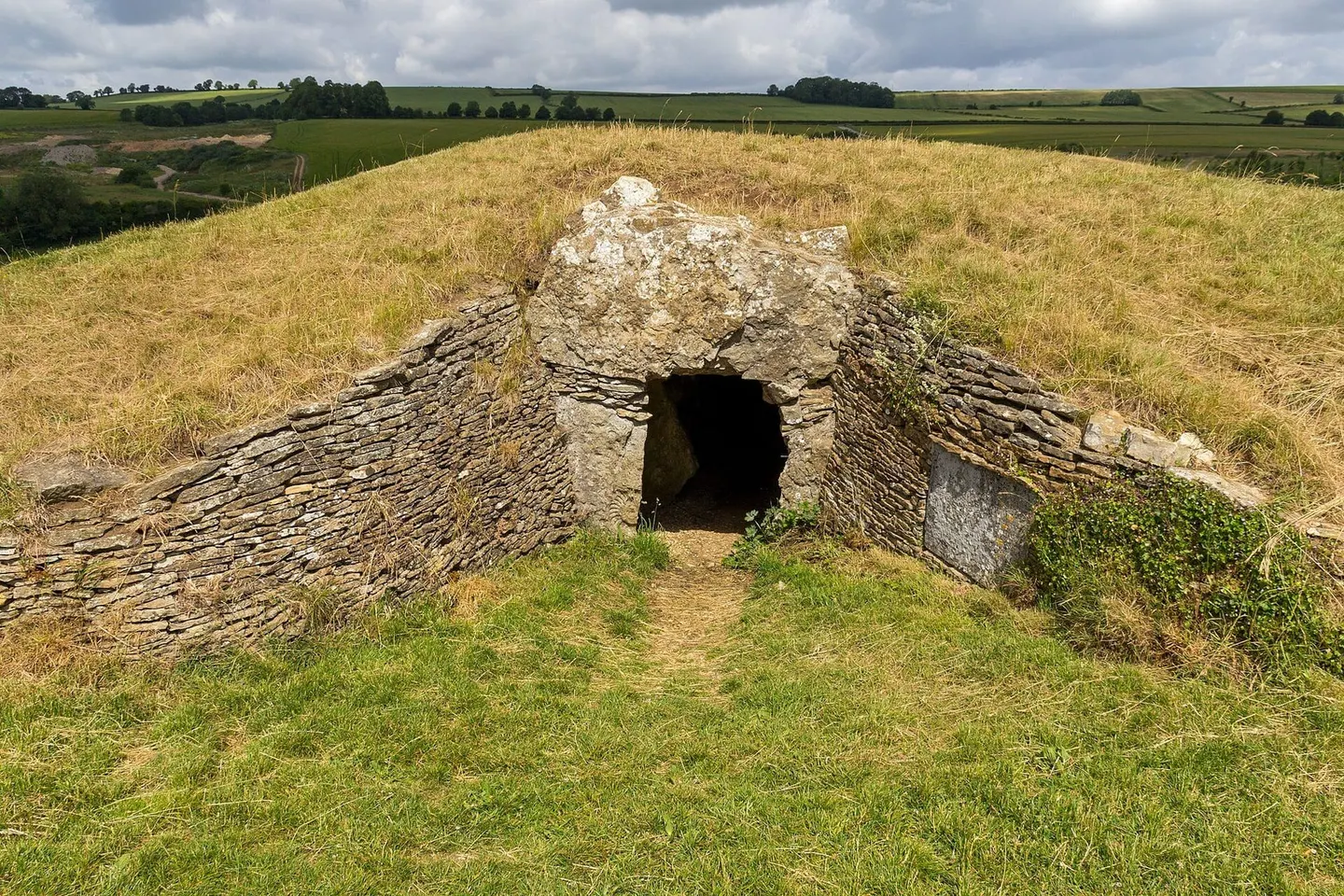
A Neolithic burial mound near Wellow whose low stone passage leads to seven small chambers and a fossil ammonite
Open accessfree to visit at any reasonable time
Standing remainssubstantial fabric survives to stand in front of
Stoney Littleton is a long barrow, a Neolithic burial mound of earth piled over a stone passage and chambers, raised close to 3500 BC on a ridge above Wellow, at the southern edge of the Cotswolds. A low passage about 13 metres long leads in from the entrance, the roof dropping to as little as 1.2 metres, so you have to duck to reach the seven burial chambers branching off it. Excavations in 1816 found human bone inside from adults and children alike, probably several generations of one family. On the stone at the left of the entrance sits a large fossil ammonite, a coiled sea-creature shell some 200 million years old that people once called a snakestone. Getting there means a short, moderate climb from the lane below, with five stiles along the way, and it’s a few miles from Farleigh Hungerford Castle.