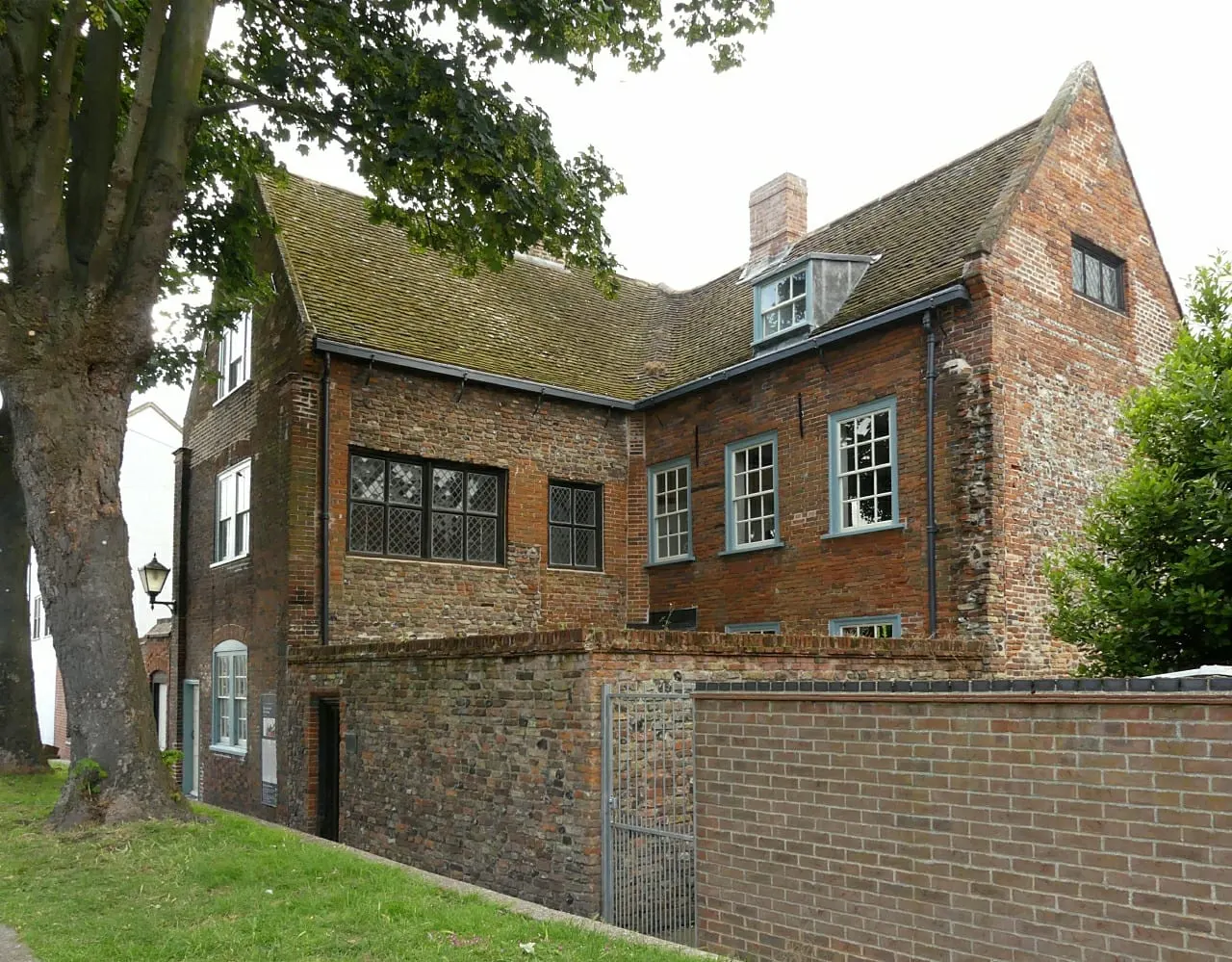
Two early-17th-century merchants' houses in Great Yarmouth's Rows, later split into tenements for the port's fishing families
Open to visitorsan English Heritage site — check opening times and admission before you go
Great Yarmouth once had a tangle of more than 140 narrow alleys, called rows, running back from the quay between the town’s three main streets, some barely a metre across. Old Merchant’s House and Row 111 House, two of the row houses that survive, date from the early 1600s, built for merchants who wanted a clear view of their ships from the upper windows. Both were updated in the 1700s with sash windows and painted panelling, then divided up and let to multiple tenants once their owners moved to bigger houses elsewhere in the century that followed. Old Merchant’s House still has ornate plaster ceilings from the 17th century, and Row 111 House came through Second World War bombing with most of its brick structure still standing, so the building escaped when the rest of its row was cleared afterwards.
Great Yarmouth grew rich on herring for centuries, and by the early 20th century the young women who followed the fishing fleets down the coast to gut and pack the catch often lodged in rooms like these. English Heritage now looks after both houses, along with a large hoard of panelling, door-knockers and other fittings rescued from the bombed rows in the 1940s and shown inside. Visits are by guided tour on selected days only. Nearby, the ruined nave of Greyfriars Franciscan friary is a short walk away, and Great Yarmouth’s station is close to both.