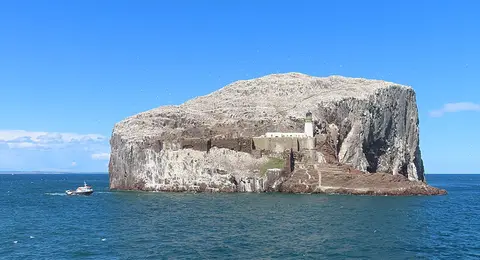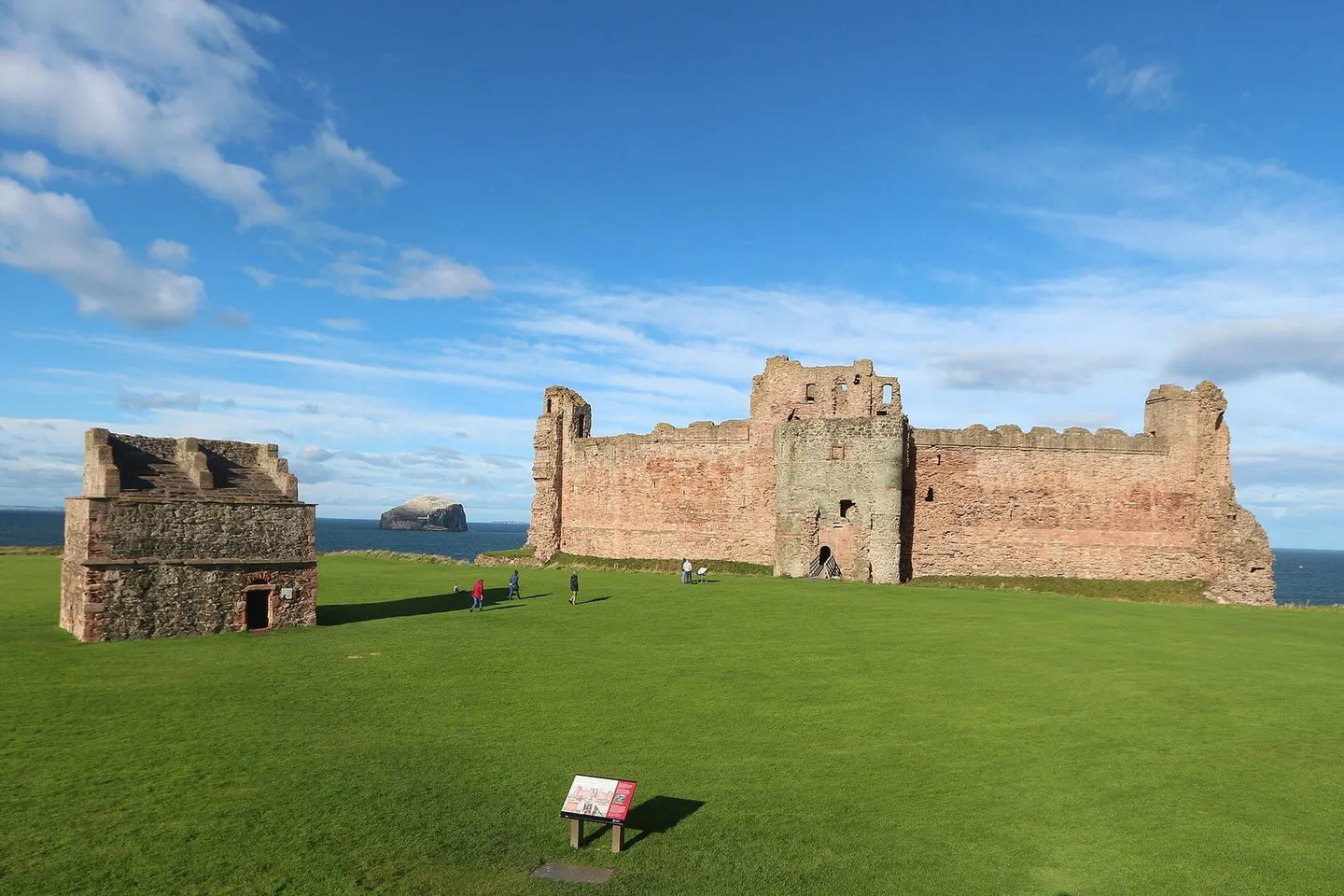
A great red sandstone stronghold of the Douglases on the East Lothian cliffs, facing the gannet-covered Bass Rock across the Firth of Forth
Open to visitorsa Historic Environment Scotland site — many are free to wander; staffed ones charge and keep set hours
Substantial ruinsruined, but plenty survives above ground
Tantallon Castle is one of the most dramatic ruins in Scotland, set on a headland with sea cliffs falling away on three sides and only a huge wall of pink-red sandstone facing the land. The Douglas family, one of the most powerful in medieval Scotland, built it in the mid-fourteenth century and held it for the best part of three hundred years. Because the cliffs did the defending on every other side, the builders concentrated everything into that one enormous curtain wall with its towers, which still stands to close to its full height.
The castle came to a violent end in 1651, when Oliver Cromwell’s army battered it into surrender during the invasion of Scotland, and it was left as the shell you see today. Even wrecked, it is a fine thing to walk round, with the wind off the sea and long views over the water.
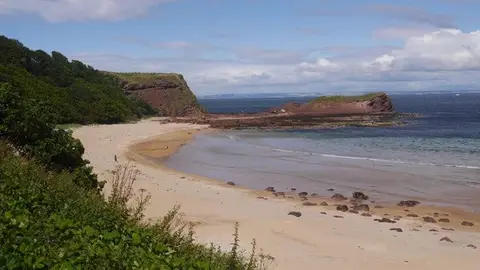
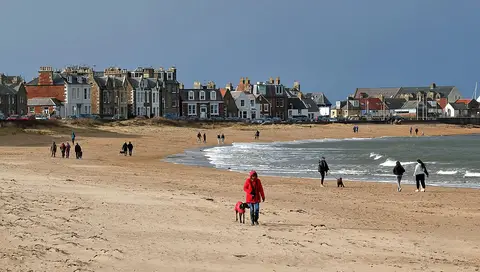
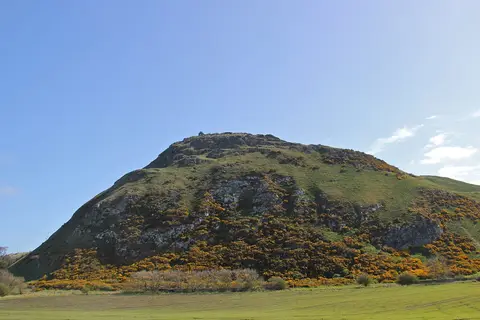
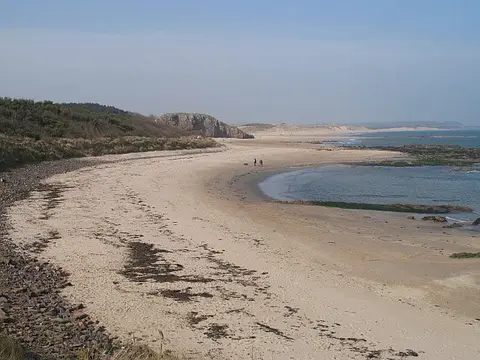
Historic Environment Scotland looks after Tantallon and charges for entry. It sits a few miles east of North Berwick, and the view most people remember is straight out to Bass Rock, the steep white-topped island that turns whiter still in summer when tens of thousands of gannets nest on it. If you want more coast, Seacliff Beach is just below to the south-east, and the cone of North Berwick Law makes a short sharp climb behind the town.