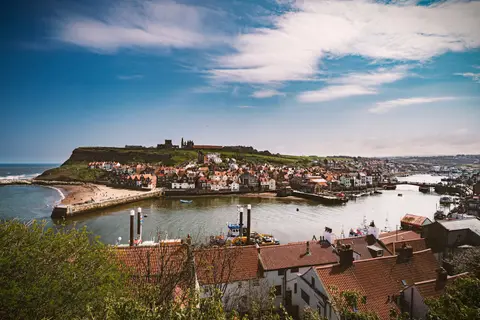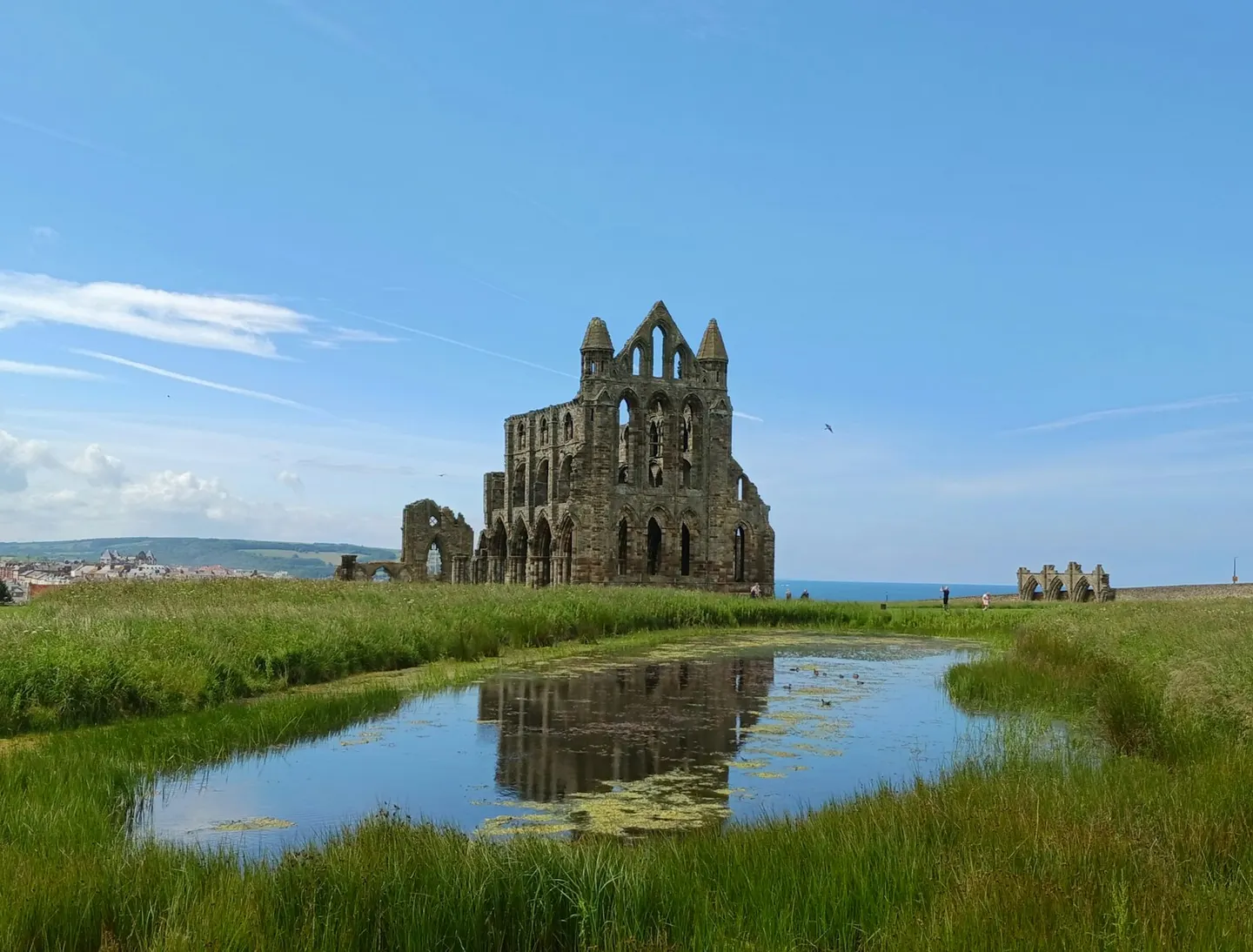
Dramatic clifftop abbey ruins above the town of Whitby, a holy site for over a thousand years and the backdrop to Dracula
Open to visitorsan English Heritage site — check opening times and admission before you go
Substantial ruinsruined, but plenty survives above ground
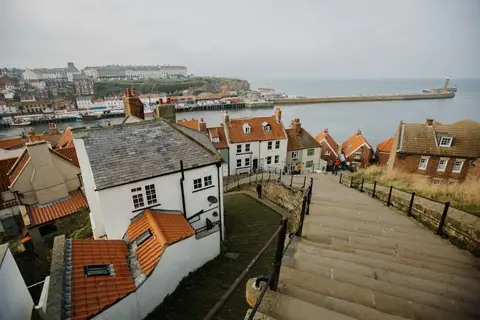
The gaunt ruins on the headland above Whitby have been a landmark for sailors and storytellers for centuries. Bram Stoker used them as a backdrop in Dracula, and if you climb the 199 Steps from the harbour on a grey day you’ll see why. The history here is far older, though. In 657 the Saxon princess and abbess Hild founded a monastery on this spot, a ‘double house’ where monks and nuns lived in separate quarters under one head. In 664 churchmen met here for the Synod of Whitby and settled how the English church would fix the date of Easter, and the monk Caedmon, the earliest English poet we can name, composed his hymn here.
Viking raiders destroyed that first monastery. After the Norman Conquest, Benedictine monks — followers of the rule of Saint Benedict — refounded it, and they built the tall, pointed-arched church whose skeleton you see today, mostly from the 1200s and 1300s. Henry VIII’s dissolution closed the abbey in 1539, and the walls have been crumbling ever since, helped along by a German naval shelling in 1914.
English Heritage runs the abbey, with a good museum in the old manor house beside it. Right next door is St Mary’s Church, with its wild clifftop graveyard, and the Cleveland Way coast path passes on its way round the North York Moors. Down below, Whitby itself is a busy harbour town, and the fish and chips make a fair reward for the climb back up.
More at the National Heritage List entry