The roofless Gothic church of a great Cistercian abbey on the Welsh bank of the Wye, which drew poets and painters for centuries
Open to visitorsa Cadw site — check opening times and admission before you go
Substantial ruinsruined, but plenty survives above ground
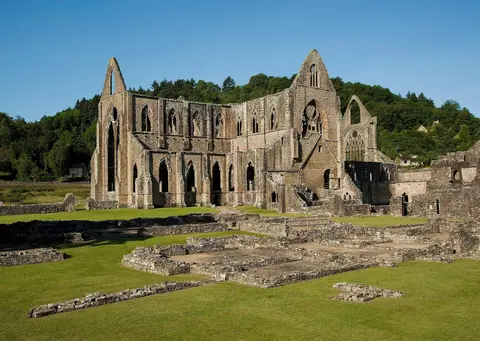
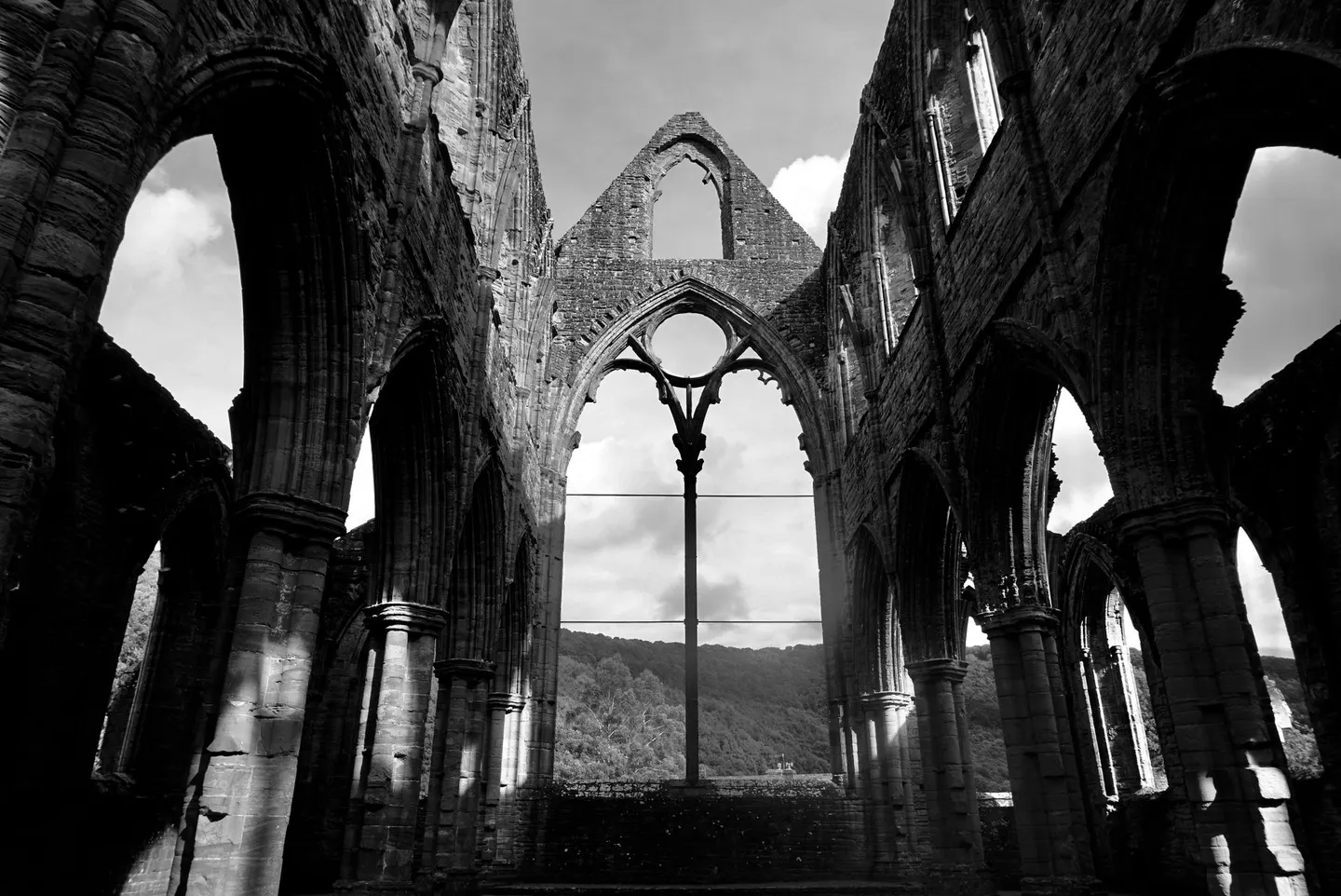
Tintern Abbey is the roofless church of a great Cistercian abbey on the Welsh bank of the River Wye. Cistercian monks, a strict order who favoured remote valleys and simple living, founded the abbey in 1131, almost 900 years ago, making it one of the earliest Cistercian houses in Britain and the first in Wales. The great church you see today, with its huge stone-traceried windows, was rebuilt in grand style through the late 1200s.
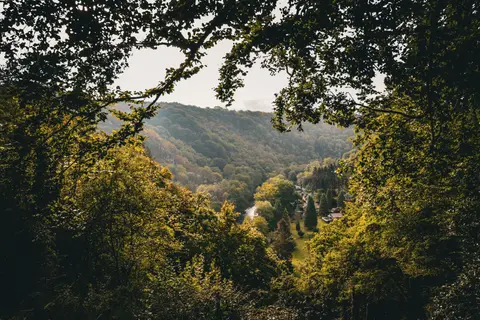
Henry VIII’s men closed the abbey in 1536, and over the centuries that followed the roof and floors were lost, leaving the bare stone shell. By the 1700s, well-to-do tourists were coming up the Wye by boat to admire and sketch the ruins, and they have come ever since. Turner painted them, and in 1798 Wordsworth wrote “Lines Composed a Few Miles above Tintern Abbey”: “While here I stand, not only with the sense / Of present pleasure, but with pleasing thoughts / That in this moment there is life and food / For future years.” Even empty, the church is a lovely sight, and through the open windows you look straight out at the wooded hillsides behind.
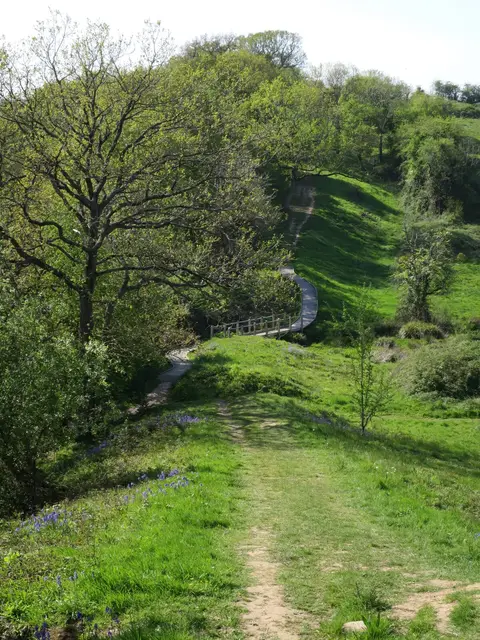
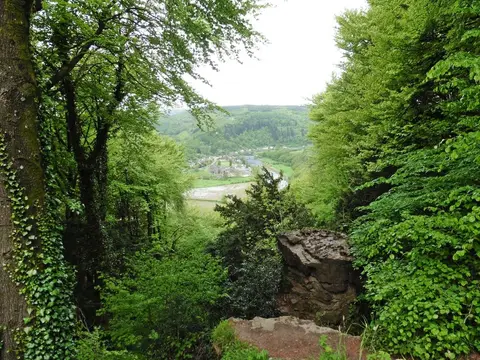
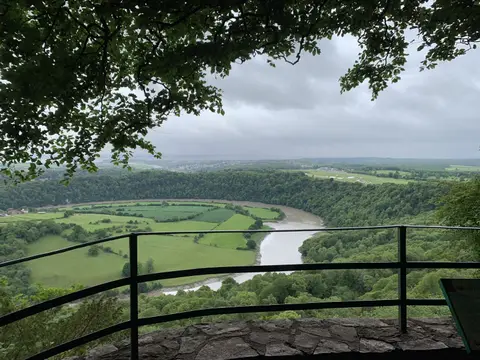
Cadw, the Welsh heritage body, runs Tintern, and there is a car park and visitor centre by the entrance. The abbey is right beside the village of Tintern, so it is easy to reach. The Wye Valley Walk passes the door, and Offa’s Dyke Path runs along the ridge on the English side; climb up to the Devil’s Pulpit, a rocky outcrop above the east bank, for the classic look down onto the abbey.