The great ruined Benedictine abbey at the heart of Bury St Edmunds, once among the richest monasteries in England and shrine to a martyred king
Open to visitorscheck opening times and admission before you go
Substantial ruinsruined, but plenty survives above ground
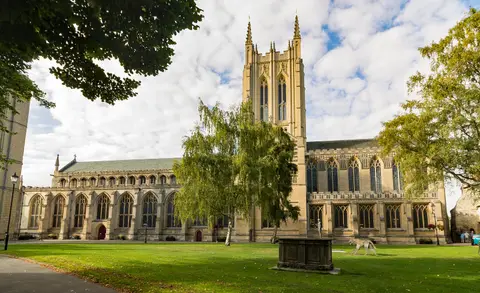
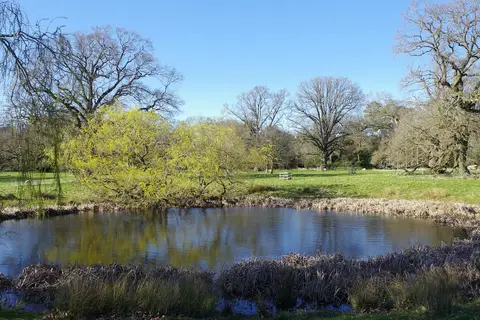
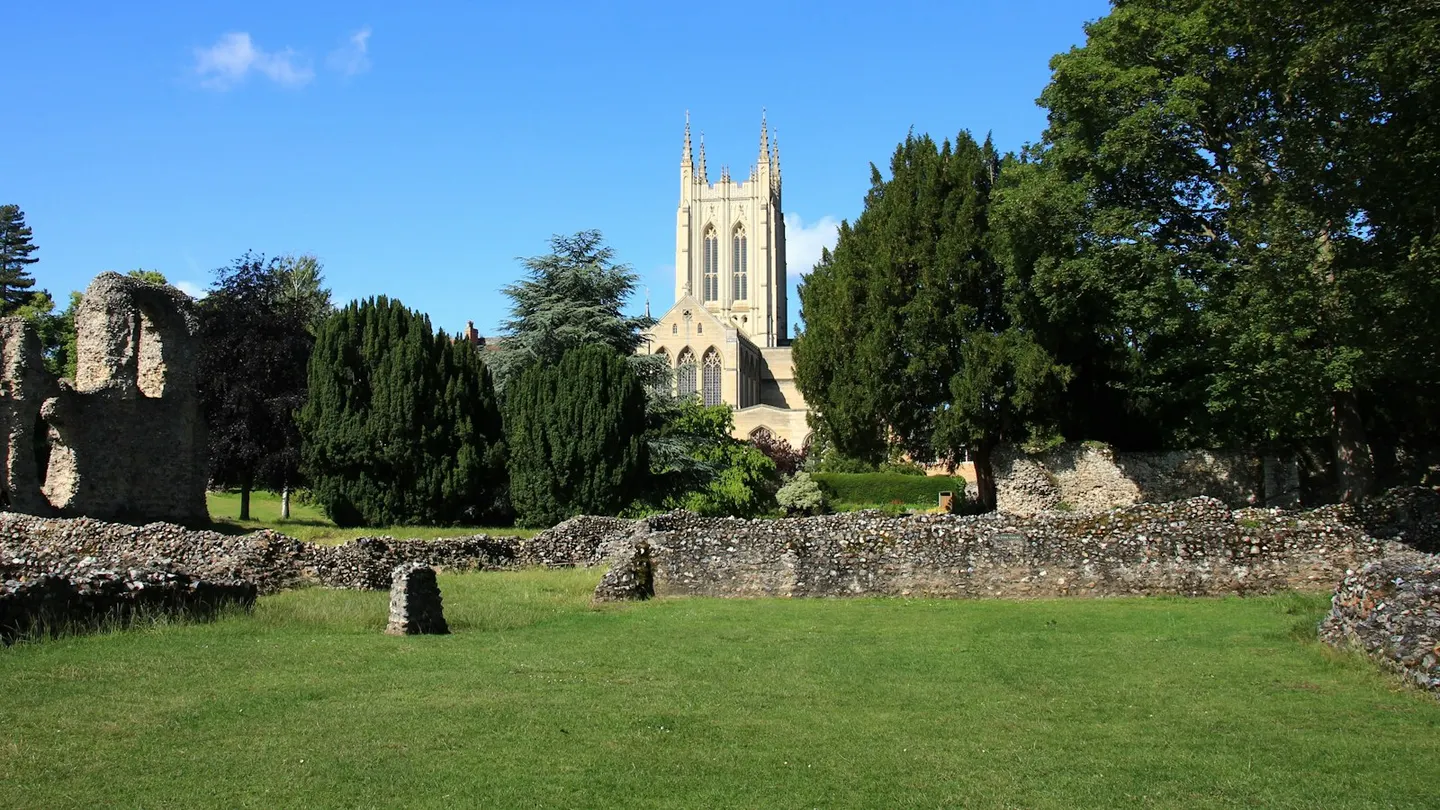
Edmund was a 9th-century king of East Anglia, killed by a Viking army and later made a saint, and the abbey grew up around his shrine to become one of the richest and most powerful Benedictine monasteries in medieval England (the Benedictines being the older order of monks who kept to a settled life of prayer and study). Pilgrims came for centuries. There is also a tradition that in 1214 the rebel barons met here and swore to force King John to accept the charter that became Magna Carta the following year, which is why the town calls itself the cradle of the law. Henry VIII closed the abbey in the 1530s along with every other English monastery, and its stone was carried off, so what stands today is mostly the flint-and-rubble core of the walls, softened into strange lumps and set in the lawns and flowerbeds of the Abbey Gardens. Two great medieval gateways survive nearly whole, and St Edmundsbury Cathedral alongside grew from one of the old abbey churches. English Heritage owns the ruins and the council runs them as part of the Abbey Gardens, a free public park open in the daytime, right in the middle of town and a short stroll from the Greene King Brewery that still brews in Bury.
More at the National Heritage List entry