A 46-mile narrow canal of 65 locks and a lost tunnel, climbing from the Trent through Nottinghamshire to Chesterfield
The Chesterfield Canal runs 46 miles from the River Trent at West Stockwith, in Nottinghamshire, up to Chesterfield in Derbyshire, by way of Worksop and Retford. It was one of James Brindley’s canals, surveyed by him and finished after his death in 1772 by his assistants John Varley and Hugh Henshall; it opened throughout in 1777. Locally it is still called the Cuckoo Dyke, and the narrowboats built for it the cuckoo boats.
It was built to carry coal, lead, limestone and Chesterfield iron, and it is heavily locked — 65 locks in all, including staircase flights — as it climbs off the Trent valley and up towards the Peak District foothills. Near the summit it passed through Norwood Tunnel, over a mile and a half long and among the longest of its day. The tunnel collapsed from mining subsidence in 1907 and has never reopened, which is why the canal is severed: the eastern length from the Trent to Kiveton is navigable, while the western end around Chesterfield has been restored in stretches but is not yet connected through.
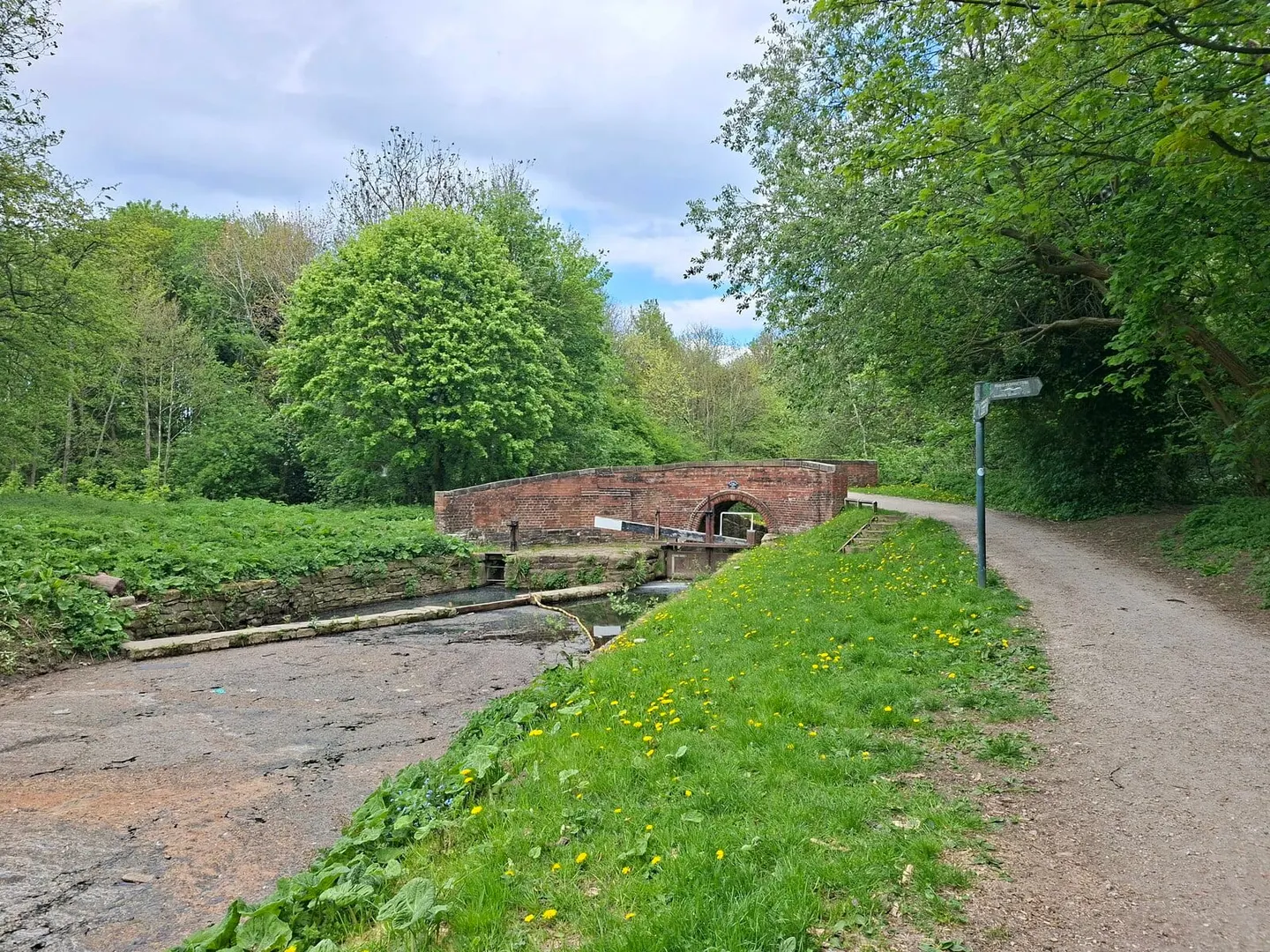
The open eastern half, through Retford and Worksop and out to West Stockwith, is quiet lowland cruising and well used by boats. The restored Chesterfield end, rebuilt by the canal society and its partners over many years, is walkable and partly navigable, and work continues on closing the gap across the tunnel line.
For walkers the towpath forms the Cuckoo Way, a long-distance path following the whole canal from the Trent to Chesterfield, including the derelict middle section, which makes the entire route walkable even where boats cannot yet pass.