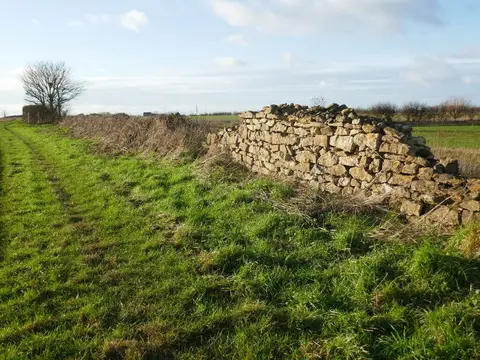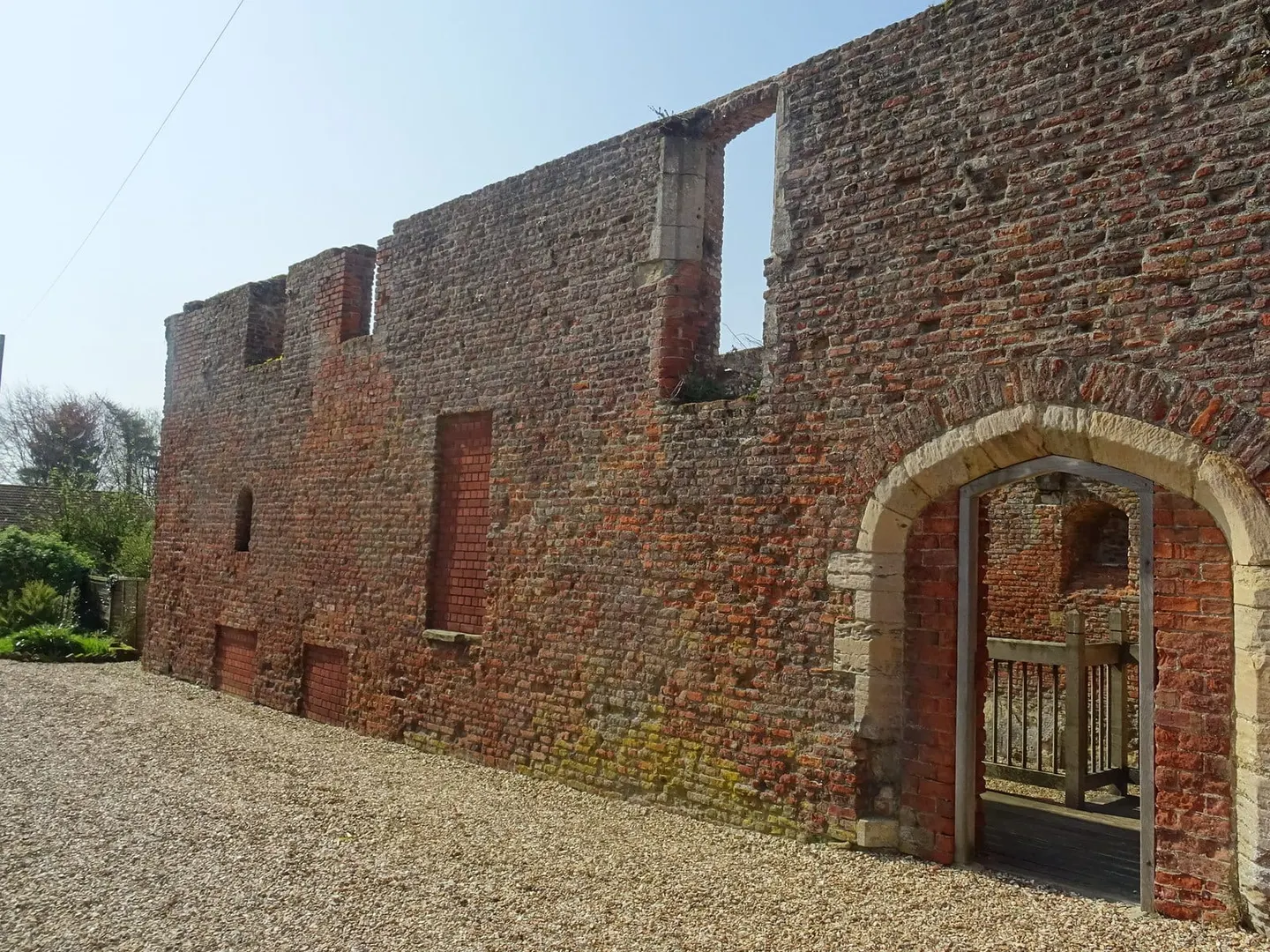
The ruined grammar school Ralph, Lord Cromwell founded for the choristers of his college at Tattershall, close by his castle
Open accessfree to visit at any reasonable time
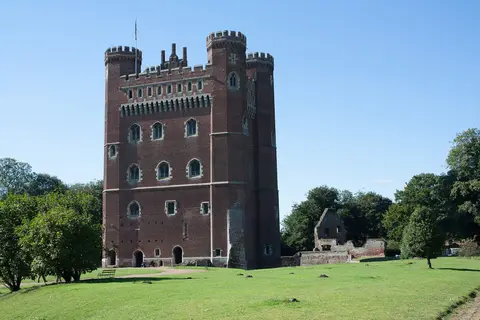
Henry VI’s wealthy treasurer, Ralph, Lord Cromwell, founded a college of priests at Tattershall in 1440; he was also responsible for the castle just down the road. Their job was to say chantry prayers — prayers paid for in advance so priests would keep on praying for their founder’s soul — for Cromwell after his death, and part of the college’s work involved running a school for the young choristers who sang in its church services.
Cromwell died in 1456, and the building you see today wasn’t finished until four years later, in 1460; William of Wainfleet, who was Bishop of Winchester, saw it through to completion, and it probably housed that school. Built from red brick trimmed with limestone, in the Perpendicular Gothic style fashionable at the time, it ranks among England’s oldest surviving brick buildings, and its original Tudor-arched doorways still show in the building’s long side walls.
When a new law abolished chantries in 1547, the wider college complex nearby was pulled down, but this building survived. Refounded as an ordinary grammar school, it continued teaching into the late 1600s before the building was put to use for malting and grain storage, and it eventually came into state care in 1972. The ruins stand open with nothing to pay and no set hours. Tattershall Castle, the great brick tower Cromwell built for himself and now cared for by the National Trust, is a few minutes’ walk away.