A Roman cavalry fort by the North Tyne, with the best-kept bath house on Hadrian's Wall and a Victorian museum of what was dug up
Open to visitorsan English Heritage site — check opening times and admission before you go
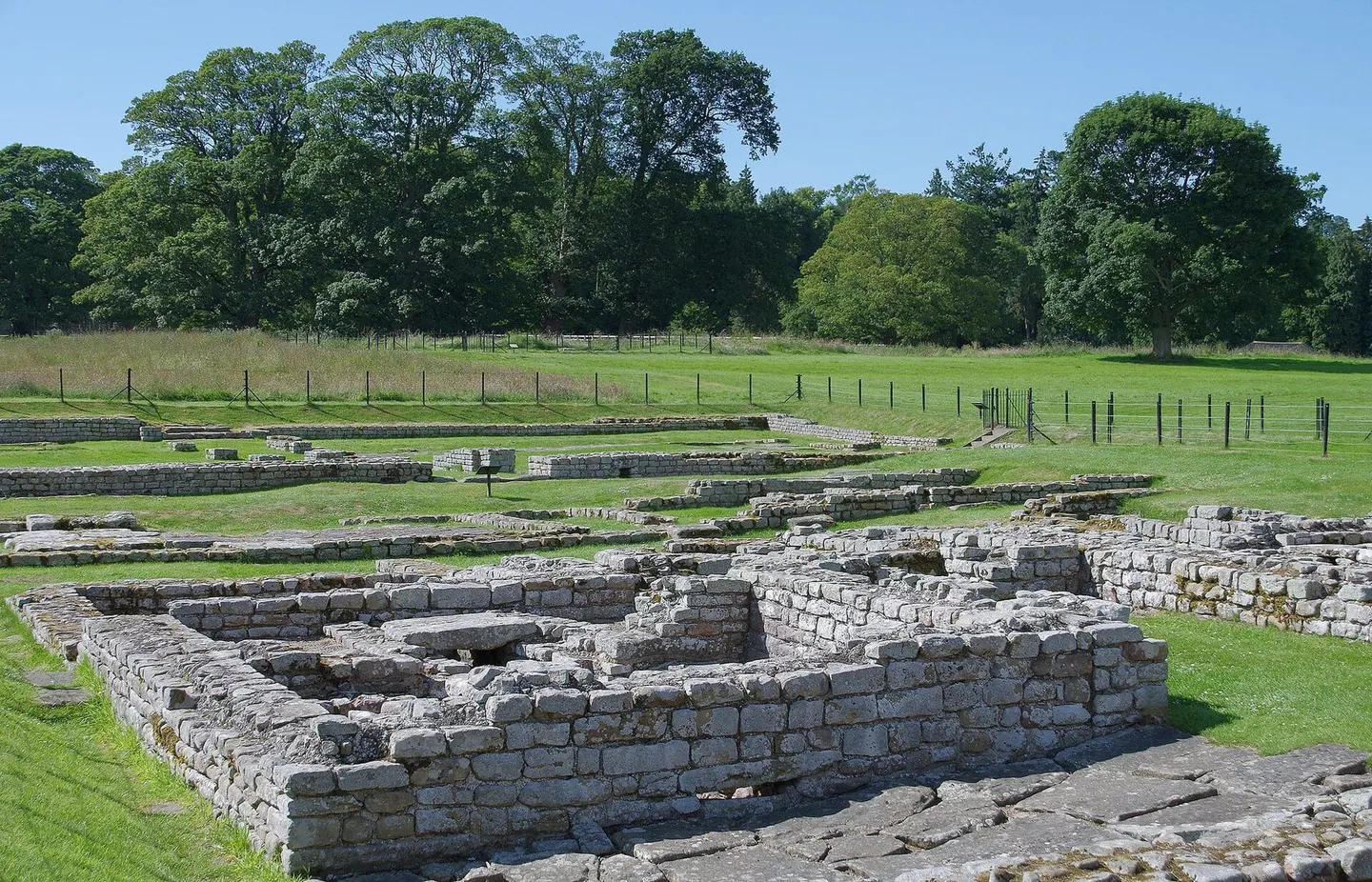
Substantial ruinsruined, but plenty survives above ground
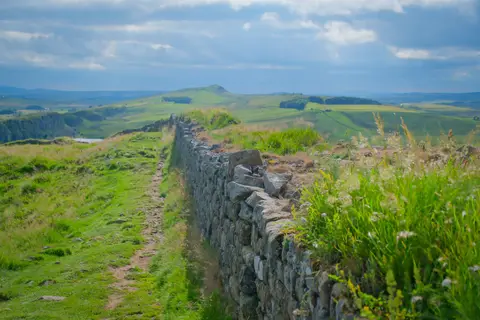
Hadrian’s Wall ran without forts on its own line for its first two years, defended instead by turrets and small gateway forts, or milecastles, roughly a Roman mile apart. Planners soon ordered fifteen forts built into the Wall itself; Chesters, raised around AD 124 where the road crossed the North Tyne, was among the first, built over a filled-in ditch and a demolished turret. The cavalry unit that stayed here longest had been raised in what is now northern Spain, remaining until Roman rule in Britain ended.
Chesters juts out past the Wall to the north rather than sitting squarely on it, so three of its four gateways face that way, each with twin arches flanked by towers; one stands tall enough to show where its stone arch would have begun. Inside, the headquarters building’s original layout survives well. A colonnaded courtyard leads into a hall and a shrine room, beneath which steps drop to a strongroom roofed with an intact stone vault. Two barrack blocks nearby give a rare sense of how Roman soldiers on the Wall actually lived.
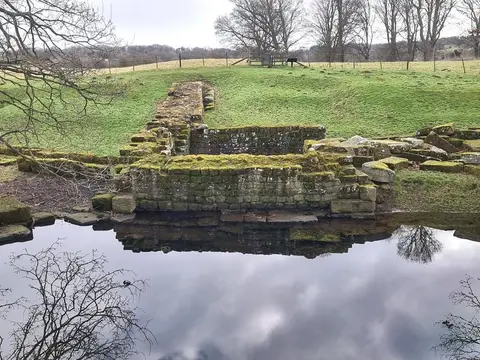
A short walk downhill from the fort, near the river, stands a Roman bath house rebuilt and altered many times over, its walls still standing close to their original height in places. A viewing platform nearby lets you see where the Roman bridge once crossed the water, and on the far bank stands the more substantial Chesters Roman Bridge Abutment, visible too from the present-day road bridge at Chollerford.
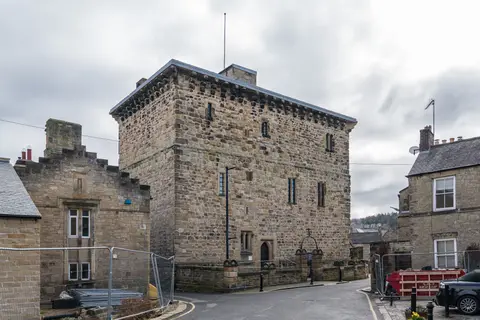
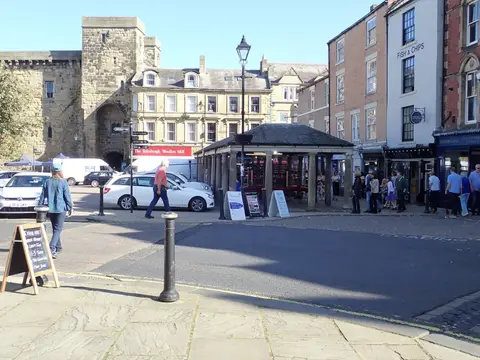
John Clayton, whose family owned the estate, spent decades from 1843 uncovering the fort after his father had turned the ruins into riverside parkland; his finds, including some of the finest inscriptions and carved stonework from the Wall, now fill the Clayton Museum on site, opened in 1896. You pay to go in today, and there are staff on site. A path leads on to the Hadrian’s Wall Path and neighbours such as Brunton Turret. Hexham and Hexham Station are about four miles south-east.
Full name: The Roman fort, vicus, bridge abutments and associated remains of Hadrian's Wall at Chesters in wall mile 27
More at the National Heritage List entry