Ashdown Forest
Local highlightA medieval hunting forest that's mostly gorse and heather today, and also, it turns out, Winnie-the-Pooh's Hundred Acre Wood
Open accesson open access land, where the right to roam applies
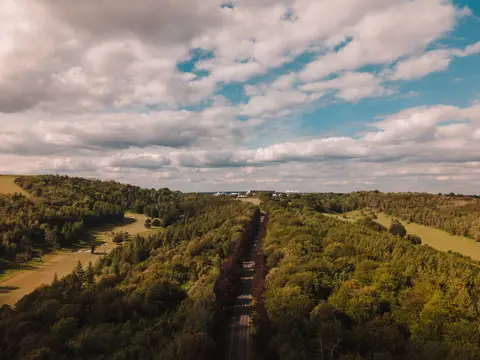
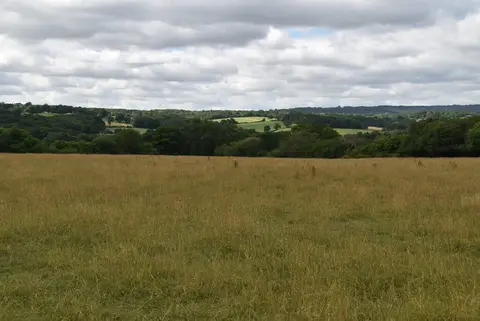
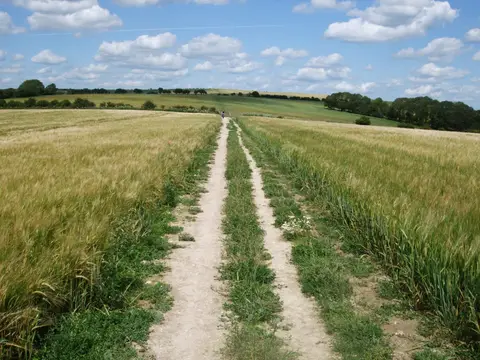
Forest is doing a lot of work in the name. When the Normans marked this land out in the twelfth century, “forest” meant a legal category for keeping deer to hunt, fenced by a boundary bank and ditch called a pale and patrolled by keepers whose job was stopping commoners taking the lord’s venison. It didn’t mean trees, and Ashdown still doesn’t have that many. What survived from the medieval enclosure is heath: gorse, heather, bracken and scattered birch and Scots pine across sandy, acidic soil that never suited farming, which is exactly why nobody ploughed it up later. At just over 32 square kilometres it’s the largest single stretch of open heathland left in the High Weald, and one of the biggest in lowland England full stop.
Commoners still have grazing and wood rights here under the body that manages the forest today, and the heath supports species that have run out of room almost everywhere else nearby: Dartford warblers, nightjars, adders sunning themselves on the sandy paths in spring. It’s all open access, laced with tracks, and big enough to walk for hours without doubling back.
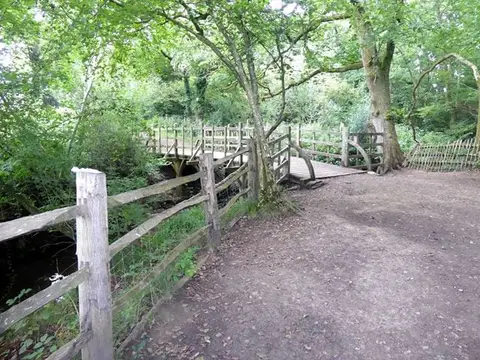
The forest has a second life too, as the landscape A. A. Milne borrowed for Winnie-the-Pooh. He lived nearby at Hartfield, and illustrator E. H. Shepard drew the Hundred Acre Wood from this very forest. Gill’s Lap, up on the high ground, is the real spot behind Galleon’s Lap in the books, with a small memorial stone to both men. You don’t need to know any of that to enjoy a walk here, but it explains why some of the car parks are busier than a heath in Sussex has any obvious right to be.