The great prehistoric stone circle on Salisbury Plain, some of its stones hauled from Wales and the ring aligned to the solstice sun
Open to visitorsan English Heritage site — check opening times and admission before you go
Standing remainssubstantial fabric survives to stand in front of
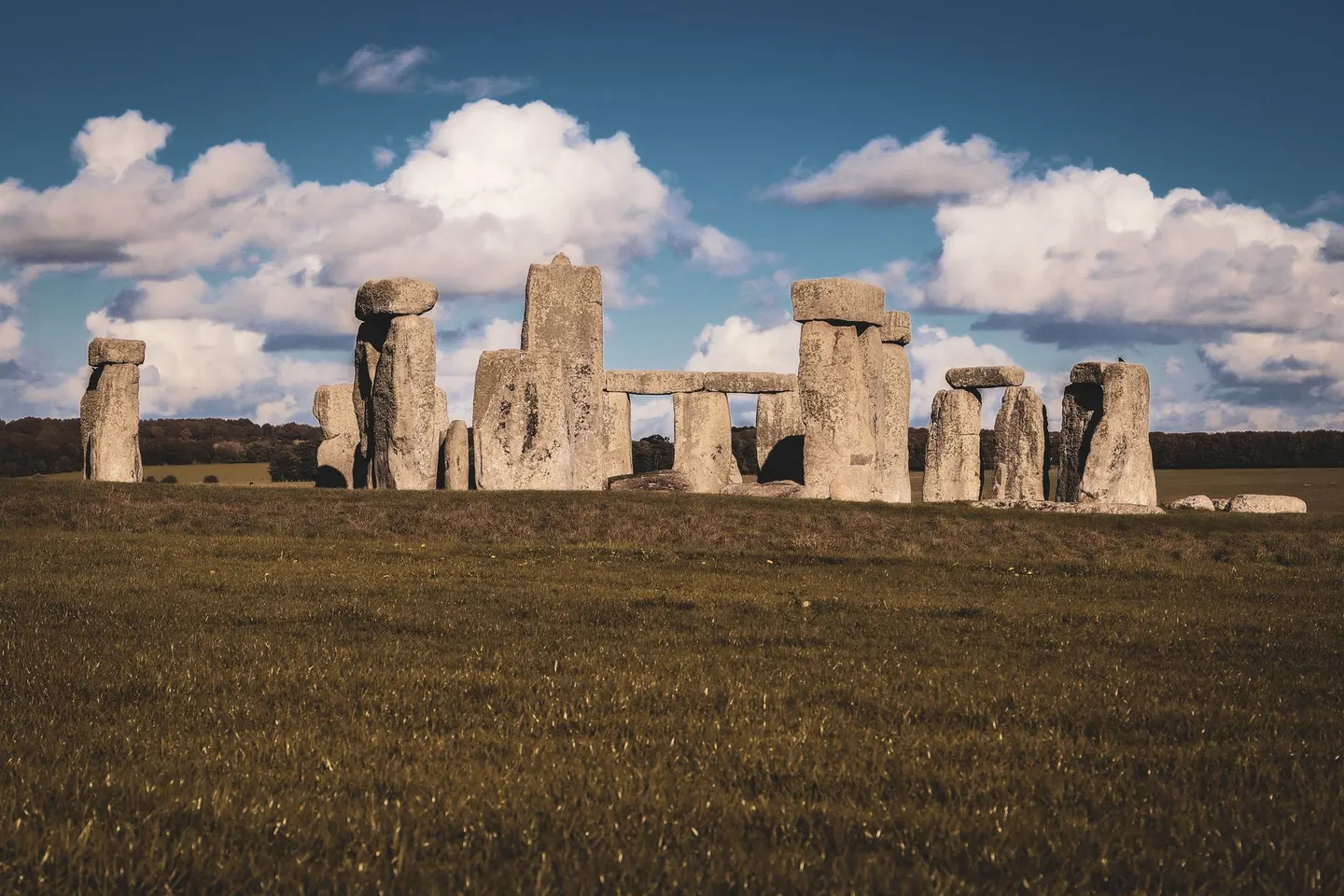
You probably already have a picture of Stonehenge in your head, but in person the circle is smaller and stranger than the photos suggest — a ring of big standing stones on open chalk downland. On some of them a pair is topped by a third stone laid flat across the top, the shape most people picture. The biggest stones are called sarsens, a hard local sandstone from the Marlborough Downs to the north. The smaller ones, the bluestones, were brought from the Preseli Hills in west Wales, around 150 miles away. Archaeologists have argued for centuries about how and why Neolithic people moved stones that heavy that far.
People built Stonehenge in stages over roughly a thousand years, starting around 3000 BC, and put up the big stones you see today around 2500 BC. Whoever built it lined the circle up with the sun: from the right spot the midsummer sun rises along the main axis, and the midwinter sun sets down the same line. That is why crowds still gather for the solstices.
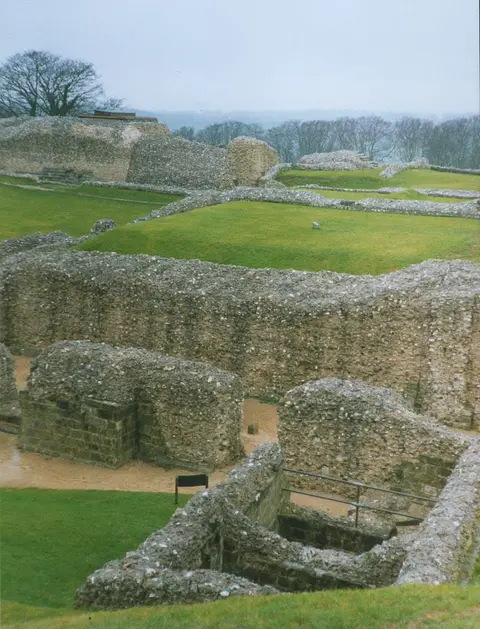
English Heritage runs the site now. A standard ticket includes the visitor centre about a mile and a half to the west and a shuttle bus out to a footpath that loops round the stones, close up but not in among them. To stand inside the circle you have to book a separate early-morning or evening visit, or turn up for the solstice, when the field is opened and it gets very busy. The downland around the stones, the Stonehenge Landscape of burial mounds and earthworks, belongs to the National Trust and is free to walk. If you want to make a day of it, Old Sarum, an Iron Age hillfort the Normans later built on, is a short drive south towards Salisbury.
More at the National Heritage List entry