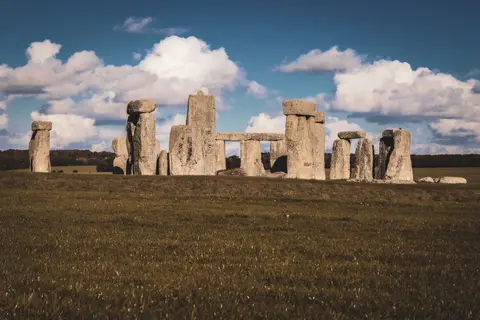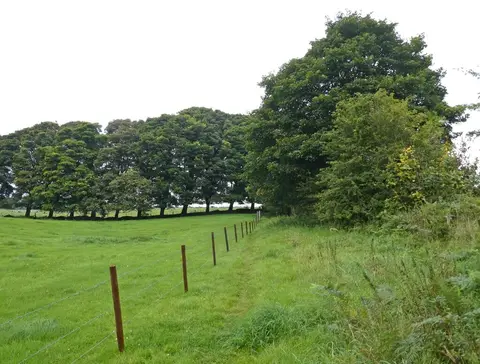
You can walk the banks of Durrington Walls, a huge Neolithic henge, then see Woodhenge's timber rings marked out in concrete posts next door
Open accessfree to visit at any reasonable time
Earthworks onlybanks, ditches and platforms — read the ground, not walls
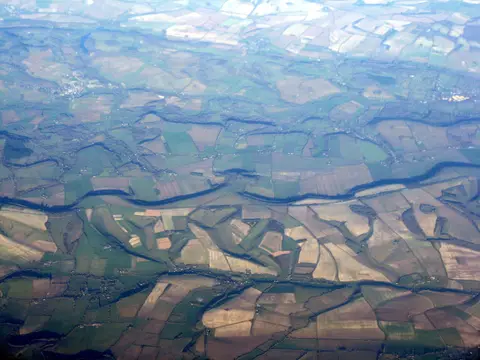
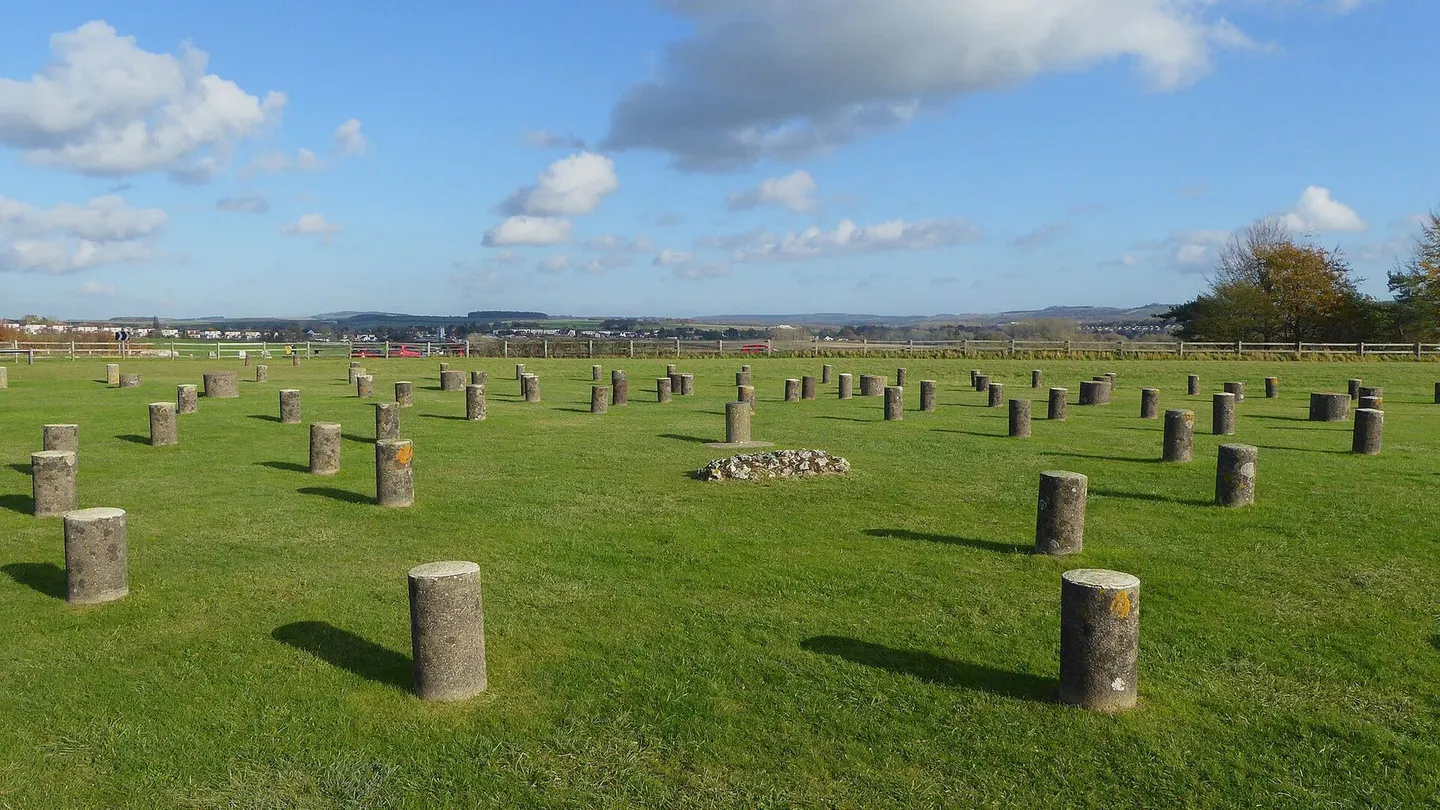
A pilot flying near Durrington in December 1925 noticed a ring of chalky marks in a ploughed field, and the next summer he saw circles of dark dots in the wheat growing on it. Maud and Ben Cunnington dug the site in 1926 and 1927 and found that the dots were postholes, left by six oval rings of wooden posts, one inside another, surrounded by a henge, which is a round enclosure with its ditch dug inside its bank. The Cunningtons set a concrete marker in each posthole so visitors could see the layout, and Maud named the site Woodhenge for its likeness to Stonehenge.
People raised Woodhenge’s posts around 2600 BC, about when the big stones were going up at Stonehenge, two miles to the south-west, and the rings are aligned on the midsummer sunrise. A small cairn of flints near the middle marks where the excavators found the burial of a young child.
Durrington Walls, just to the north, is the same idea on a far bigger scale, a henge around 500 metres across. Geoffrey Wainwright found a large timber circle inside it in 1966–67, set out to face the sunrise at midwinter. In the 2000s excavations led by Mike Parker Pearson uncovered the floors of Neolithic houses by the eastern bank, along with masses of pig bones from feasting, and his team argues that this was where the builders of Stonehenge lived and gathered in midwinter. The bank survives as a broad, low ridge round a shallow bowl of grass, with the A345 cutting straight through.
Both are free. Woodhenge is unstaffed, so you can wander round the posts any time in daylight, and the land at Durrington west of the road is National Trust ground, part of its Stonehenge Landscape and open to walk. Standing on Durrington’s bank and looking across the hollow is the easiest way to see how much bigger Durrington was than its timber neighbour.
Full name: Henge monuments at Durrington Walls and Woodhenge, a round barrow cemetery, two additional round barrows and four settlements
More at the National Heritage List entry