A group of Bronze Age burial cairns and standing stones set in a quiet grove of trees, a few miles from the Culloden battlefield
Open to visitorsa Historic Environment Scotland site — many are free to wander; staffed ones charge and keep set hours
Standing remainssubstantial fabric survives to stand in front of
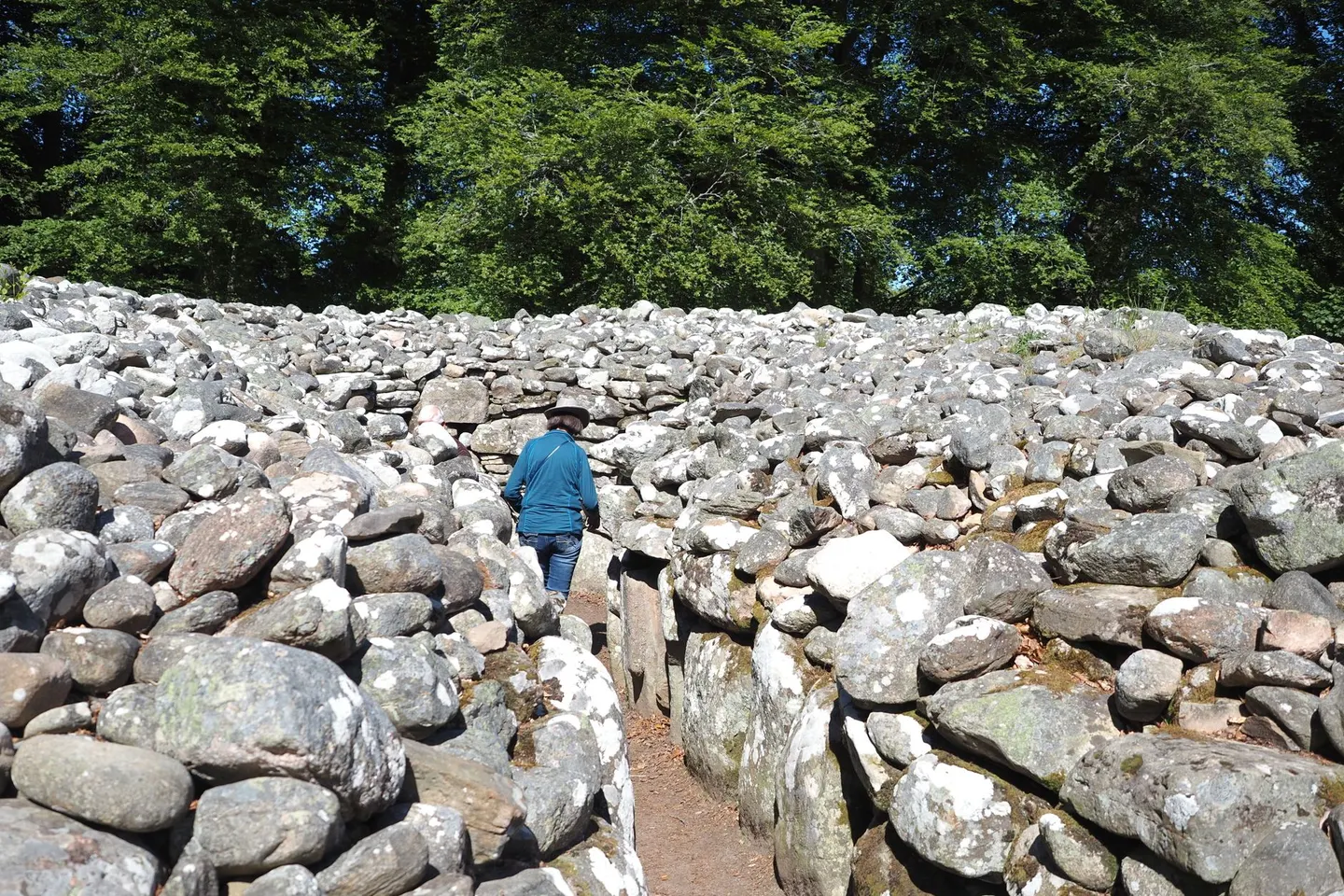
Set among trees a short way from Inverness, the Clava Cairns are a cluster of stone burial mounds built about 4,000 years ago in the Bronze Age. Three of them stand close together, each ringed by upright stones. Two are passage cairns, round mounds of piled stone with a low passage running in to a chamber at the centre; the third, between them, is a ring cairn, an open ring of stone with no way in. The two passage cairns are lined up so that the setting midwinter sun shines down each passage, the same interest in the solstice you find at other tombs of the age. Some of the kerb stones carry cup marks, small round hollows pecked into the rock whose meaning is lost. The beech trees that shade the site were planted much later, in the 1800s, but they make it a calm, dim place to wander. Historic Environment Scotland looks after it and entry is free. Many people fold it into a visit to the nearby Battle of Culloden site, a couple of miles west, since the two sit close together on the same lanes.