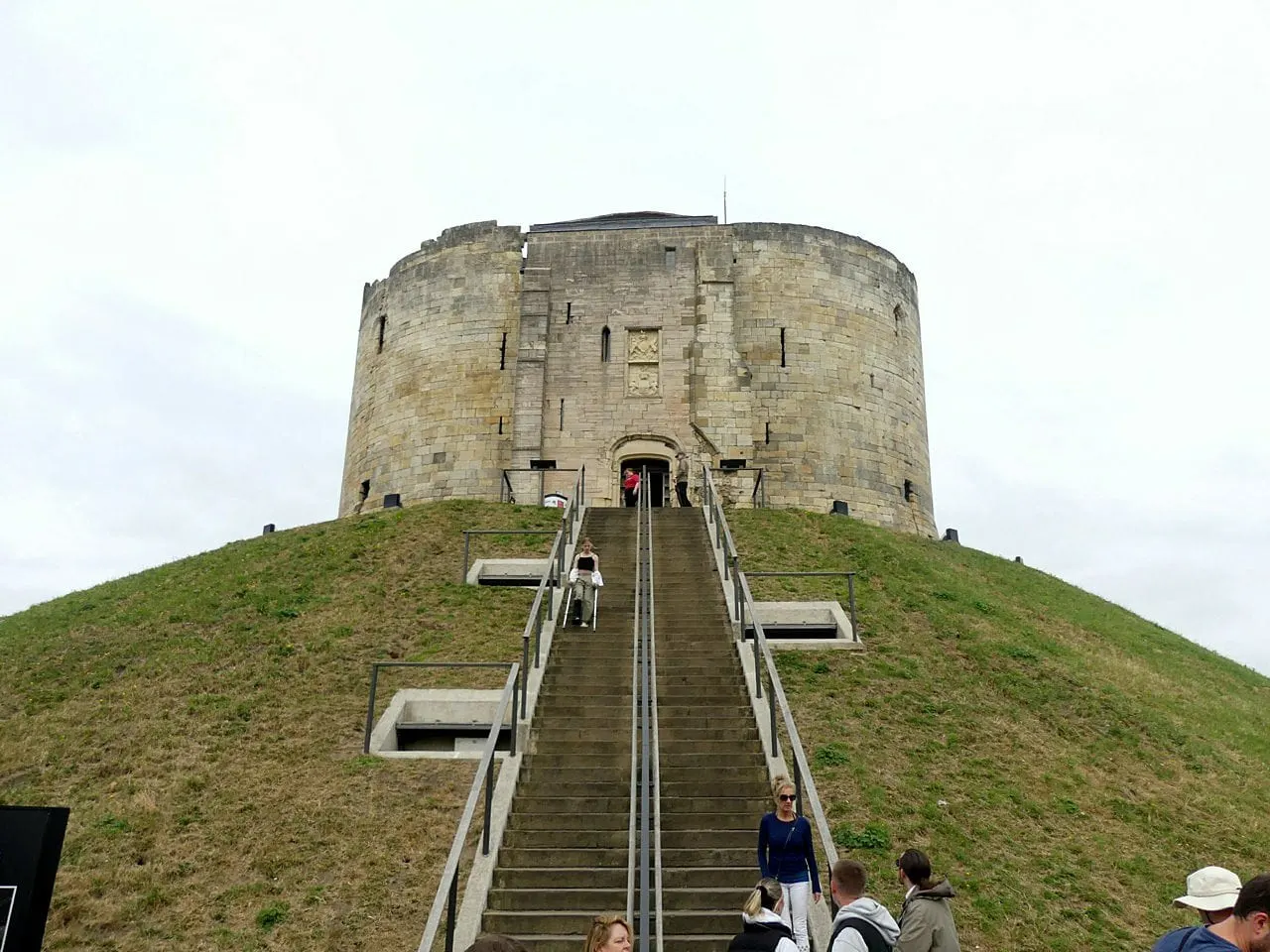
Clifford's Tower, Henry III's four-lobed stone keep on William the Conqueror's castle mound in York, now with a roof deck and views over the city
Open to visitorsan English Heritage site — check opening times and admission before you go
Substantial ruinsruined, but plenty survives above ground
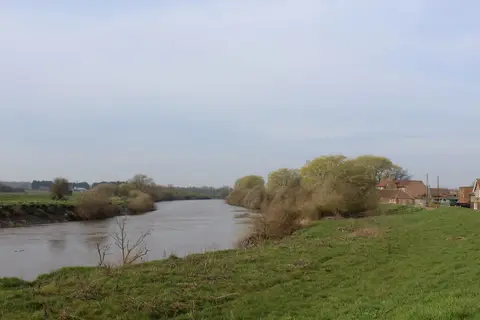
The grassy mound in the middle of York is older than the stone tower standing on it. William the Conqueror had it heaped up in 1068, between the rivers Ouse and Foss, as the motte of a castle, a steep earth mound with a wooden keep at the summit and a fenced yard, the bailey, below it. Rebels and a Danish fleet took the castle the following year, and William’s men rebuilt it.
In March 1190 around 150 of York’s Jews sheltered in that wooden tower from a mob. Trapped, most of them took their own lives, the tower burned, and those who came out were killed. A plaque at the bottom of the mound remembers them.
Henry III, expecting war with Scotland, had the stone keep you see now begun around 1245. Its plan is unusual, four round lobes pressed together like a four-leaf clover, and nothing else in England was built quite like it. Over the centuries the tower probably held a treasury, and served as a prison and a Royalist gun platform in the Civil War. The name Clifford’s Tower first turns up in 1596, possibly after Roger de Clifford, a rebel whose body was hung from a gibbet here after the Battle of Boroughbridge in 1322. A fire in 1684 gutted the inside, and some stones are still reddened from it.
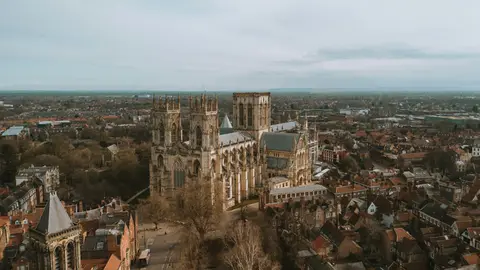
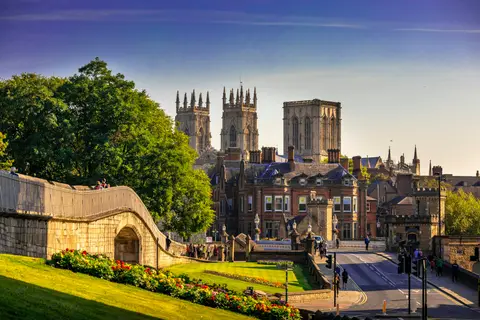
Below the mound, the old bailey is now the Eye of York, lined with the 18th-century prison and court buildings that house York Castle Museum and the Crown Court. From York station the walk is about a kilometre, and the city walls are only a few minutes further on foot. Entry to the tower is ticketed and staffed. A project finished in 2022 added walkways inside the shell and a timber roof deck, so once you’ve climbed the long flight of steps to the tower you can look out across the rooftops to York Minster.
Full name: York Castle: motte and bailey castle, tower keep castle (including Clifford's Tower), and site of part of Romano-British fort-vicus and Anglian cemetery
More at the National Heritage List entry