The walkable streets, granaries and market building of a Roman supply town behind Hadrian's Wall, and the museum holding a soldier's buried armour
Open to visitorsan English Heritage site — check opening times and admission before you go
Substantial ruinsruined, but plenty survives above ground
Corbridge started out as a fort guarding the point where the road north, Dere Street, crossed the Tyne, built from around AD 85, decades before Hadrian’s Wall existed. Local people knew the place as Coria, a Celtic word meaning roughly a meeting or hosting place. That stayed its role for centuries. Once the frontier settled a few miles north on the Wall, Corbridge became the town where soldiers paused before reaching it, and where traders kept the garrisons supplied.
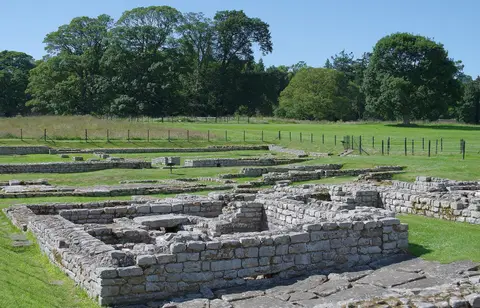
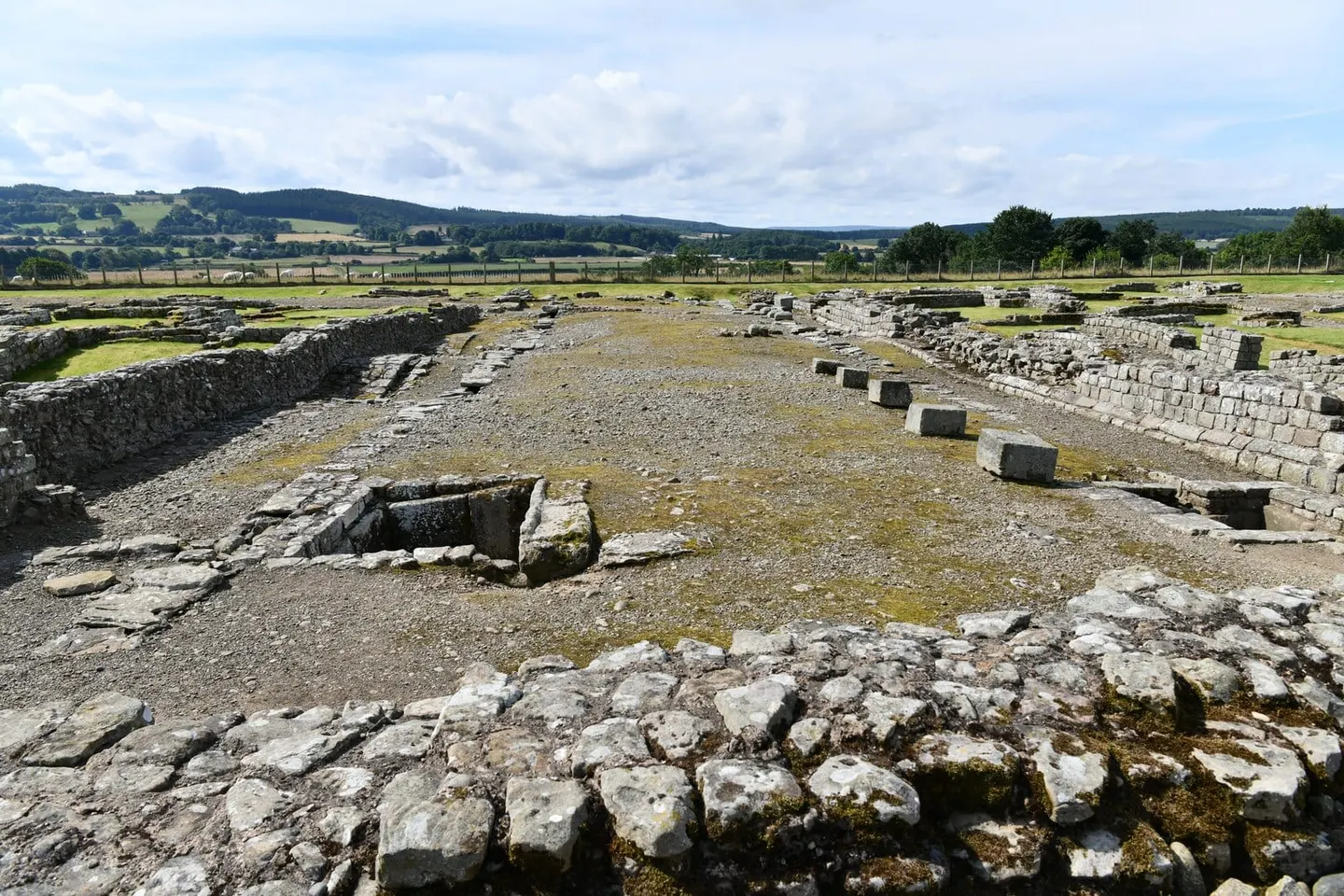
What survives today is the heart of that later town. You can walk on the town’s actual Roman road surface, still in place after nearly two thousand years, running past the low stone footings of shops and workshops on either side. Beside it stand two granaries, among the best-surviving in the country, their floors raised on rows of low stone piers so air could pass underneath and keep the stored grain dry.
Facing the granaries is the unfinished shell of a warehouse and market building, abandoned mid-construction after a 2nd-century fire. Its most famous find lay hidden nearby for far longer: in 1964, archaeologists dug up a wooden chest that a soldier had buried near the market building around AD 105–120, packed with tools and pieces of Roman segmented armour, a rare survival from the period. The chest and its contents are now the centrepiece of the on-site museum’s collection, called the Corbridge Hoard.
Corbridge went on supplying troops on campaigns as far as Scotland, and stayed a working town into the 4th century, long after nearby forts had gone quiet. The site is staffed today, with an admission charge. Later builders quarried its ruins for stone, some of which ended up in St Andrew’s Church in present-day Corbridge, a short walk away and a few minutes from Corbridge Station; the Hadrian’s Wall Path runs a few miles further north.