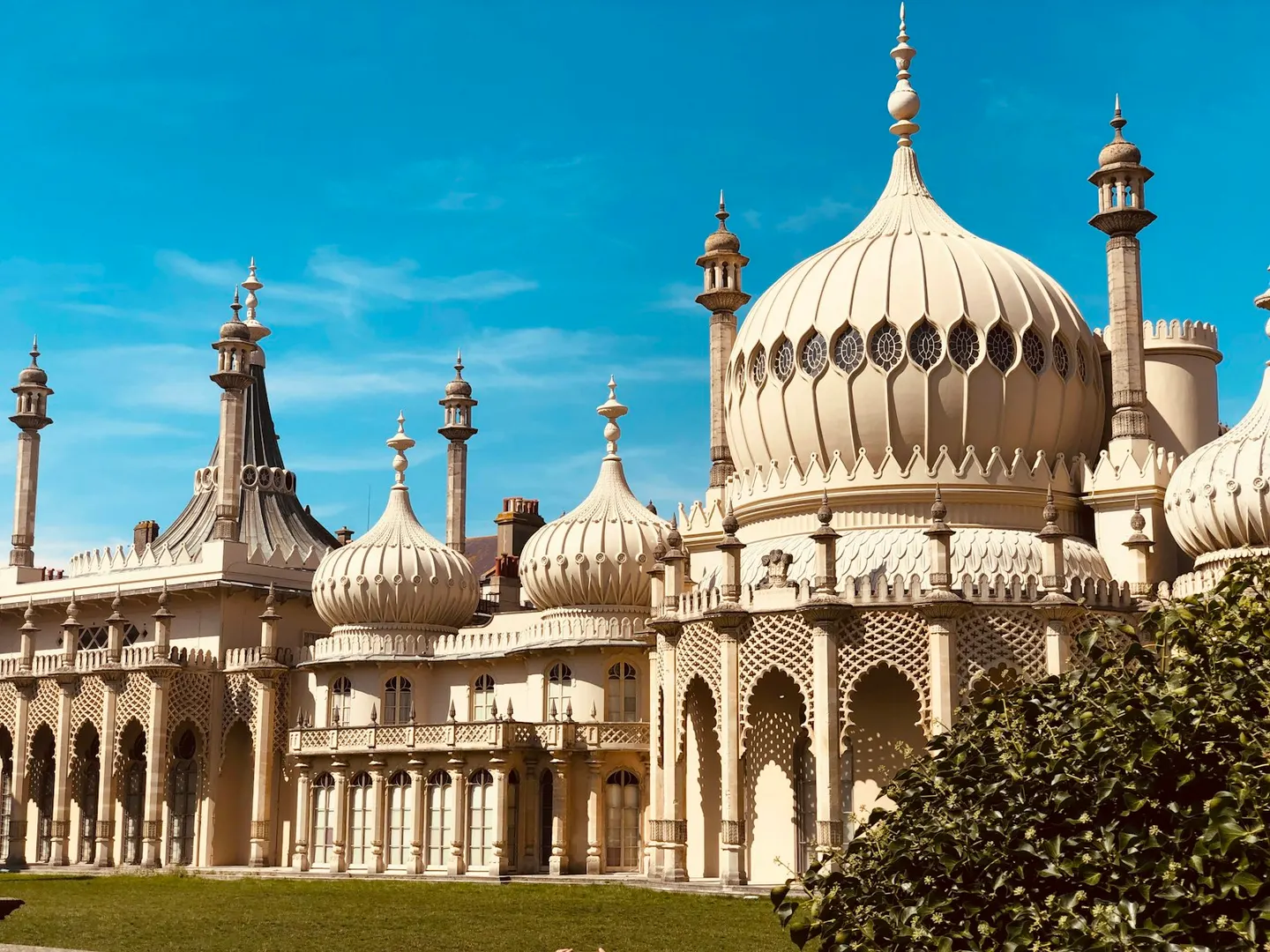
George IV's seaside palace in the middle of Brighton, with Indian-style domes and minarets outside and fanciful Chinese-style rooms within
Open to visitorscheck opening times and admission before you go
The future George IV first came to Brighton in 1783 and three years later rented a farmhouse facing the Steine, the grassy promenade in the middle of the town. In 1787 Henry Holland turned it into a neat classical villa, and from 1815 John Nash rebuilt it with onion domes, minarets and pointed arches borrowed from the Mughal buildings of India. The inside went the other way, a fantasy of China with dragons, painted wallpapers and huge chandeliers in the Banqueting Room and Music Room. Queen Victoria preferred Osborne House and sold the Pavilion to the town in 1850.
During the First World War the Pavilion was a hospital for soldiers of the Indian Army wounded on the Western Front, and more than 2,300 men were treated here between December 1914 and January 1916. Today Brighton & Hove Museums runs it, with paid entry to the state rooms, while the Pavilion Garden around it is a public park. The sea and Brighton beach are a few minutes south, and Brighton station is under 1 km away.