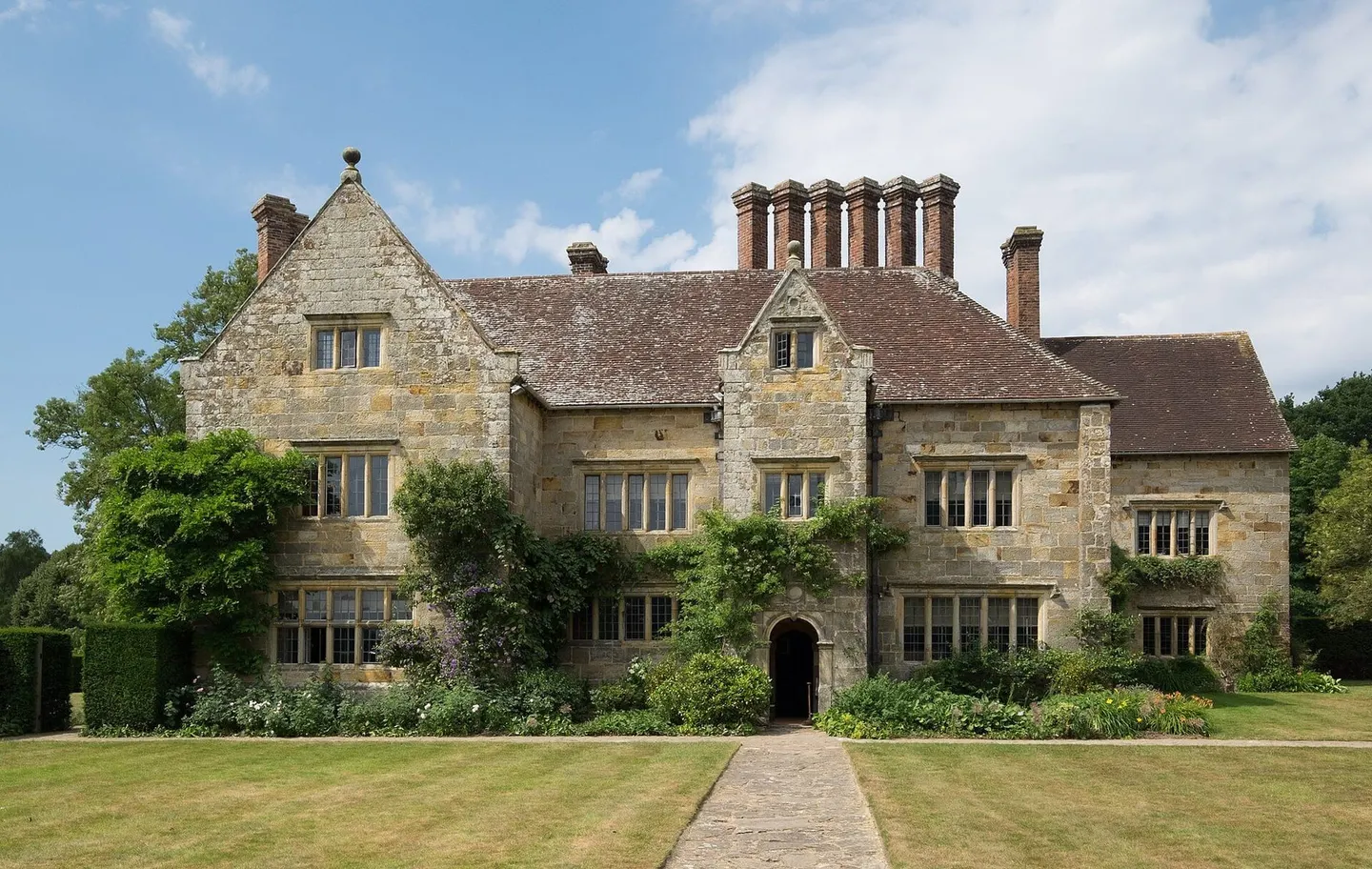
Rudyard Kipling's home for over three decades, a Jacobean house in the Dudwell valley with his old Rolls-Royce still in the garage
Open to visitorsa National Trust place — check opening times and admission before you go
Kipling bought this house in 1902, partly to get away from the sightseers who’d taken to peering over his garden wall at his previous home in Rottingdean, and stayed until he died in 1936. It’s a square, sandstone house built in 1634, put up for a Wealden ironmaster back when this stretch of the High Weald still smelted its own iron, with mullioned windows and tall chimneys he fell for straight away. Much of his later writing came out of these years, including the two Puck books, which lean directly on the fields and lanes around the house, and he picked up the Nobel Prize in Literature in 1907 while living here, the first English-language writer to get it.
Down by the river is an old watermill that Kipling had working again to grind flour, then rigged with a turbine so it could generate electricity for the house. He never learned to drive himself, but he loved being driven around the Sussex lanes, and the Rolls-Royce Phantom I he ran still sits in the garage.
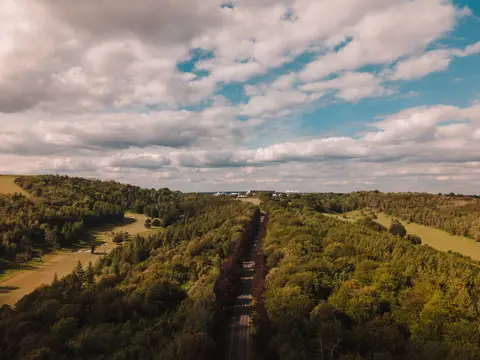
The garden stays modest next to all that, with a rose garden, a pond and a bit of orchard, nothing on the scale of the house’s history. Burwash village sits just up the hill, and the nearest station is Stonegate, a few miles north, so you’ll most likely be arriving by car. Once there, Dallington Forest is close enough for a woodland leg-stretch, and Bodiam Castle or Battle Abbey both make sense as a second stop if you want more history in the same day. Ashburnham Place, another big estate a few miles south, is a gentler pairing.