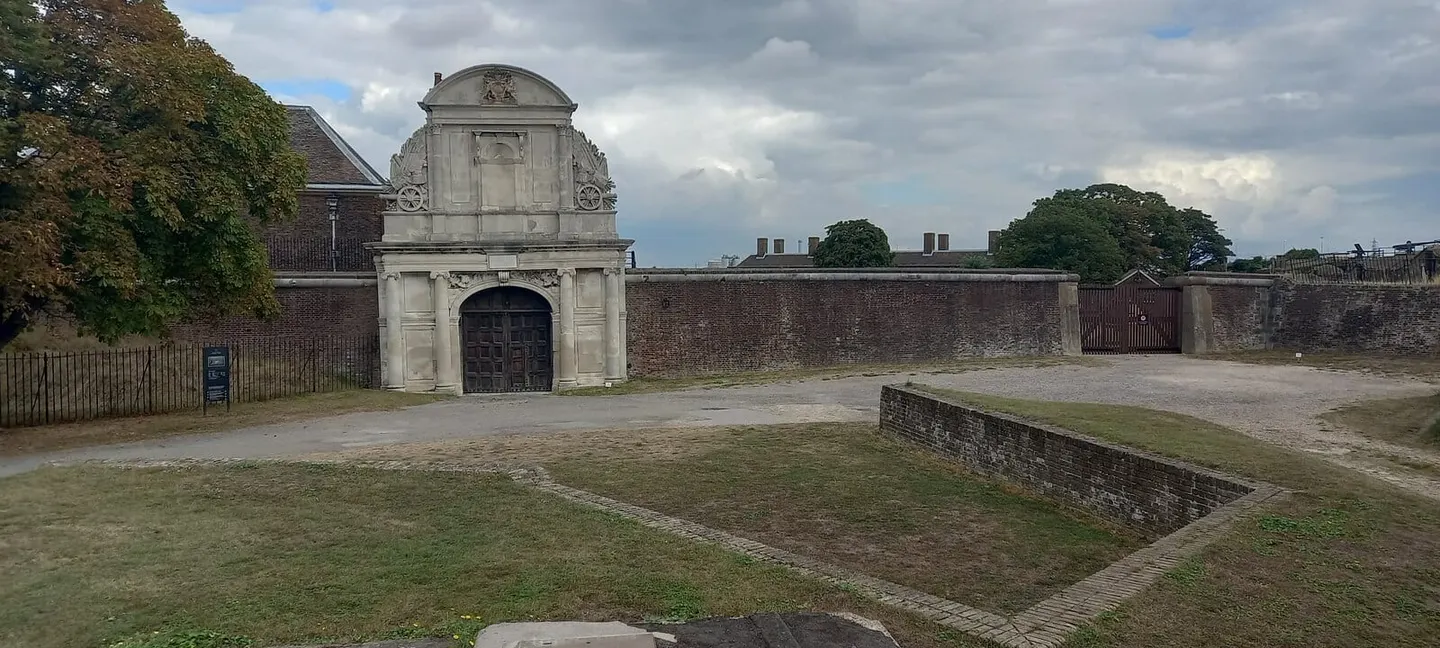
The great star-shaped fort Charles II had built in brick after the Dutch humiliated the navy on the Medway in 1667
Open to visitorsan English Heritage site — check opening times and admission before you go
Substantial ruinsruined, but plenty survives above ground
When Henry VIII feared invasion in 1539, he had five gun towers built along the Thames east of London, spread across both banks, to stop enemy ships reaching London’s docks. The blockhouse on the Essex bank, at West Tilbury, was squat and D-shaped, with two floors of guns aimed along the water.
Fifty years later, as the Spanish Armada threatened, Elizabeth I arrived by barge at the blockhouse in August 1588 and rode on to the army camped a couple of miles inland at West Tilbury, where she gave the speech about having “the heart and stomach of a king, and of a king of England too”.
In 1667 a Dutch fleet stormed the fort at Sheerness, then burned English warships further up the Medway near Chatham, leaving the Thames wide open to attack. From 1670 the military engineer Bernard de Gomme replaced the old blockhouse with the star-shaped fort you can walk round today, five sides in brick, with four bastions (a fifth was planned, but the river’s tides ruled it out), two water-filled moats, and guns facing straight down the river.
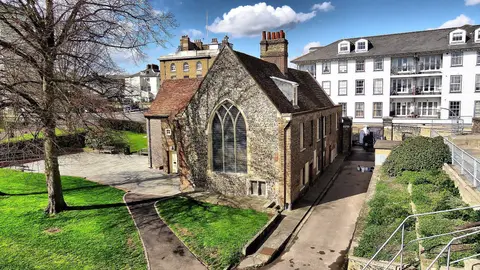
Tilbury also doubled as one of the country’s biggest gunpowder stores through the 18th century. After the Jacobite rising of 1745, hundreds of Scottish prisoners were crammed into the old magazine here, and typhus killed many before their fates were decided; a granite stone from Culloden Moor, placed by the river wall in 1998, now marks their memory. The last soldiers left in 1950, after almost four centuries of use. You’ll need a ticket and there are staff on site today, with Victorian magazine tunnels to explore and views across the water to Gravesend; Milton Chantry, a much-altered medieval chapel, lies just across the water in Gravesend.