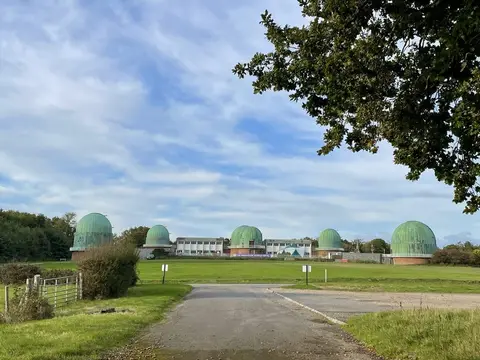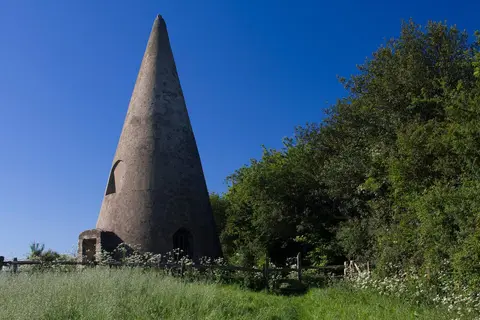
Fifteenth-century brick towers that later housed the Royal Greenwich Observatory's telescopes for over 40 years
Open to visitorscheck opening times and admission before you go
Standing remainssubstantial fabric survives to stand in front of
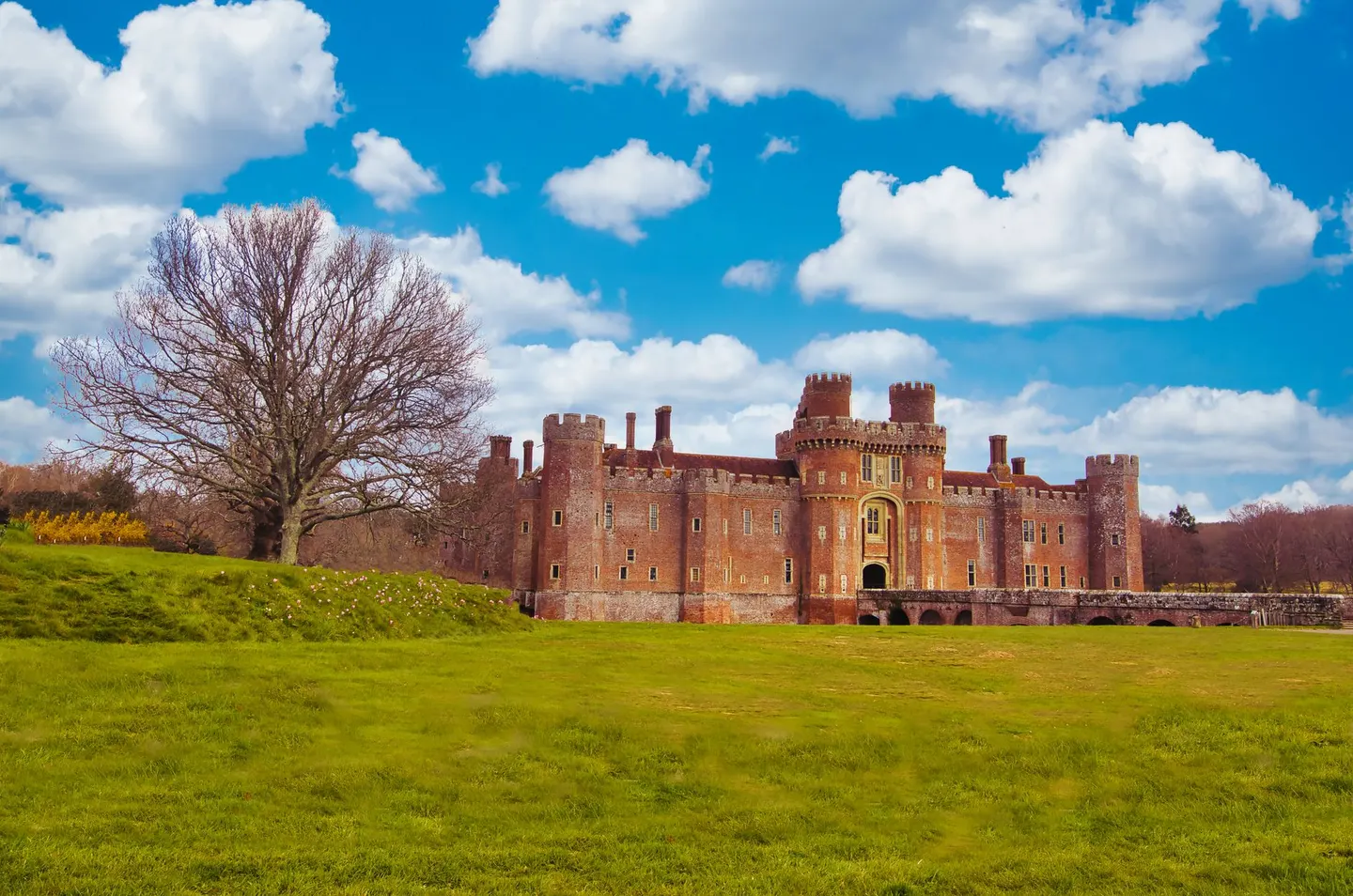
Built in the 1440s for Sir Roger Fiennes, Herstmonceux Castle owes its historical importance less to its battlements than to its building material: it’s one of the earliest large-scale uses of brick in an English building since the Romans left. Brick had to be specially made or imported at the time, so putting up an entire castle from it was as much a statement of wealth as anything defensive — the moat, towers and battlements dress the place up as a serious fortification, but Sussex in the 1440s had little real need of one.
The castle didn’t stay in one piece throughout, either. Its interior was gutted in the 18th century, the materials carted off to build a new house nearby, and it stood open to the weather for well over a hundred years before being restored in the early twentieth century. Then, in the years after the Second World War, it took on a role nobody in the 1440s could have guessed at: home to the Royal Greenwich Observatory, which moved its telescopes out of London to escape the capital’s smoke and streetlights. The observatory operated from Herstmonceux from 1948 to 1990, and the domes and instruments it left behind still stand next door as a science centre open to the public.
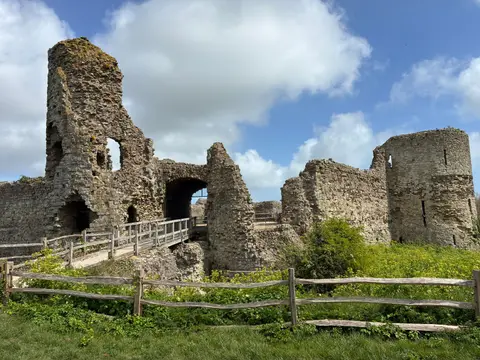
Herstmonceux Castle and Place is now owned by Queen’s University in Canada, which uses it as an international study centre. The grounds are open to the public in season, with the castle itself seen on a guided tour rather than something you can wander through freely. Herstmonceux Park borders the estate, and it sits within a few miles of Pevensey Castle and Michelham Priory too, close enough to see more than one in a day.
More at the National Heritage List entry