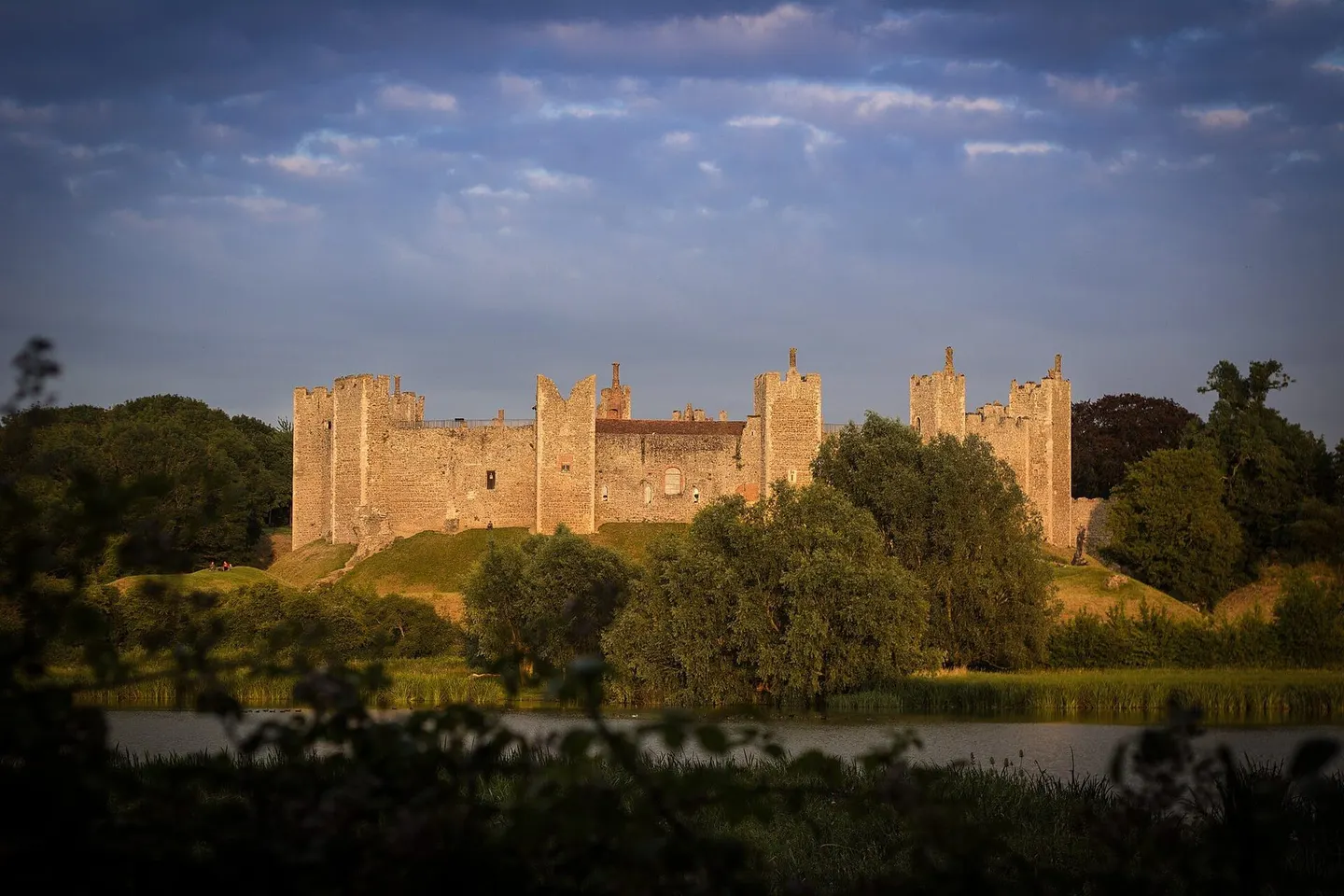
The ring-walled Suffolk stronghold of the Bigod earls, where Mary Tudor gathered her supporters before being proclaimed queen in 1553
Open to visitorsan English Heritage site — check opening times and admission before you go
Substantial ruinsruined, but plenty survives above ground
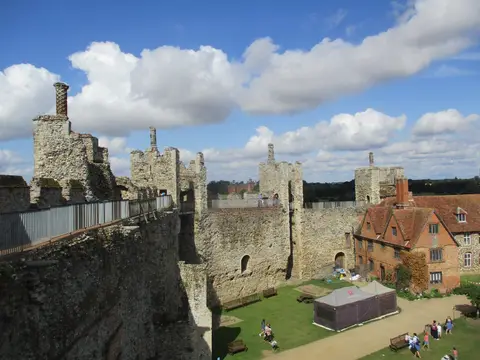
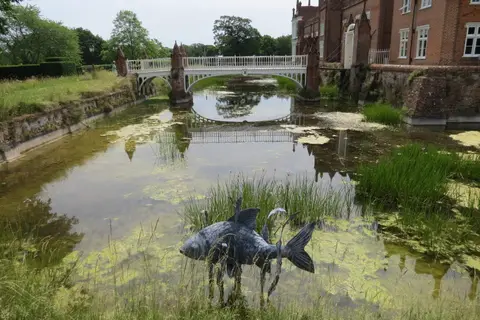
Framlingham Castle stands on a low rise above a large lake, the mere, on the edge of the small town of Framlingham. The unusual thing about it is that there is no great central tower. Instead the castle is a ring of high curtain wall — the outer defensive wall — joined by thirteen square towers, built by the powerful Bigod family in the years around 1190 after their earlier castle on the spot was pulled down on royal orders. You can walk the full circuit along the top of that wall, which gives you a clear view over the mere and the rooftops below.
Framlingham’s big moment came in 1553. Mary Tudor gathered her supporters here after the death of her brother Edward VI, and it was from Framlingham that she set out to London to be proclaimed queen. Later the castle passed through the hands of the Howard dukes of Norfolk, and later still it served as a poorhouse, which is why a plainer brick building sits oddly inside the medieval walls.
English Heritage runs the site today. It is an easy walk from the middle of Framlingham, and the parish church a couple of hundred metres away, St Michael’s, holds the grand tombs of the Howard family. A few miles west, Saxtead Green Post Mill is a working timber windmill worth a look.
More at the National Heritage List entry