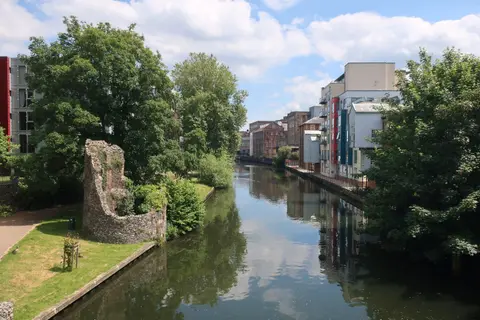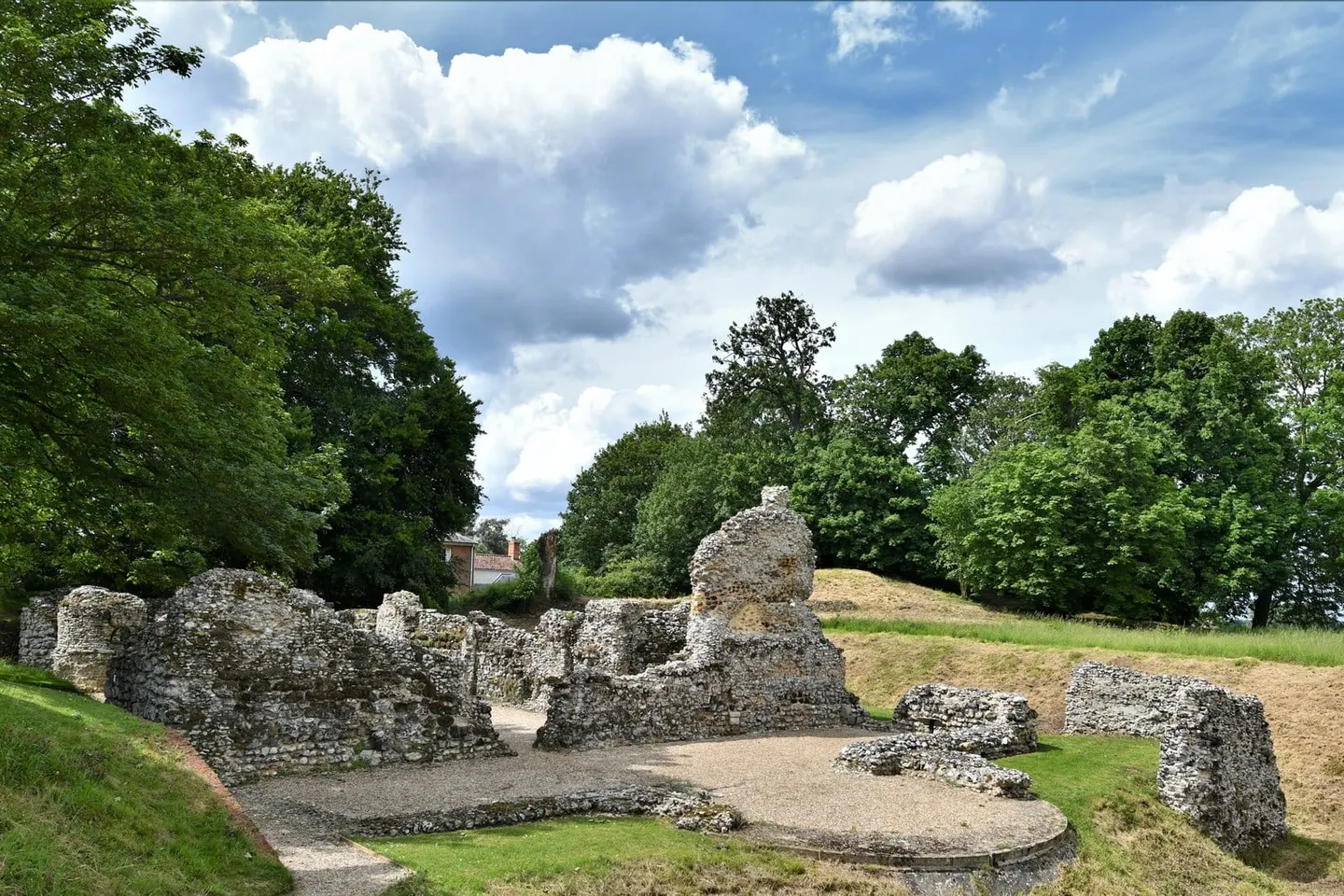
Bishop Despenser turned this Norman chapel, built where East Anglia's Saxon cathedral probably stood, into a moated and fortified house in the 1380s
Open accessfree to visit at any reasonable time
Substantial ruinsruined, but plenty survives above ground
East Anglia’s bishops had their seat at North Elmham in the last centuries of Saxon England, and excavation here has found traces of a timber church, probably their cathedral. After the Normans moved the bishop’s seat to Thetford in the 1070s, Bishop Herbert de Losinga built himself a little chapel on the same spot, sometime between 1091 and 1119. The design was ambitious for its size, with a west tower as wide as the nave, towers flanking the transept (the cross-arms of the church) and a rounded east end.
Nearly three centuries later Henry Despenser, Bishop of Norwich, took the chapel over as a house. He was hated in Norfolk for the way he crushed the Peasants’ Revolt of 1381, and at the end of 1387 he got the king’s permission to fortify his new home and had it moated. At ground level you’re looking at his cellars, with round footings for the pillars under the upper floor he added, and the banks and ditches of his moats still ring the site. No bishop seems to have lived here after he died in 1406, and the buildings slowly decayed.
The layers take some untangling, so the information panels help. The chapel is free to wander round in daylight, along Church Lane in the village, and the River Wensum runs through the valley just to the east.
Full name: Episcopal chapel and fortified manor house on site of Anglo-Saxon cathedral
More at the National Heritage List entry